


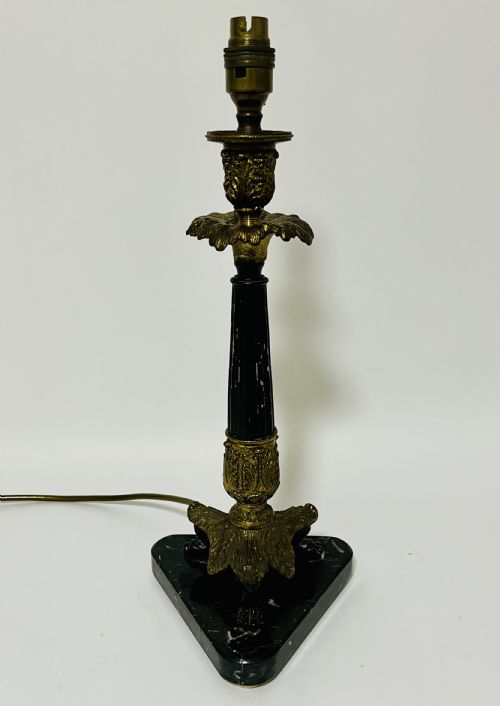


French Empire Table Lighting
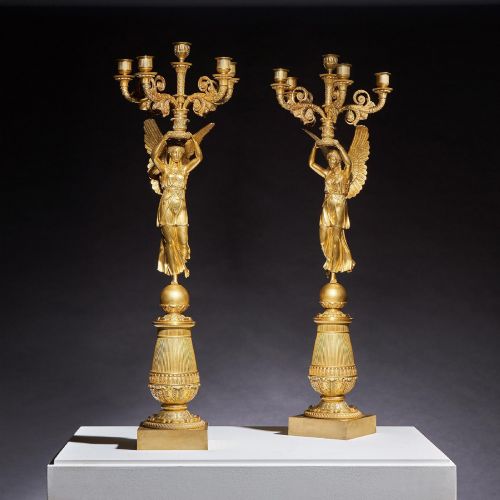
French empire table lighting brings neoclassical grandeur into a room through heavy gilt bronze, classical columns, and finely chased ormolu forms.
French Empire Table Lighting
When searching for french empire table lighting, buyers encounter monumental candelabra, converted candlesticks, and bouillotte lamps designed to illuminate interiors with classical dignity. The listings show heavy reliance on forms from the nineteenth century, alongside later revivals that echo the strict symmetry and military motifs of the Napoleonic era.
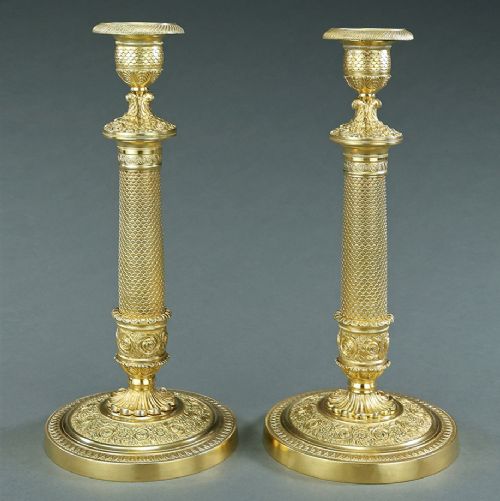
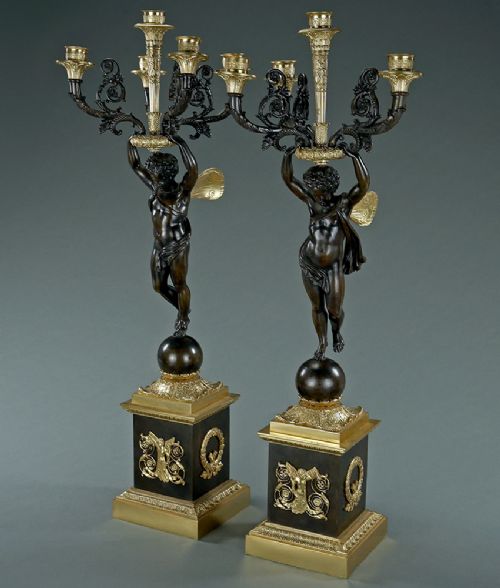
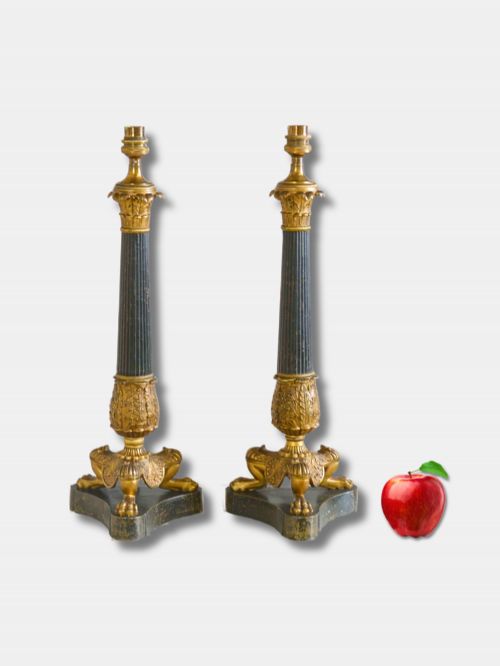
Most items meeting this search take the form of paired candelabra or single column lamps, frequently combining polished ormolu with patinated dark bronze. White marble bases and lion paw feet appear regularly, anchoring the vertical designs to heavy classical foundations.
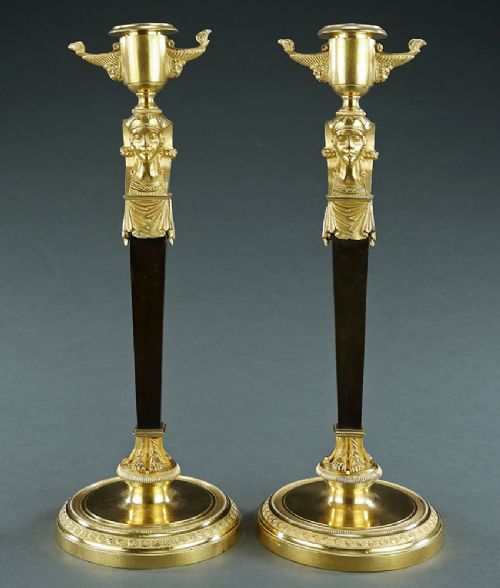
Originating predominantly from French workshops, these pieces draw upon neoclassical and Regency idioms, often incorporating rams' heads, caryatids, and Egyptian revival details. Buyers are most likely to meet nineteenth-century interpretations that bridge functional lighting with sculptural presence.
Materials and construction
Maker workshops relied heavily on cast bronze and brass, utilising mercury gilding to produce the bright ormolu surfaces characteristic of the style. Patinated bronze provided a dark, contrasting finish that highlighted the crisp detail of chased acanthus leaves and classical figures.
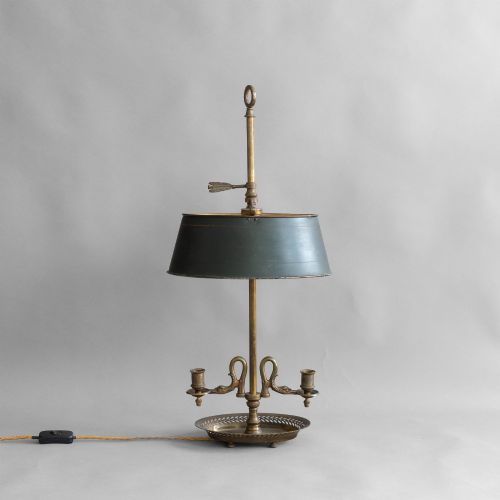
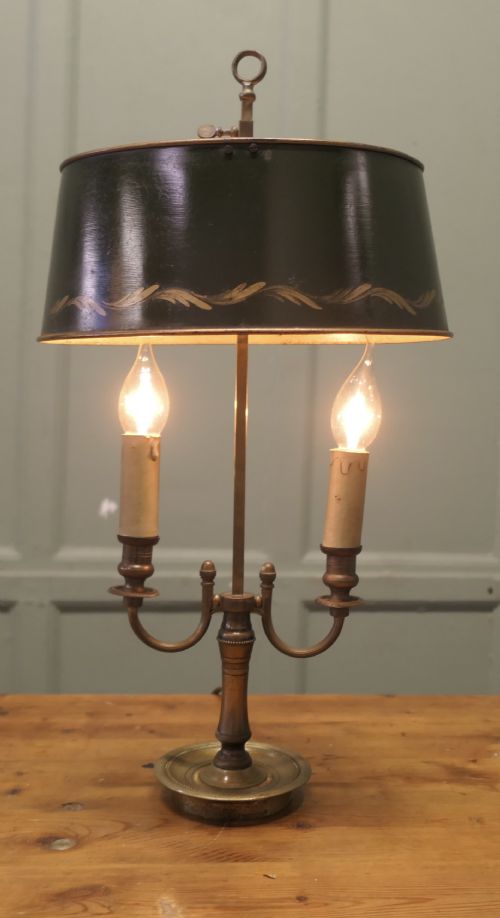
White marble frequently forms the plinths and columns, turned and polished to support heavy metal mounts. Toleware shades, painted in dark green or muted tones, appear on bouillotte desk lamps to direct task lighting downwards.
The listings combine nineteenth-century periods with Neoclassical, Regency, and Louis XVI styles, dominated by ormolu and patinated bronze.
Evaluating the pieces
Quality rests principally in the crispness of the chasing and the depth of the metalwork. Superior examples exhibit sharp, hand-finished details on foliage and figures, whereas lesser pieces show softer, blurred casting lines from worn moulds.
The weight of the bronze and the choice of materials dictate the standard of the object. Heavy, solid cast components and genuine white marble bases separate master-patterned output from lighter, mass-produced commercial variations.
Pierre Philippe Thomire·Rabiat·Auguste Cain
The French Empire Table Lighting Glossary
- Ormolu
- Gilded bronze produced by applying a mercury and gold amalgam to a bronze base and heating it until the mercury vaporised. This historic fire-gilding technique yields a deep, warm lustre.
- Bouillotte lamp
- An adjustable desk lamp featuring a central standard, multiple candle arms, and a painted metal shade. It was originally designed for the card game bouillotte.
- Candelabra
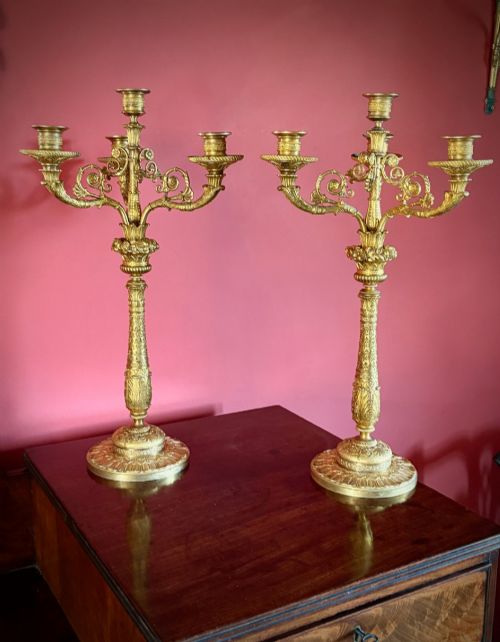
- A branched lighting fixture holding multiple candles or lamp bulbs. In this category, they often feature central figural shafts.
- Patinated bronze
- Bronze treated with chemical solutions to create a dark surface colour. This dark tone provides contrast against bright gilt mounts.
- Caryatid
- A sculpted female figure serving as an architectural support. They frequently appear as the central shafts of candlesticks and lamps.
French Empire Table Lighting: Frequently Asked Questions
What is french empire table lighting?
French empire table lighting comprises candelabra, candlesticks, and lamps produced in the neoclassical taste associated with the early nineteenth century. These objects use classical motifs like columns, laurel wreaths, and military trophies.
They serve as both functional illumination and sculptural ornaments for sideboards, desks, and mantlepieces. The category spans period originals and later nineteenth-century revivals.
How do I use a bouillotte lamp?
A bouillotte lamp places a toleware shade over a central column to cast light downward onto a surface. The shade typically adjusts up and down on a central rod to control the spread of light.
Historically used for card playing or reading at a desk, today it functions well as task lighting or ambient accent lighting in a traditional study.
How are candelabra and candlesticks different?
Candlesticks hold a single candle upon a vertical shaft and base. Candelabra feature branched arms that support multiple candles from one central standard.
Both forms appear frequently in this category, with many period candlesticks later wired to function as electrical table lamps.
Are these pieces wired for electricity?
Many items in this category began as oil, candle, or gas fixtures and have subsequently been adapted for modern electrical use. Conversions vary from discreet internal wiring to older exterior setups.
Buyers should examine how the wiring enters the base or candle nozzle to assess the reversibility of the conversion.