






French Empire Style Frame
These pieces carrying a french empire style frame bring neoclassical grandeur and distinct military-inspired ornamentation into a room.
French Empire Style Frame
A french empire style frame is encountered across various decorative forms, principally surrounding mirrors, portraits, and photographs. These objects channel the heavy classical influence of the early nineteenth century, combining architectural discipline with lavish symbolic detail. Pieces range from nineteenth-century originals to later revivals produced into the twentieth century.
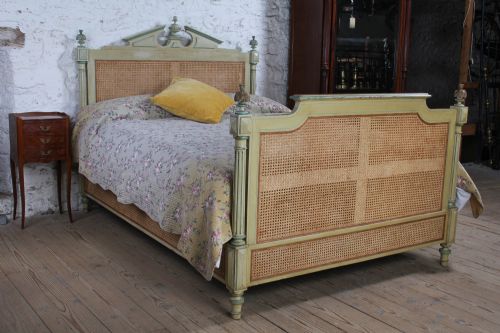
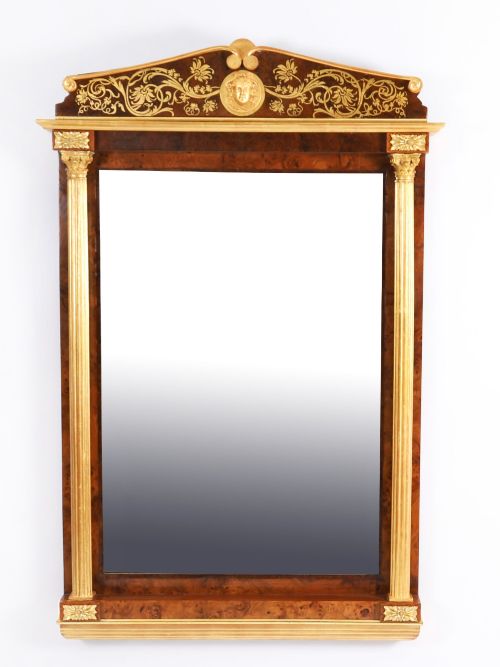
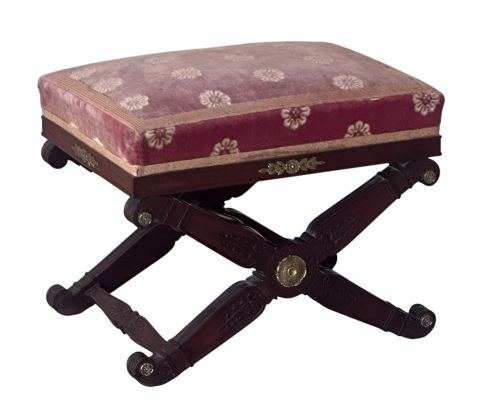
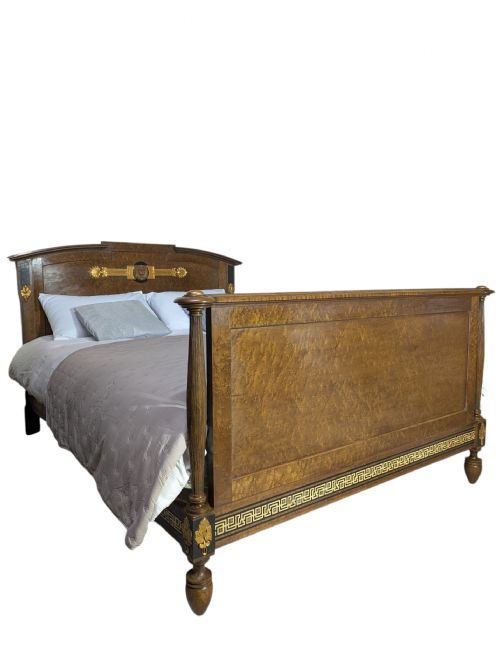
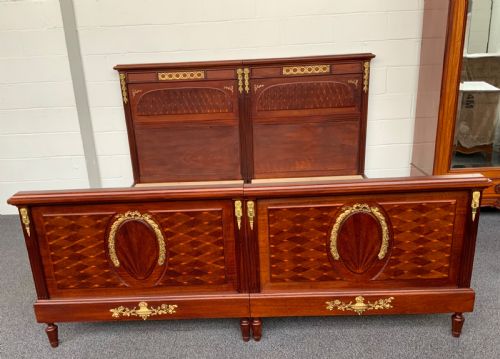
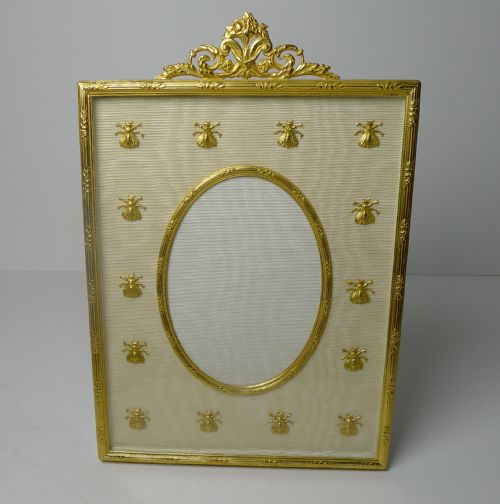
Buyers seeking this aesthetic will find items constructed from rich timbers like mahogany alongside gleaming gilt bronze and ormolu mounts. The forms borrow heavily from classical antiquity, often integrating motifs such as Napoleonic bees, laurel wreaths, and martial trophies. While picture and photograph frames provide a focused example of the style, larger mirrors and upholstered beds also carry the characteristic framing details.
The selection reflects both true period craftsmanship and later stylistic revivals spanning the nineteenth and twentieth centuries. The unifying thread remains the commitment to symmetrical balance, bold proportions, and the luxurious application of metalwork. Each piece demonstrates how classical ideals were reinterpreted for domestic interiors across successive generations.
How they were made
Construction relies heavily upon dense hardwoods, with mahogany and fruitwoods serving as the primary structural timbers for larger frames and beds. These woods provide a stable, dark foundation that contrasts sharply with applied metal ornamentation. Cabinetmakers utilised precise joinery to ensure stability, particularly on expansive architectural mirrors and bed frames.
Surface enrichment defines the aesthetic, executed through fire-gilded ormolu, cast brass, and intricate giltwood carving. Ormolu mounts - finely chased bronze coated in a gold amalgam - are pinned or screwed directly to the timber substrate to create high-relief classical motifs. Gilding techniques applied to wood involve laying thin gold leaf over a prepared gesso base, which is then burnished to achieve variable lustres.
French Empire Style Frame Retail Price Guide 2026
Typical asking prices for french empire style frame among the pieces listed under this phrase on Sellingantiques today, from the lower quarter to the upper quarter. They describe what is for sale here now, not the wider market.
Listings feature items spanning the nineteenth and twentieth centuries, utilising mahogany, ormolu, and giltwood across various domestic forms.
What varies in quality
The distinction between ordinary and exceptional examples rests primarily in the crispness and depth of the metal chasing and wood carving. Superior ormolu mounts exhibit sharp, hand-finished details where individual feathers, foliage, or facial expressions remain distinct rather than softened by mass production. Lesser examples rely on shallow castings with blurred edges and minimal secondary hand tooling.
Material selection and structural integrity further divide the range. Top-tier pieces employ premium timbers like figured mahogany or plum pudding mahogany, paired with heavy, genuine fire-gilding that retains a warm, deep hue over time. Inferior pieces often substitute lighter woods with hasty surface treatments or utilise brittle brass alloys that lack the rich coloration of period bronze.
Boin Taburet
The French Empire Style Frame Glossary
- Ormolu
- Finely chased bronze that has been coated in a gold amalgam and fired, producing a rich and enduring golden surface finish. This technique was widely utilised for mounts on furniture and picture frames during the nineteenth century.
- Neoclassical
- A style spanning the late eighteenth and early nineteenth centuries that drew direct inspiration from the art and architecture of classical Greece and Rome. It emphasises symmetry, straight lines, and classical motifs.
- Giltwood
- Timber, often gesso-prepared and carved, that has been decorated with a thin layer of gold leaf. This material catches the light and adds grandeur to mirrors and picture frames.
- Parquetry
- Geometric mosaic woodwork arranged in precise patterns across a surface, often utilising contrasting timbers like mahogany and fruitwood. It provides decorative complexity to larger panels and bed frames.
French Empire Style Frame: Frequently Asked Questions
What defines a french empire style frame?
These frames are characterised by their heavy neoclassical influence, often incorporating symmetrical architectural lines and bold proportions.
They frequently feature distinct cast metal mounts, such as ormolu or gilt bronze, displaying classical motifs like bees, laurels, and military trophies.
How do I identify the period of these pieces?
Distinguishing between an original nineteenth-century piece and a later twentieth-century revival requires careful inspection of the construction methods, timber choice, and metal casting quality.
Earlier pieces often exhibit hand-chased bronze mounts and dense old-growth mahogany, whereas later revivals may show more standardised machine tooling and lighter secondary woods.
Where should I place a giltwood mirror?
These mirrors serve as dramatic focal points when hung above mantelpieces, console tables, or in grand hallways where they can reflect light and open up the room.
Their substantial gilded frames require a secure wall fixing and work best against plain or softly coloured walls that allow the ornate woodwork to stand out.
How should I care for ormolu mounts?
Maintain metal mounts by gently dusting them with a soft, dry cloth to prevent the accumulation of grit within the recessed chased details.
Avoid abrasive cleaners or chemical polishes, as these can strip the original gilding and permanently damage the delicate antique surface.