


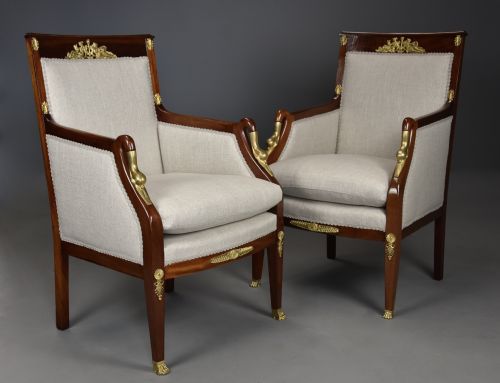


French Empire Style Chair
A french empire style chair brings architectural dignity and classical proportion to a room, drawing on centuries of European design.
French Empire Style Chair
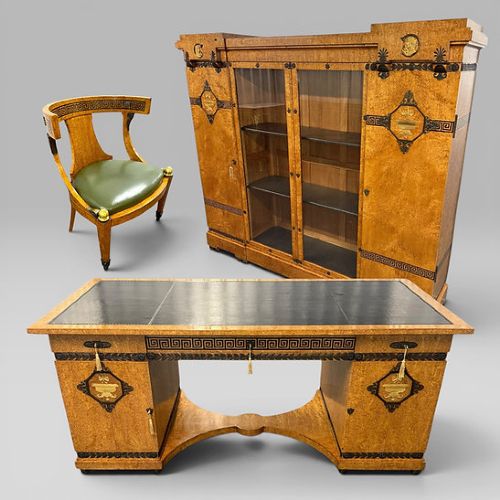
A french empire style chair encompasses seating forms designed for formal salons, libraries, and studies, drawing from the nineteenth century onward through revivals. Buyers encounter open armchairs, side chairs, and desk chairs originating from periods including the nineteenth century and early twentieth century revivals.
The selections span distinct stylistic interpretations, ranging from strict nineteenth century examples to later Empire revival pieces and related French Restauration or Consulate designs. Forms vary from monumental library armchairs to delicate salon chairs and piano stools.
Materials and Construction
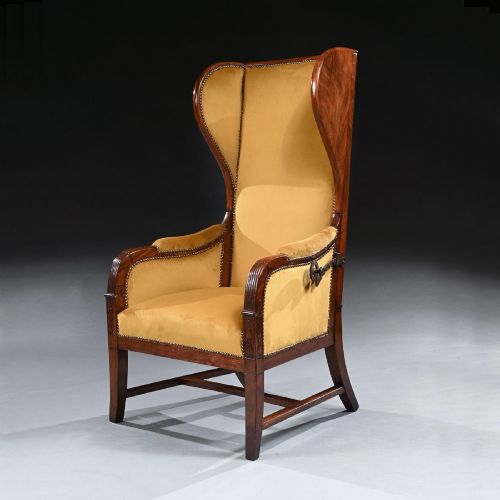
Makers utilised dense timbers such as mahogany and occasional rosewood or cherry as the primary structural frame, shaping the wood to achieve clean architectural lines. Upholstery relies upon traditional fabric, leather, and textile coverings tailored to fit the specific chair geometry.
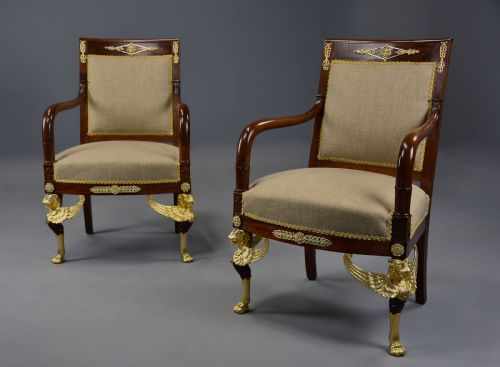
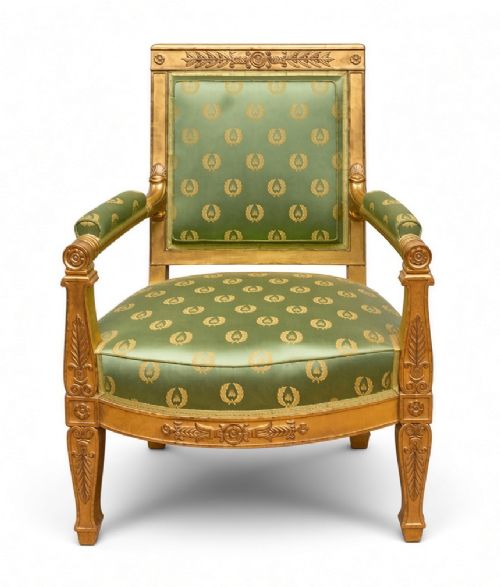
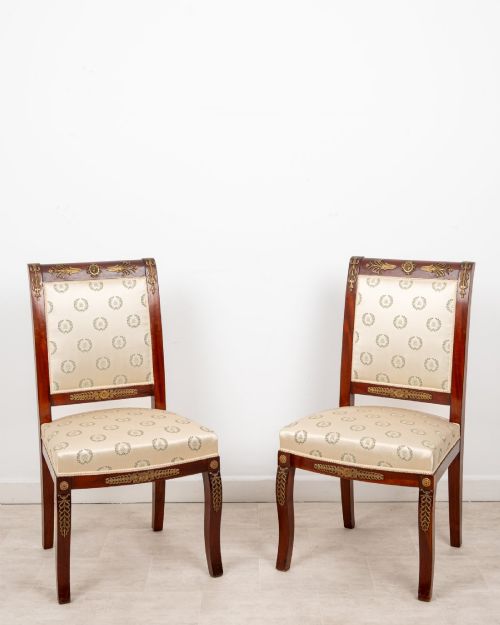
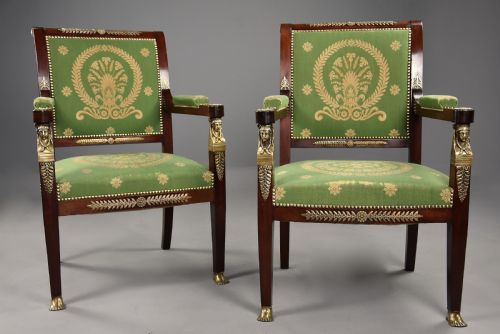
Decorative enrichment depends heavily on cast metal elements, utilising brass, ormolu, and gilt bronze mounts secured to the timber frame. Giltwood, painted surfaces, and parcel silvering further define the classical aesthetic.
Adjustable screw top mechanisms allow certain piano stools to spin through the centuries with theatrical ease.
Execution and Detail
The distinction between tiers rests upon the crispness of the timber carving and the precision with which metal mounts are fitted to the wood. Finer examples display meticulously chased ormolu and substantial mahogany framing rather than simplified secondary woods.
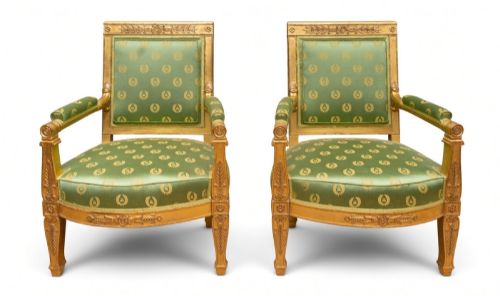
Original mounts and unified suite integrity elevate the status of a piece, separating standard revival iterations from items demonstrating superior craftsmanship and period authenticity.
Jacob Desmalter·Mercier Frères
The French Empire Style Chair Glossary
- Fauteuil
- An open-arm chair with upholstered seat and backrest, typically featuring exposed wood framing. These open armchairs form a core part of traditional French seating.
- Ormolu
- Gilded bronze applied as decorative mounts onto furniture frames. This technique provides the bright metallic ornamentation characteristic of the style.
- Bergère
- An enclosed upholstered armchair with solid upholstered sides resting on an exposed wooden frame. They offer a deeper, more enclosed seat than standard open armchairs.
- Curule stool
- An ancient Roman magistrate form adapted into classical revival seating with intersecting curved legs. They frequently appear with gilded finishes.
- Gondola chair
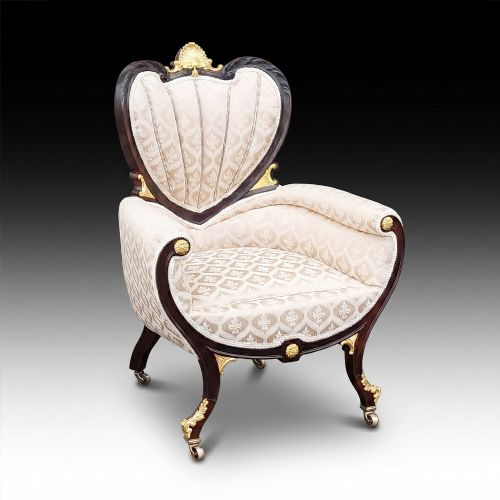
- A seating form featuring a curved, enclosing backrest resembling the shape of a Venetian boat. These chairs provide a compact profile suitable for salons.
French Empire Style Chair: Frequently Asked Questions
What defines a french empire style chair?
A french empire style chair is characterised by classical architectural lines, heavy reliance on mahogany timber, and applied brass or ormolu mounts reflecting nineteenth century design ideals.
These pieces draw inspiration from ancient Roman, Greek, and Egyptian motifs adapted for formal European interiors.
How do I identify an original nineteenth century piece?
Examination of the timber construction, hand-cut joinery, and the patination of the wood and metal mounts helps distinguish period pieces from later revivals.
Makers of the nineteenth century employed traditional assembly methods and heavy hardwoods that differ from twentieth century manufacturing techniques.
Where were these chairs used historically?
These seating forms belonged in formal drawing rooms, libraries, studies, and state apartments where dignified interior decoration mattered.
Armchairs and desk chairs served practical seated duties while projecting an air of classical authority.
How should I care for the wood and metal mounts?
Maintaining the timber requires occasional gentle dusting and the avoidance of harsh chemical polishes that might degrade historic finishes.
Metal mounts should be kept dry to preserve the original gilding and ormolu lustre without abrasive cleaning.