

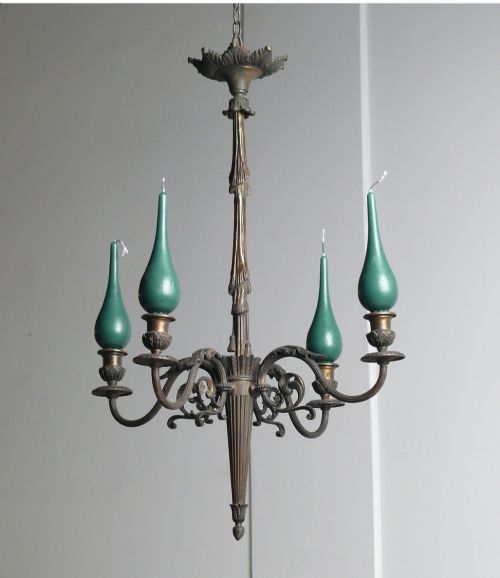
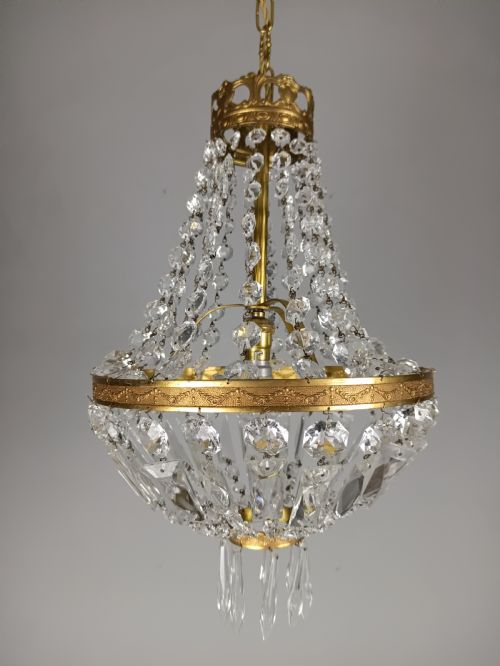

French Empire Pendant Light
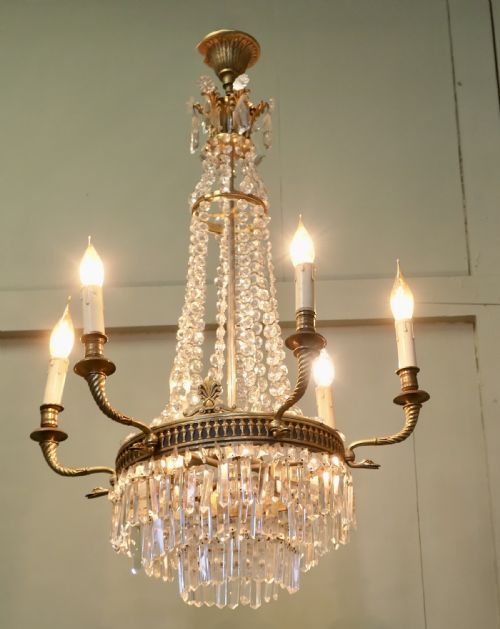
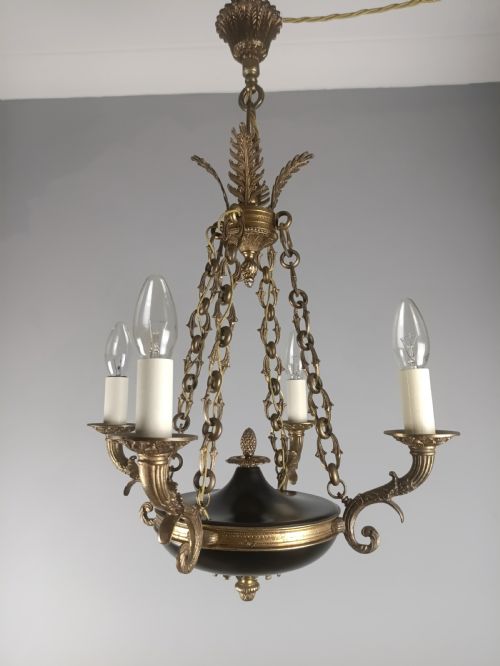
A french empire pendant light brings classical proportion and glittering crystal drops into a room, offering the grandeur of historical French salons.
French Empire Pendant Light
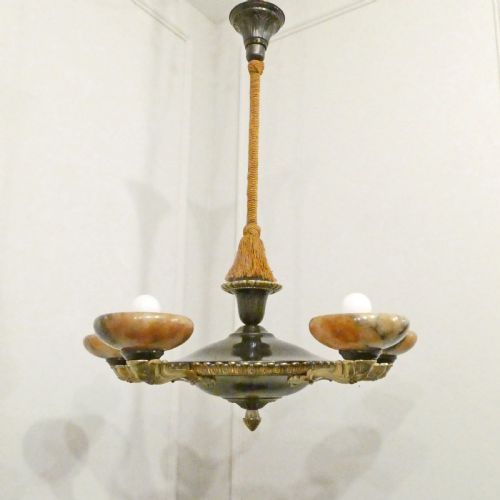
A french empire pendant light combines classical architectural forms with ornate hanging drops, drawing inspiration from neoclassical design and revival periods.
The selections available here span from the nineteenth century into the twentieth century, encompassing styles such as French Neoclassical, Empire Revival, and Louis Revival.
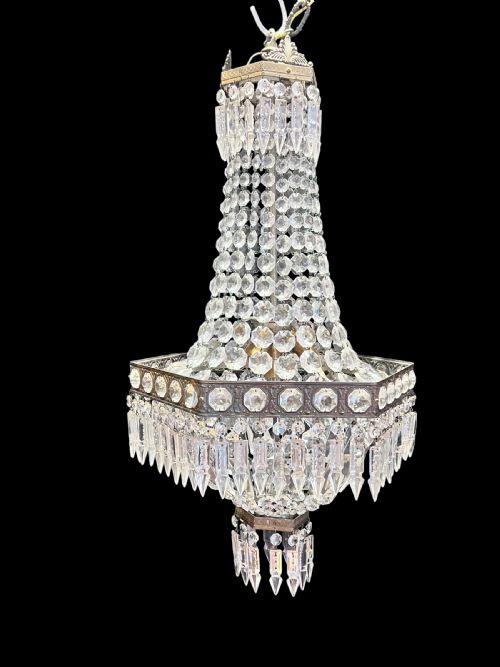
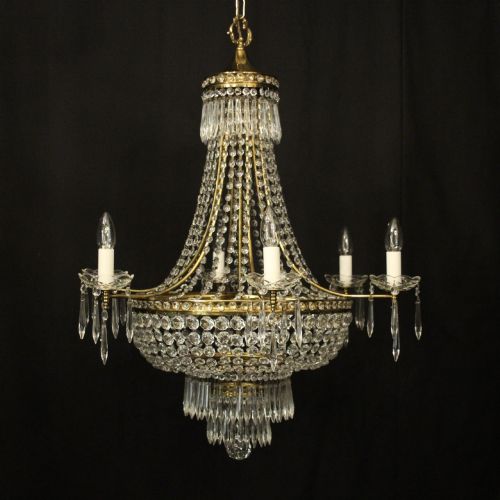
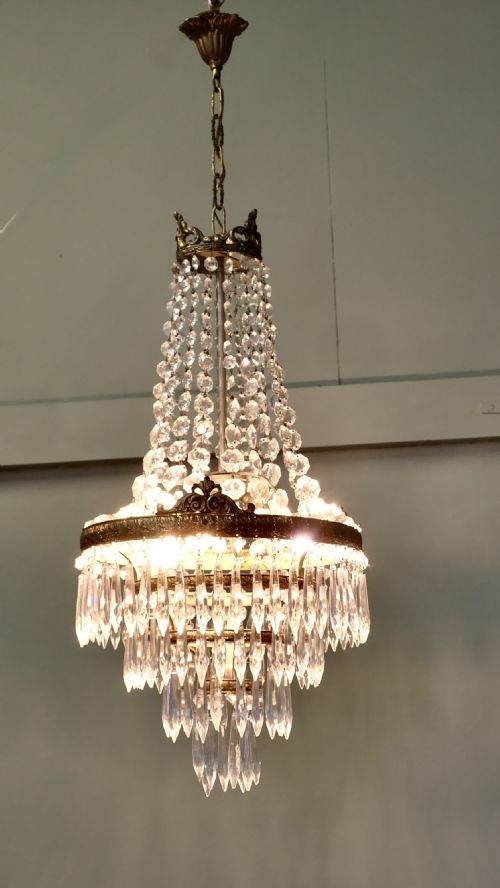
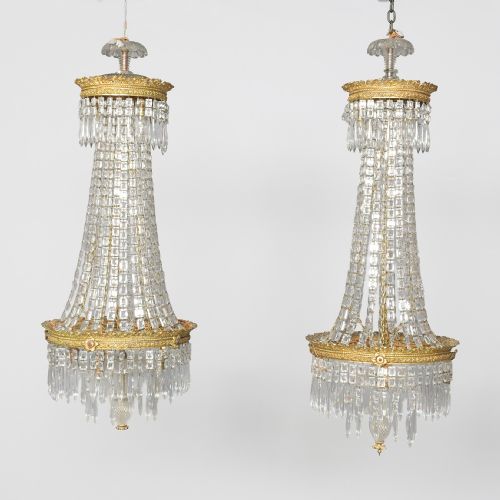
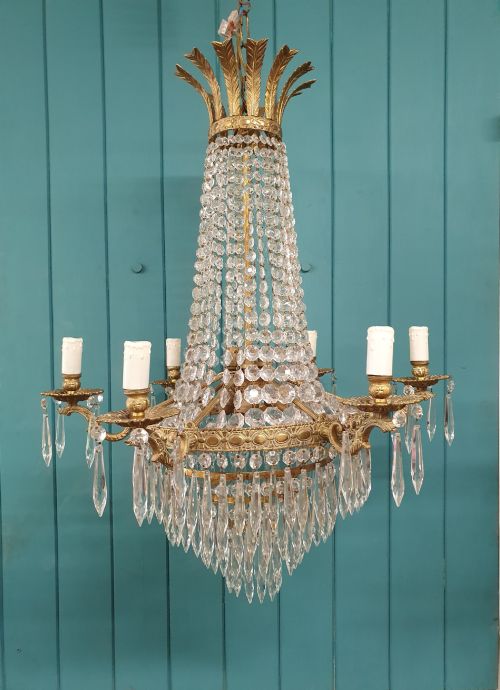
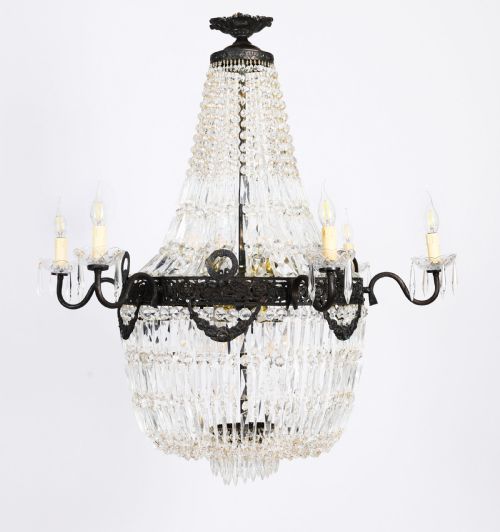
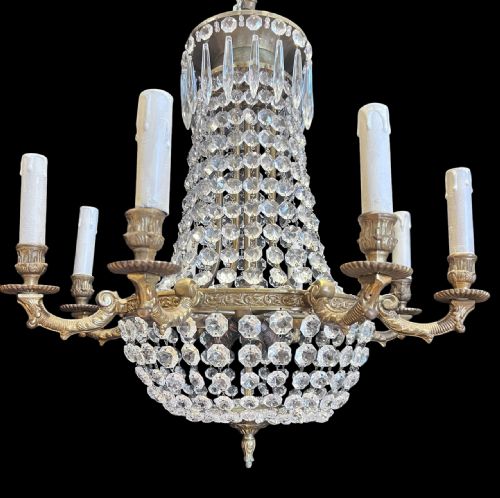
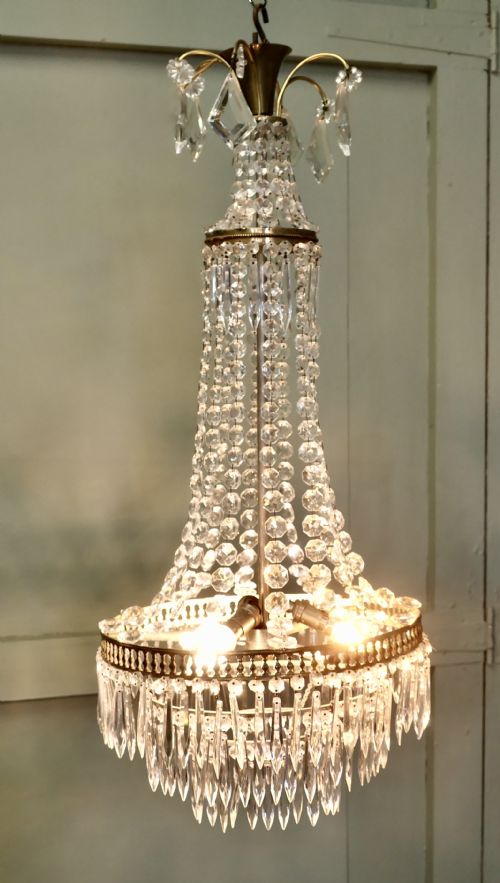
Common configurations include multi-light chandeliers, basket fittings, and tent and waterfall designs that feature tiered arrangements of glass beads and prisms.
Assessing Quality and Execution
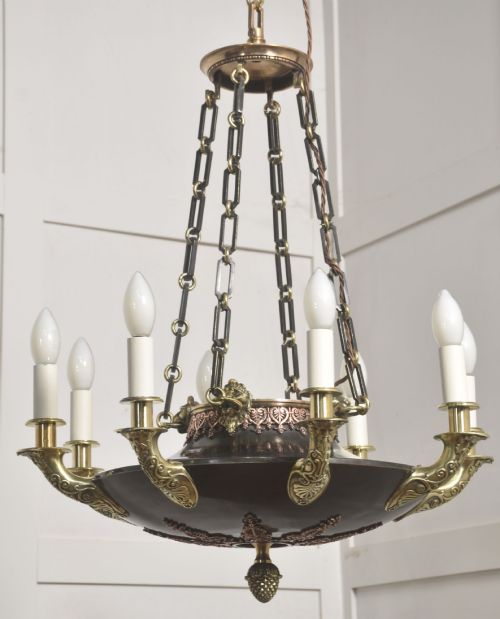
Quality rests in the crispness of the bronze or brass casting, where finely chased foliage and classical motifs distinguish superior metalwork.
The clarity and cut of the crystal prisms dictate how light refracts through the tent and waterfall drops, separating standard pieces from finer examples.
Proportion and structural complexity, such as multi-tiered arm arrangements and integrated bronze mounts, signal higher levels of period craftsmanship.
One diminutive prison bag chandelier measures a mere eight inches.
Wedgwood
The French Empire Pendant Light Glossary
- Tent and waterfall
- A chandelier configuration featuring an upper conical section of beads known as a tent, flowing down into a wider cascade of crystals.
- Gilt bronze
- Metal alloy treated with a gold finish, frequently employed in classical French lighting to provide a warm, reflective surface.
- Basket chandelier
- A lighting form where the lower section of crystals is gathered into a rounded, bowl-like container beneath the central frame.
- Prism
- A cut glass element designed to refract light into spectral colours, suspended in large numbers across Edwardian and earlier fixtures.
French Empire Pendant Light: Frequently Asked Questions
What defines a french empire pendant light?
These fixtures draw heavily on classical antiquity, featuring symmetrical bronze or brass frames adorned with cascading crystal drops and geometric lines.
They often incorporate architectural motifs like laurel leaves, urns, and neoclassical swags that reflect the tastes of nineteenth and early twentieth-century revival periods.
How do I choose the right size?
Consider the height of your ceiling and the floor area of the room before selecting a multi-light chandelier or a single-light basket fixture.
Larger spaces accommodate sixteen-light tent and waterfall designs, while smaller rooms benefit from compact lantern or single-light configurations.
Where should I hang these lights?
These pieces suit high-ceilinged entrance halls, formal dining rooms, and drawing rooms where their reflective crystal prisms can catch natural and artificial light.
Ensure adequate suspension clearance so the lower drops or baskets hang safely above walkways and furniture.
How do I distinguish nineteenth-century pieces?
Examine the metal casting, the hand-cut quality of the crystal prisms, and the specific patination on the bronze or brass components.
Revival pieces from later decades often imitate these earlier neoclassical proportions while utilising machinery suited to twentieth-century production.