

French Empire Light
French empire light fixtures bring classical grandeur to domestic interiors through heavy gilded metalwork and balanced neoclassical forms.
French Empire Light
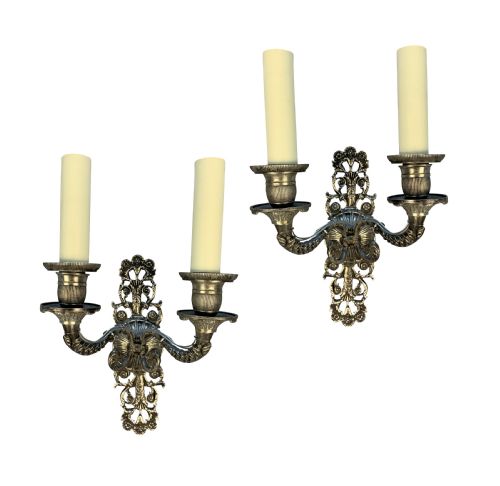
A search for a french empire light reveals formal chandeliers, wall sconces, candelabra, and table lamps rooted in nineteenth-century classicism. These pieces draw heavily on classical antiquity, incorporating symbols like urns, wreaths, and classical figures into everyday domestic illumination.
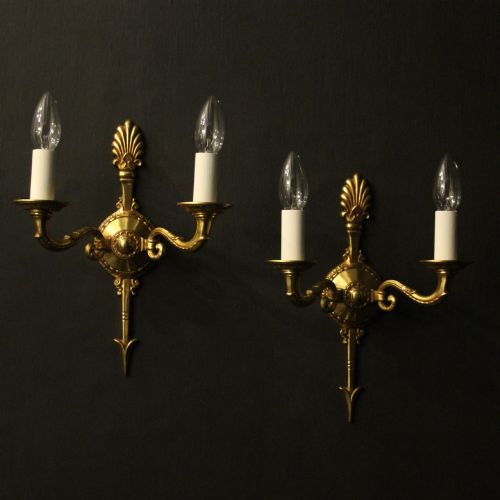
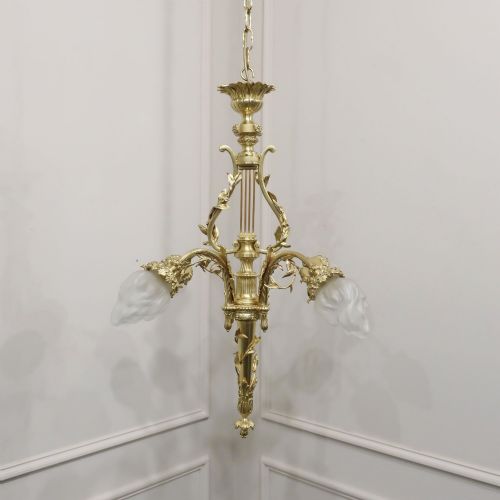
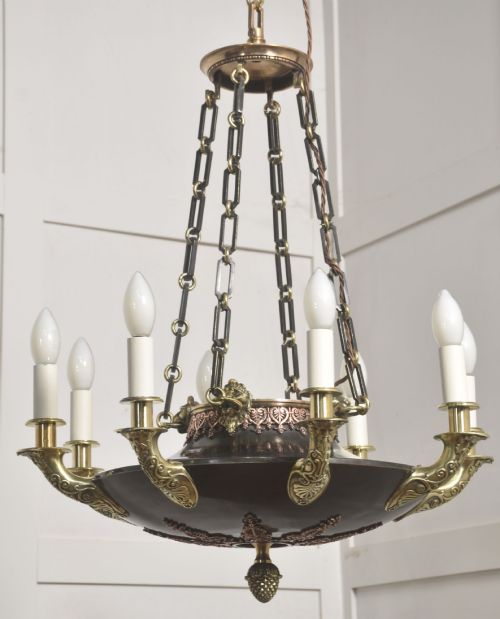
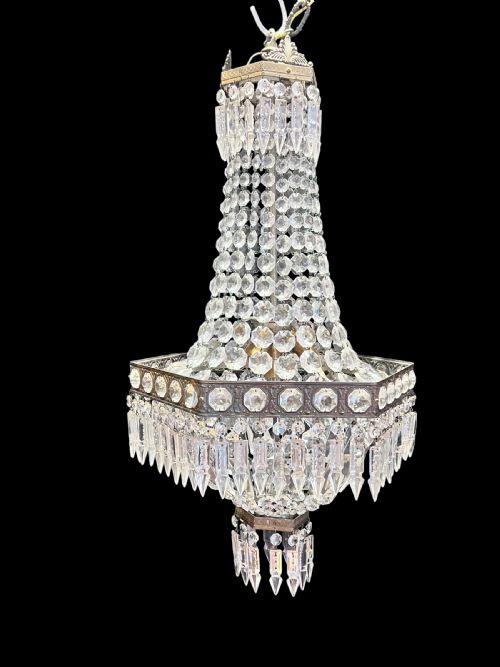
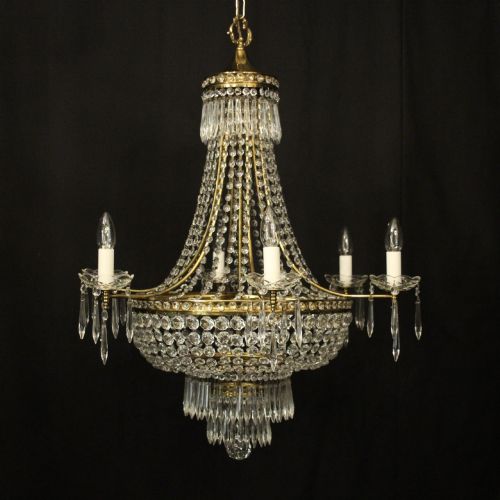
The most common items found in this category are wall lights and multi-armed chandeliers, often paired with tent and waterfall crystal arrangements. Pieces also span related nineteenth-century iterations such as Regency, Louis XVI, and later revival movements from the early twentieth century.
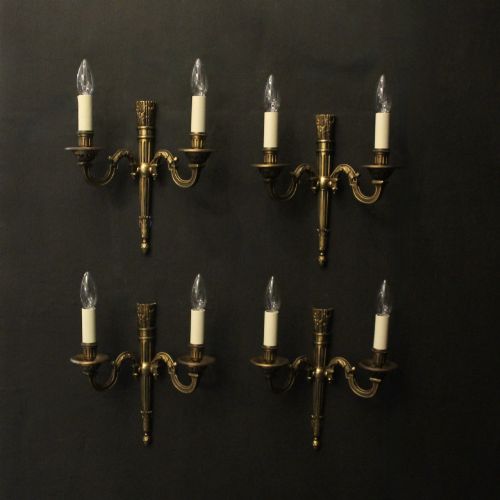
Lighting formats range from small single-arm wall sconces to large ballroom chandeliers carrying numerous lights. Buyers will also encounter desk lamps, bouillotte lamps, and heavy bronze or brass floor standards.
Materials and Construction
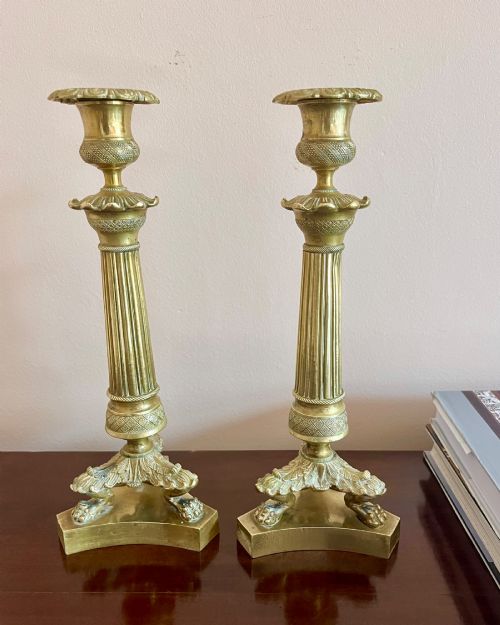
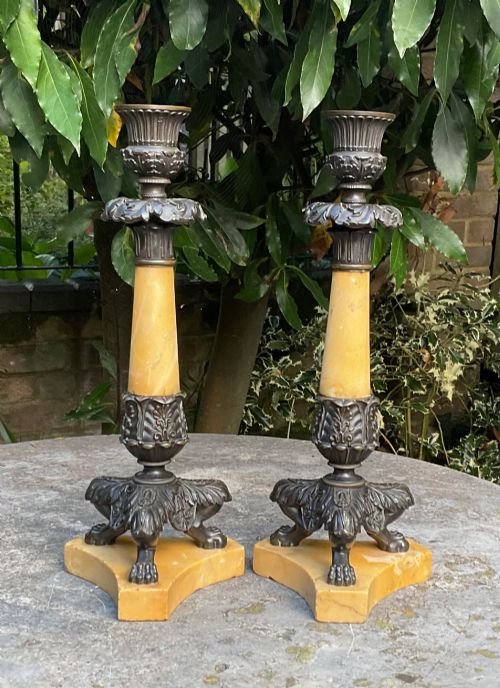
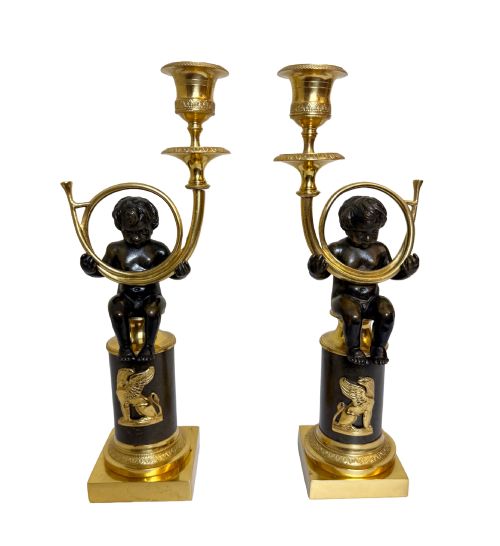
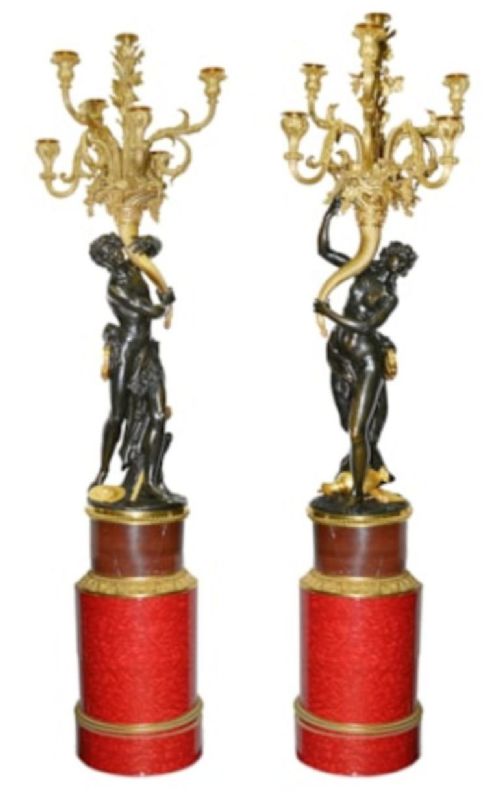
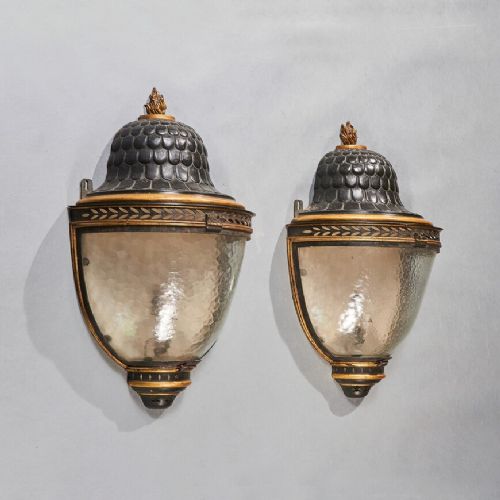
The primary metals utilised across these fixtures are bronze and brass, frequently treated with fire gilding to create rich ormolu surfaces. Cast elements are combined with patinated bronze to create tonal contrast on figural candlesticks and wall lights.
Decorative glass plays a vital supporting role, appearing as cut crystal droplets in tent and waterfall chandeliers, or as solid alabaster bowls in later Art Deco interpretations. White and coloured marble bases frequently anchor heavy candelabra and table lamps.
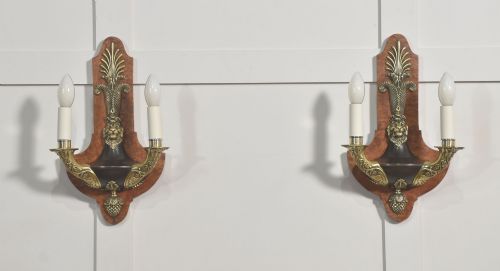
Secondary structural materials include tole peinte for painted tin lanterns and lamp shades, alongside occasional burr walnut framing on specialised wall brackets. Metal components are traditionally cast, chased by hand, and assembled with threaded screws or pins.
Listings feature brass, bronze, ormolu, glass, crystal, and marble formed into chandeliers, candelabra, wall lights, and lamps across multiple historical periods.
Judging Quality and Execution
The distinction between ordinary and exceptional examples lies in the crispness of the metal chasing and the depth of the gilding. High-tier pieces exhibit sharp, deeply carved detail in foliage and figural elements, whereas lower-tier production often shows softer, shallower casting marks.
Material selection dictates overall weight and presence, with genuine ormolu and heavy cast bronze sitting above plated brass alternatives. The quality of associated glass is also telling, as hand-cut crystal drops refract light far more cleanly than pressed glass substitutes.
Pierre Philippe Thomire
The French Empire Light Glossary
- Ormolu
- Gilded bronze produced by applying a mercury and gold amalgam to a bronze base before heating. This historical technique creates a durable, warm golden finish characteristic of high-end classical metalwork.
- Patinated bronze
- Metal that has been chemically treated to produce a dark, uniform surface colour. It provides a stark visual contrast against bright ormolu mountings.
- Tent and waterfall
- A chandelier configuration featuring strings of small crystals forming an upper cone, dropping down into a tiered cascade. This design maximises light reflection across a room.
- Tole peinte
- Painted sheet metal used for decorative lanterns and shades. It introduces rich colour blocks, often in greens or dark tones, paired with gilt accents.
- Bouillotte lamp
- An adjustable desk lamp featuring a central shaft, a shade, and multiple candle arms. It was originally designed for the card game bouillotte.
- Candelabra
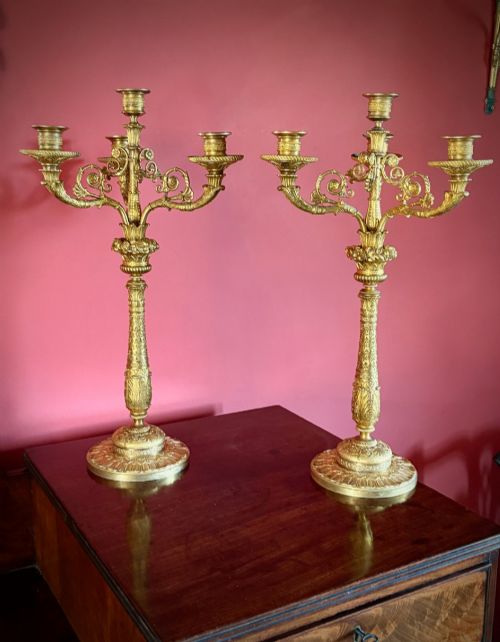
- A branched candlestick designed to hold multiple candles simultaneously. These items often stand on marble bases and feature elaborate figural supports.
French Empire Light: Frequently Asked Questions
How do I identify a true period piece?
Examine the weight of the metal and the method of construction behind the fittings, as nineteenth-century pieces utilise heavy cast bronze and hand-cut threading rather than modern machine screws.
Look closely at the chasing on the ormolu surface, because period makers hand-tooled the bronze after casting to sharpen details before applying the gold amalgam.
Can these chandeliers be rewired safely?
Most antique metal and crystal chandeliers accept modern internal wiring without altering their external appearance or historic structure. Professional electricians can thread modern flex through existing brass channels.
It remains important to check that the hanging loop and ceiling plate can support the considerable dead weight of cast bronze and crystal components.
Where should I hang a tent and waterfall chandelier?
These large multi-light fixtures require adequate ceiling height to allow the crystal drops and cascading arms to hang clear of daily traffic. Formal reception rooms and high-ceilinged dining spaces suit their grand proportions best.
Positioning them centrally ensures the cut glass catches natural light during the day as well as artificial illumination at night.
What is the difference between Empire and Louis XVI styles?
Louis XVI design leans toward lighter, rectilinear neoclassical proportions with restrained floral swags and ribbon motifs. The subsequent Empire style introduces heavier, more militaristic and classical Roman symbols, such as sphinxes, laurel wreaths, and dense ormolu mounts.
Both aesthetics share a reliance on symmetry, yet Empire pieces project a heavier and more imposing architectural presence.