
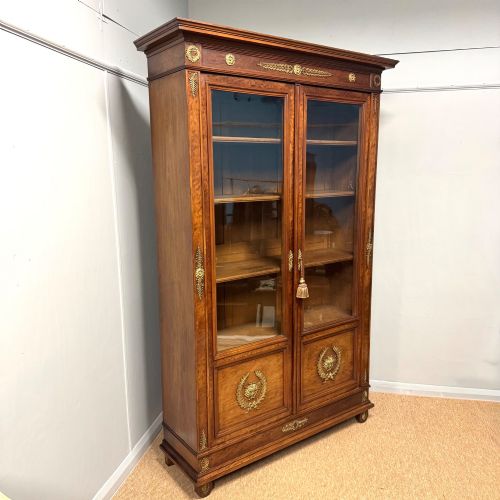
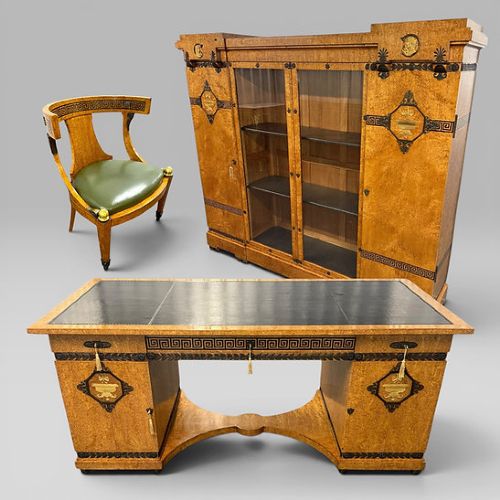
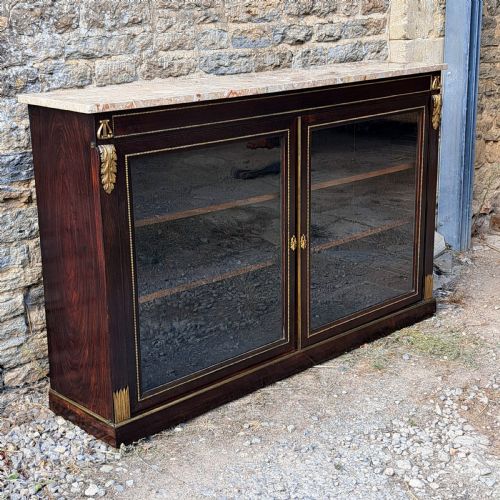
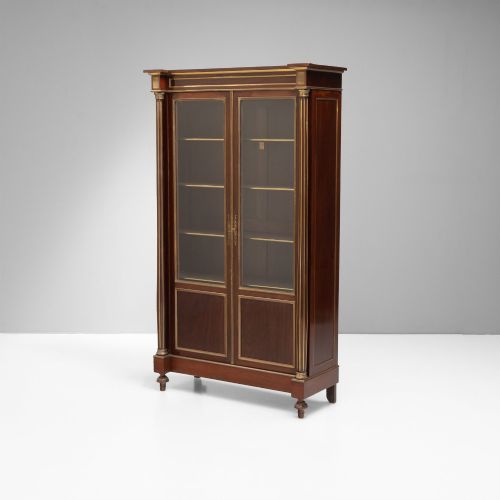




French Empire Glazed Bookcase
A french empire glazed bookcase brings grand architectural presence and disciplined neoclassical symmetry to a room, framing a collection behind clear glass.
French Empire Glazed Bookcase
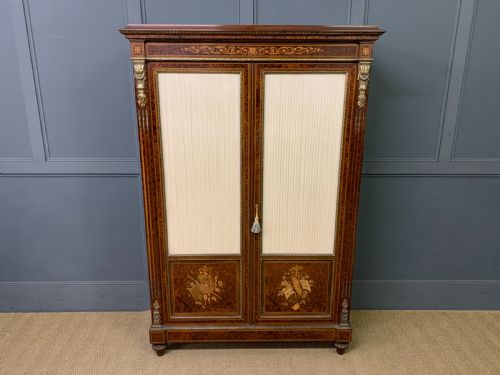
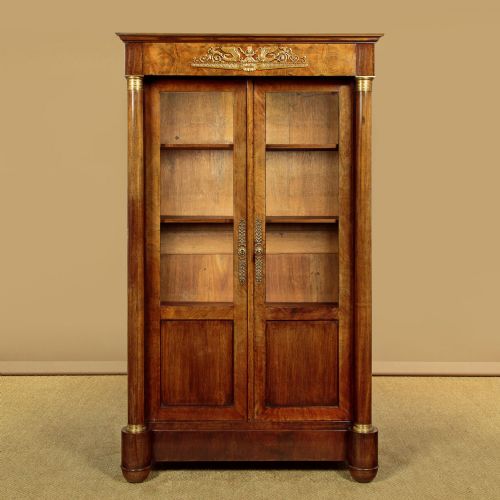
A french empire glazed bookcase combines large expanses of glazed display space with the structured, classical proportions typical of nineteenth-century continental cabinet-making. These pieces primarily date from the nineteenth century, including periods such as the Georgian era, 1860, 1870, 1880, 1890, and 1900, drawing on French Empire, Napoleon III, French Neoclassical, Regency, and Charles X styles.
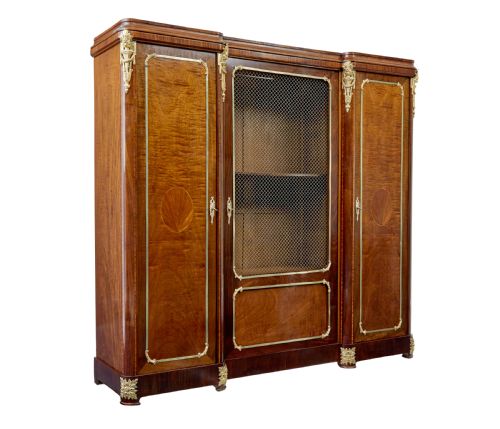
The primary forms on this page span bookcases, display cabinets, vitrines, and office sets, often functioning as substantial focal points in a study or salon. Buyers frequently encounter versions executed in mahogany, ebonised wood, or burr maple, frequently paired with contrasting timber veneers.
Makers and workshops of the period utilised distinct regional influences, ranging from strict French Empire designs to later nineteenth-century interpretations. Scale varies considerably from neat-sized cabinets to very tall library pieces.
Materials and construction methods
Cabinet-makers constructed the carcase of a french empire glazed bookcase using solid timbers like mahogany, oak, and satinwood, frequently applying decorative veneers such as plum pudding mahogany, amboyna, rosewood, and burr maple. Ebonised wood also appears among Napoleon III and late nineteenth-century examples, providing a dense, dark surface finish.
Metal mounts in ormolu, brass, and gilt metal accent the architectural lines of the cabinetry, fixed to the corners, friezes, and door surrounds. Glass panels are set into glazed doors to protect the volumes housed within while maintaining visibility.
Listings feature pieces spanning the nineteenth century, incorporating periods such as Georgian, 1860, 1870, 1880, 1890, and 1900.
Assessing quality in cabinet-making
Quality in a french empire glazed bookcase rests on the selection of timber veneers and the precision with which decorative elements are integrated. Figures like plum pudding mahogany or burr maple display deliberate grain matching across the doors and panels.
The refinement of cast metal mounts defines the upper tier of execution, where ormolu and gilt bronze details exhibit crisp chasing rather than soft, commercial casting. Structural integrity in the glazed doors and the weight of the timber carcase further separate standard production from exceptional pieces.
Mercier Frères
The French Empire Glazed Bookcase Glossary
- Ormolu
- Gilt bronze mounted onto furniture and decorative objects. This technique involves applying a gold-mercury amalgam to a bronze base, creating a durable golden finish characteristic of Empire pieces.
- Boulle marquetry
- An elaborate inlay technique utilising tortoiseshell and brass. This decorative method is often seen on Napoleon III pieces.
- Vitrine
- A glass-fronted display cabinet. These pieces are designed specifically to showcase collections of books or objects of curiosity.
- Ebonised
- Wood treated to imitate ebony. Cabinet-makers used this finish extensively during the nineteenth century to achieve a dense black surface.
- Neoclassical
- A style drawing inspiration from classical antiquity. It prioritises symmetry, clean lines, and restrained ornamentation.
French Empire Glazed Bookcase: Frequently Asked Questions
How do I style a french empire glazed bookcase?
A french empire glazed bookcase commands attention, making it ideal as the principal architectural element in a study, library, or drawing room. Pair its dark timbers and metallic mounts against neutral walls to let the grain and proportions stand out.
Organise the interior shelves with a mix of leather-bound volumes and curated decorative objects. Ensure the room has adequate ambient lighting to catch the gilt bronze mounts and glass reflections.
What periods do these bookcases cover?
The listings span the nineteenth century, encompassing specific decades from 1860 through to 1900. You will also find pieces associated with the Georgian era and Charles X.
Stylistic influences range from strict French Empire and French Neoclassical to later Napoleon III revivals. Each era brings subtle shifts in timber choice, from rich mahogany to ebonised finishes and exotic veneers.
How were these cabinets used?
Historically, a french empire glazed bookcase served to house and protect valuable libraries and scholarly texts. The glazed doors kept dust and moisture away from fragile paper and leather bindings.
Beyond functional storage, they functioned as display pieces in formal reception rooms. Owners used them to exhibit fine porcelain and decorative objects alongside their book collections.
How do I tell styles apart?
Early nineteenth-century French Empire pieces rely on strict symmetry, architectural pilasters, and restrained ormolu mounts. They often feature straight-grained or figured mahogany.
Later nineteenth-century Napoleon III examples frequently introduce ebonised wood, boulle marquetry, and more eclectic decorative flourishes. Examining the choice of secondary woods and the style of the cast mounts helps clarify the date.