

French Empire Brass Lighting
French empire brass lighting brings classical grandeur to a room through heavy metals, sharp casting and symmetrical forms.
French Empire Brass Lighting
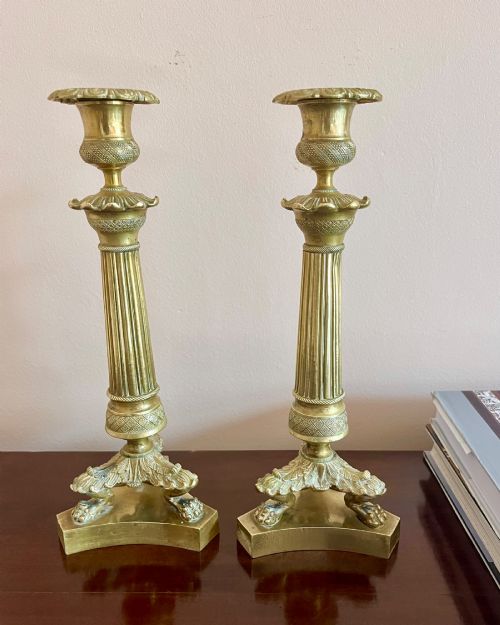
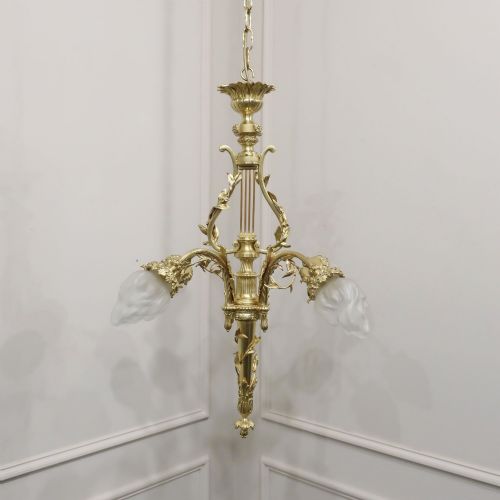
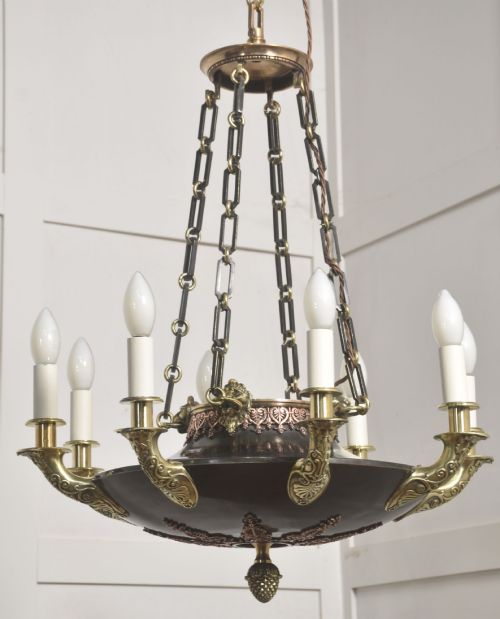
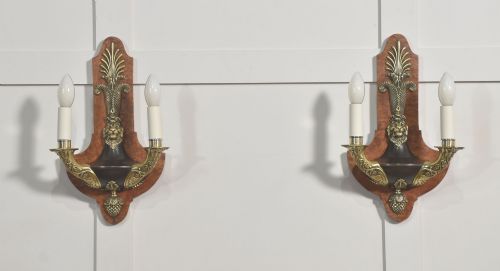
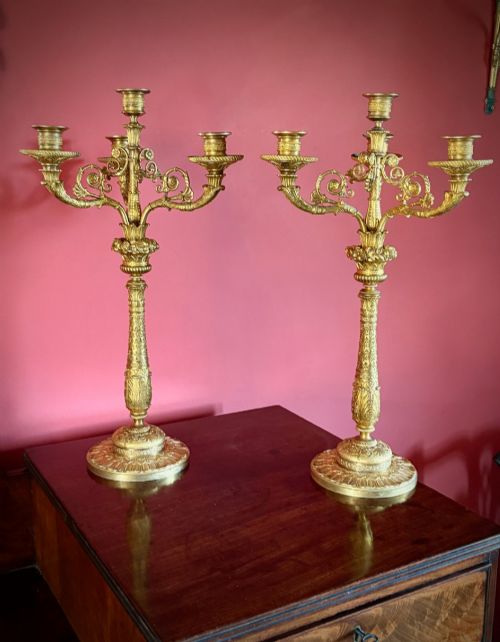
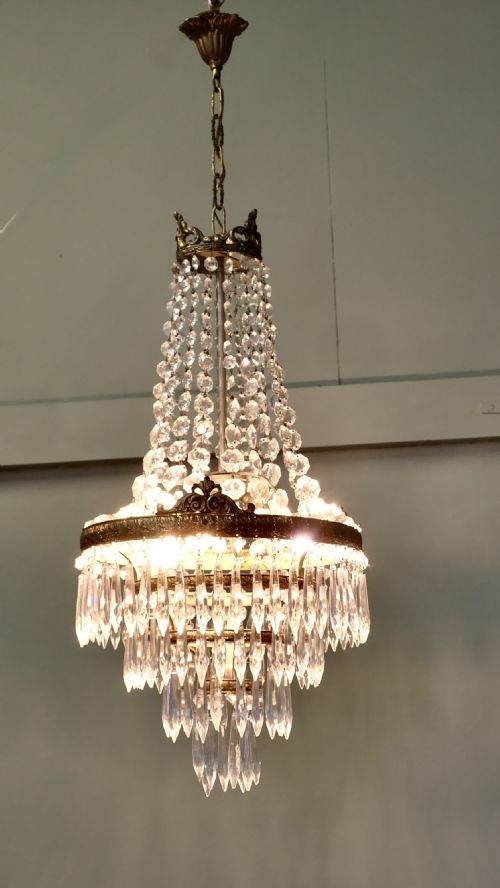
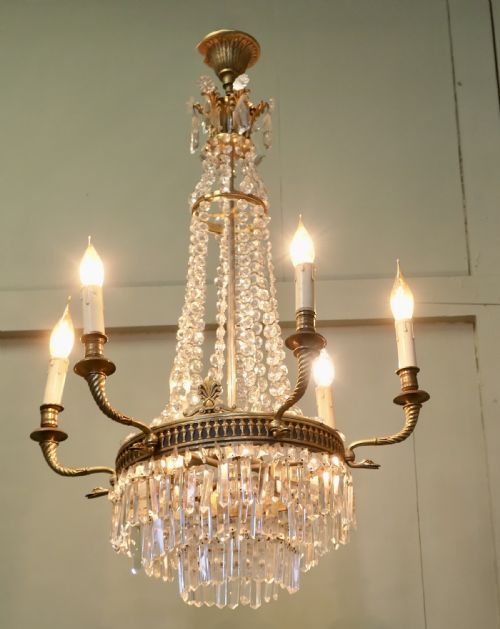
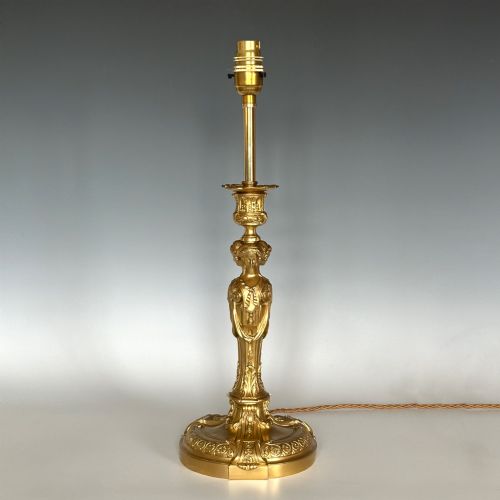
French empire brass lighting encompasses a range of stately fittings designed to illuminate grand interiors with classical authority. Buyers seeking french empire brass lighting will encounter substantial chandeliers, multi-branch candelabra, wall lights and table lamps originating from the nineteenth century into the twentieth century. These pieces draw upon french neoclassical and regency design vocabulary, incorporating architectural columns, urns and laurel motifs.
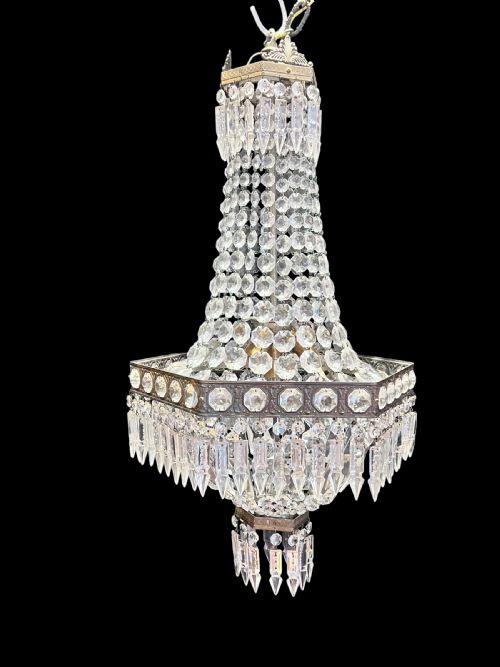
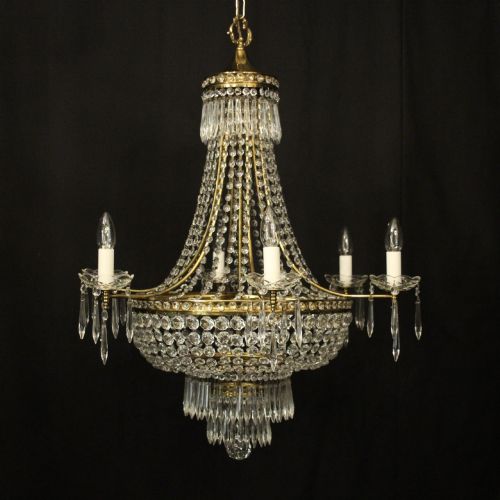
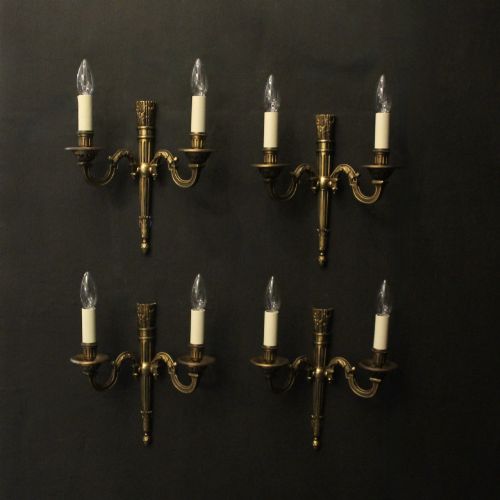
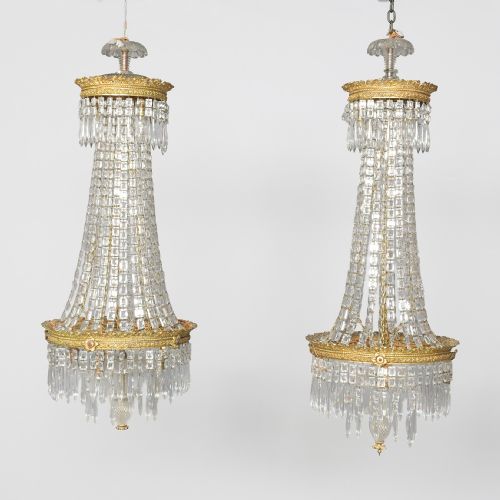
Chandeliers dominate the selection, frequently appearing in tent and waterfall configurations hung with cut glass or crystal drops. Smaller wall lights, sconces and candlesticks complement the larger ceiling pieces, often cast in pairs or sets of four. The assortment moves through the nineteenth century and touches later revival periods up to the mid-twentieth century, maintaining strict symmetry and classical proportions throughout.
Materials and construction
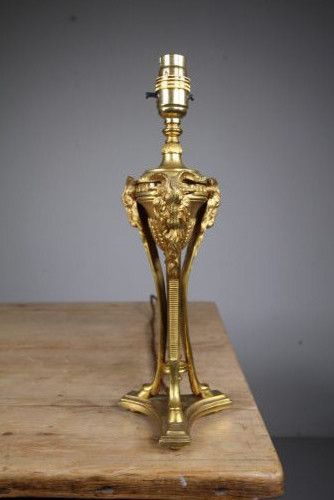
Makers utilised cast brass, bronze and ormolu alongside gilded surfaces to achieve the characteristic metallic lustre of these pieces. Metal components were laboriously cast, chased and gilded, then paired with contrasting materials such as white marble bases, alabaster bowls or painted toleware elements. Crystal drops and cut glass beads were wired by hand to metal frames, creating shimmering waterfalls and tent structures.
The construction relies on heavy mechanical joints, threaded rods and screws to secure the multi-arm branches and candle nozzles. Ormolu applications provide bright golden highlights against darker patinated bronze or green toleware bodies. Natural stone components like marble anchor the bases of table lamps and candlesticks, adding necessary weight to support the metalwork.
Materials documented across the inventory include brass, gilt bronze, crystal, ormolu, marble, toleware, and alabaster.
Casting and finishing
The integration of secondary materials further separates grades of production. Superior items employ heavy fire-gilt ormolu and substantial crystal prisms rather than pressed glass and thin lacquered brass. Solid marble socles and robust framing ensure that multi-arm chandeliers hang true and table lamps stand without wobble.
The French Empire Brass Lighting Glossary
- Ormolu
- Gilded bronze produced by applying a mercury and gold amalgam to a bronze base and heating it. This technique creates a durable, luminous golden finish characteristic of the period.
- Toleware
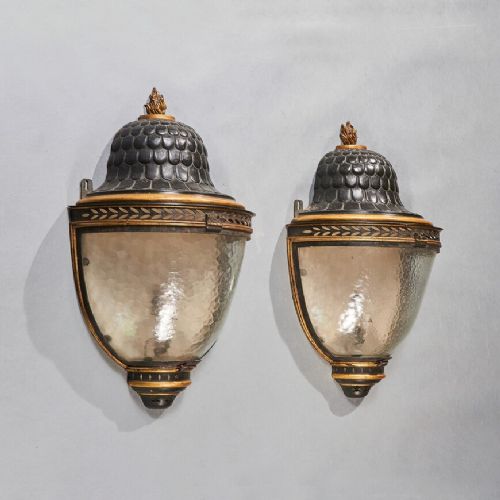
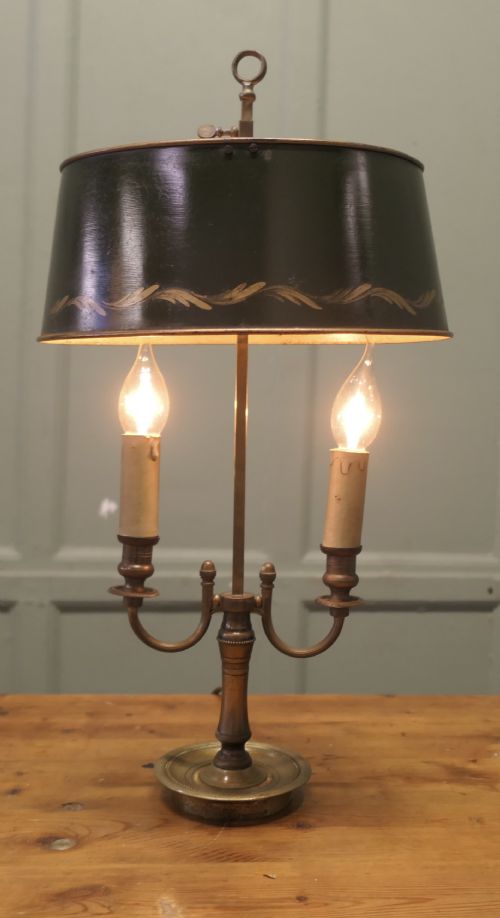
- Lacquered or enamelled sheet metal painted in muted greens or other colours. It often forms the bodies of bouillotte desk lamps and wall lanterns.
- Candelabra
- Branched lighting fixtures designed to hold multiple candles simultaneously. They frequently stand on marble bases with classical mounts.
- Tent and waterfall
- A chandelier structure featuring an upper conical tent of strings of beads cascading down into a wider waterfall basket of crystal drops.
- Appliques
- Wall-mounted lighting fixtures designed to hold candles or electric bulbs against panelling or plaster. They mirror the decorative motifs found on larger chandeliers.
French Empire Brass Lighting: Frequently Asked Questions
How do I wire old chandeliers?
Rewiring requires running modern heat-resistant flex through the internal channels of the metal arms and central spindle. Professional electricians must handle this process to ensure the vintage frame safely supports current electrical loads.
Many fixtures retain their original socket covers or drip pans, which can be retained or adapted to conceal modern lamp holders. Earth wiring must be grounded to the metal frame for safety.
What is the difference between ormolu and brass?
Ormolu consists of gilded bronze where a fine layer of gold amalgam is bonded to a copper alloy base through heat. Brass is an alloy of copper and zinc with a uniform golden colour throughout the metal.
Genuine ormolu exhibits a deeper, more buttery lustre and greater weight than standard stamped or cast brass. Over time, ormolu retains its rich surface unless aggressively cleaned.
Where should I hang a tent chandelier?
Tent and waterfall chandeliers require sufficient ceiling height and open floor space to showcase their cascading crystal drops. Dining rooms, entrance halls and high-ceilinged drawing rooms provide ideal proportions for these large centrepieces.
Ensure the hanging height allows comfortable clearance below while anchoring the visual weight of the room. Heavy fixtures demand secure joist fixings rather than standard plasterboard anchors.