




French Empire Armchair Pair
A French empire armchair pair brings formal neoclassical lines and commanding presence to a room, offering matched seating rooted in nineteenth century design.
French Empire Armchair Pair
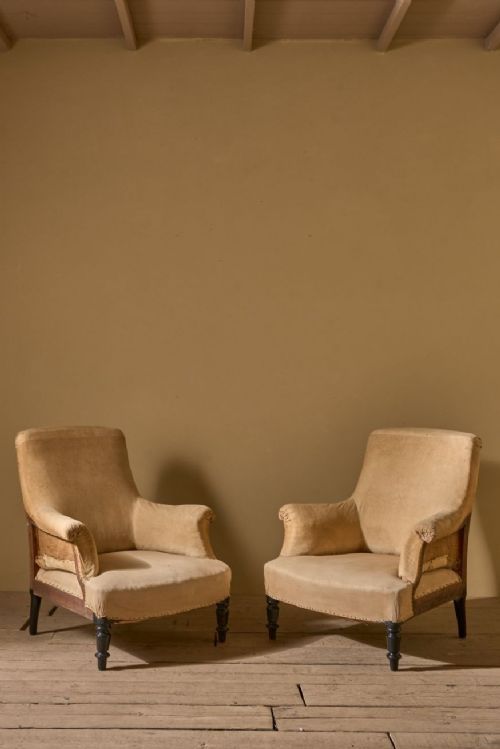
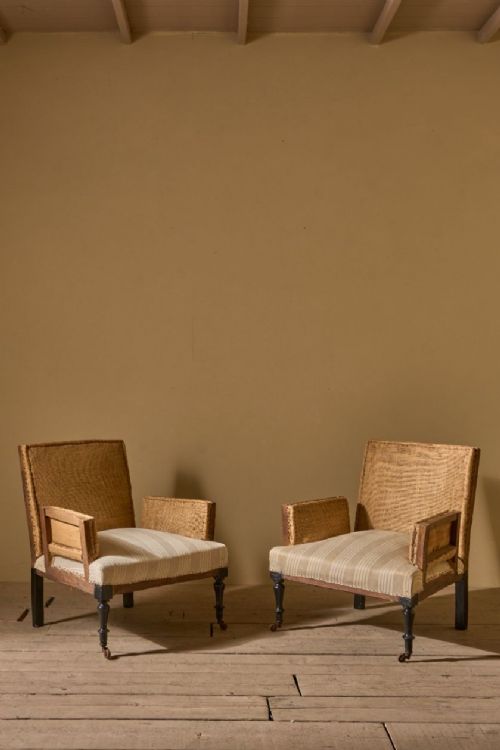
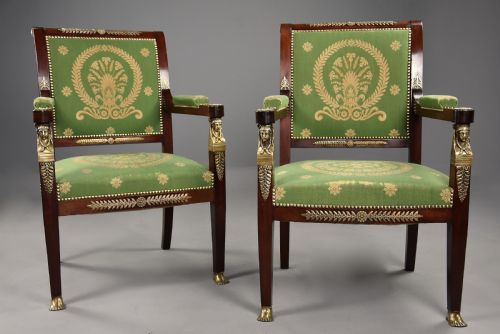
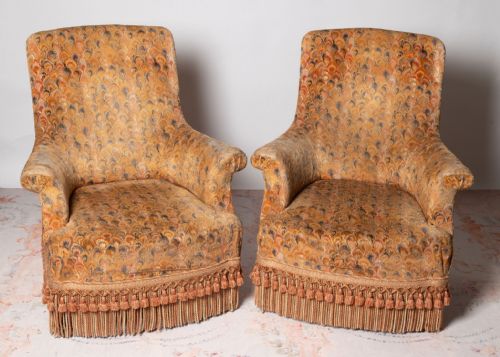
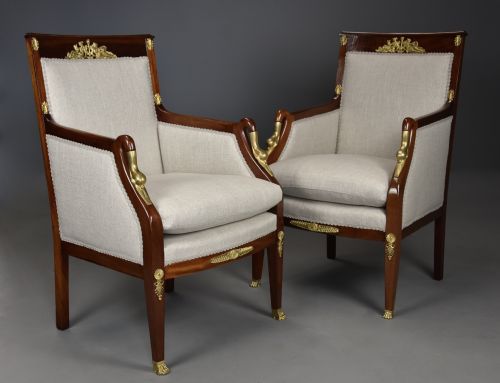
A French empire armchair pair comprises two matching seats created in the neoclassical taste associated with the early nineteenth century. These items typically present structured frames with upright backs and open arms, designed for formal reception rooms and parlours.
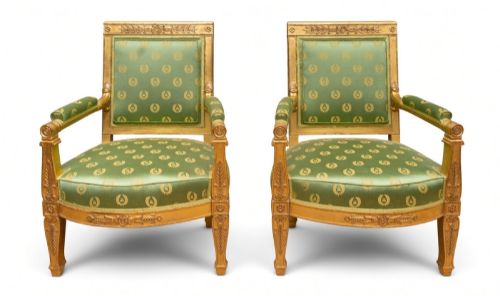
Most examples encountered here date from the nineteenth century or reflect later revivals such as the Napoleon III and Empire Revival periods. Buyers regularly find variations spanning mahogany, walnut, and giltwood construction, alongside specialised forms like bergere and tub armchairs.
The aesthetic draws heavily on classical antiquity, interpreted through French craftsmanship from periods including the Consulate, Restauration, and Second Empire. Pairs survive in diverse formats, ranging from plain square-backed models to richly ornamented suites featuring marquetry and gilt mounts.
Materials and Construction
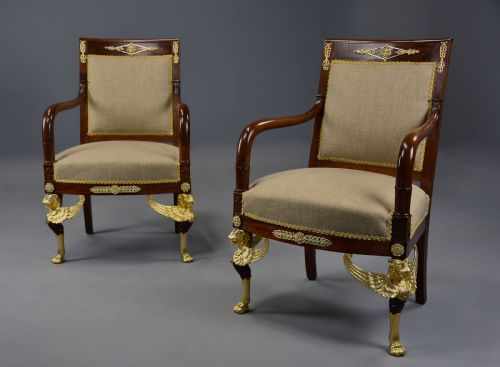
Carpenters utilised dense hardwoods including mahogany, walnut, and beech to build the foundational frames of these seats, frequently employing ebonised wood for stark visual contrast. These timbers provided the structural integrity required to support broad armrests and upright backs.
Surface ornamentation relied on applied cast brass and ormolu mounts, which highlighted structural junctions and introduced metallic lustre to the dark wood. Giltwood and parcel silvered finishes further enhanced select pieces, aligning with the decorative ambitions of the style.
Upholstery formed an essential component of construction, utilising fabric, leather, and specialised interior stuffing to shape the seat. Frames often accommodate modern re-upholstery while retaining their original nineteenth century wooden skeletons.
Listings feature mahogany, walnut, and beech frames, frequently accented with brass, ormolu, and giltwood finishes across various nineteenth century periods.
Quality Variations
The refinement of the carved wooden ornament separates standard workshop production from finer studio output. Crisp detailing in scrollwork and arm supports indicates superior hand execution by skilled cabinetmakers.
The precision and weight of the cast ormolu and brass mounts dictate the overall calibre of the piece. Heavy, well-chased metalwork applied to mahogany or rosewood frames signals a higher tier of manufacture.
The integrity of the structural timber and the preservation of original or sympathetic upholstery finishes determine the enduring value of a pair. Cohesion between the two chairs in a matched set remains paramount for discerning collectors.
Jacob Desmalter
The French Empire Armchair Pair Glossary
- Fauteuil
- An open-arm armchair with upholstered back and seat, typically featuring exposed wooden framing. This form served as a standard seat for formal French interiors.
- Bergere
- An enclosed armchair featuring upholstered sides filled in with fabric or cane. This style offers a deeper, more enclosed seat than standard open armchairs.
- Ormolu
- Gilt bronze applied to furniture as decorative mounts and accents. The technique involves applying a gold amalgam to bronze before firing.
- Canape
- A decorative settee or sofa designed to match accompanying armchairs in a salon suite. These pieces share the structural motifs of the related seating.
- Giltwood
- Timber treated with a thin layer of gold leaf applied over a prepared gesso ground. This finish provides a brilliant reflective surface on formal frames.
French Empire Armchair Pair: Frequently Asked Questions
How do I identify a true empire armchair?
Look for architectural lines, classical proportions, and mahogany construction accented with cast brass or ormolu mounts. The armrests frequently terminate in carved animal forms or scrolling wooden volutes.
Check for nineteenth century construction methods in the frame joinery. True period examples carry the weight and material density characteristic of early nineteenth century French cabinetmaking.
Can these armchairs be used in modern interiors?
These seats adapt well to contemporary settings when paired with complementary neoclassical or transitional furnishings. Their strong silhouettes provide a grounding focal point in modern living spaces.
Many examples arrive newly upholstered, allowing buyers to select fabrics that match existing interior colour schemes. Their robust wooden frames ensure daily usability alongside historical character.
How do revival pieces differ from original nineteenth century items?
Revival items, such as those from the later nineteenth or early twentieth centuries, replicate earlier neoclassical forms using contemporary workshop standards. They often exhibit minor variations in wood selection and mount casting quality.
Original period items carry the specific wear patterns and construction quirks of their early manufacturing era. Both categories share the same stylistic vocabulary derived from French imperial design.