



French Ebonised Occasional Table
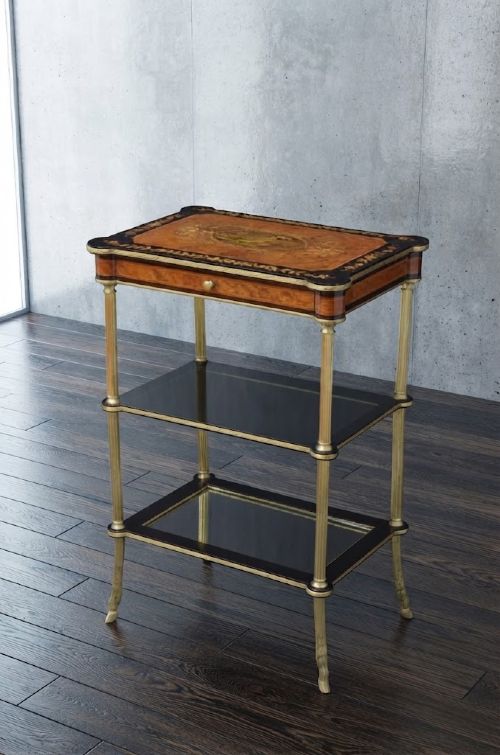
A french ebonised occasional table brings dark timber and gilt metal together to anchor a room with continental formality.
French Ebonised Occasional Table
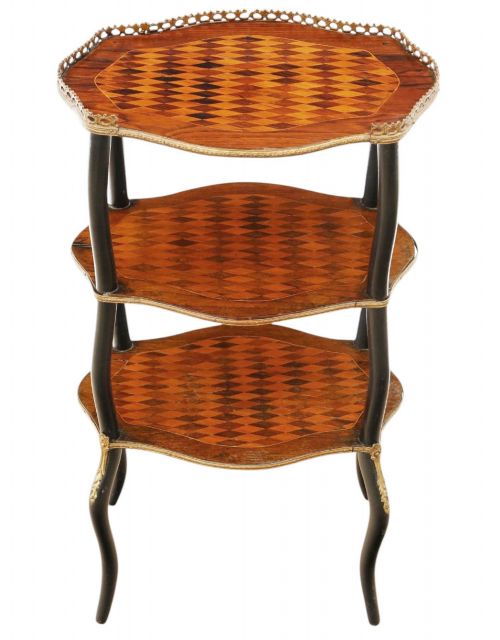
When you search for a french ebonised occasional table, you encounter nineteenth century pieces shaped by revivalist tastes such as Napoleon III, Louis XV, and Empire styles. These compact surfaces served functional roles in period drawing rooms as side tables, etageres, and small writing desks.
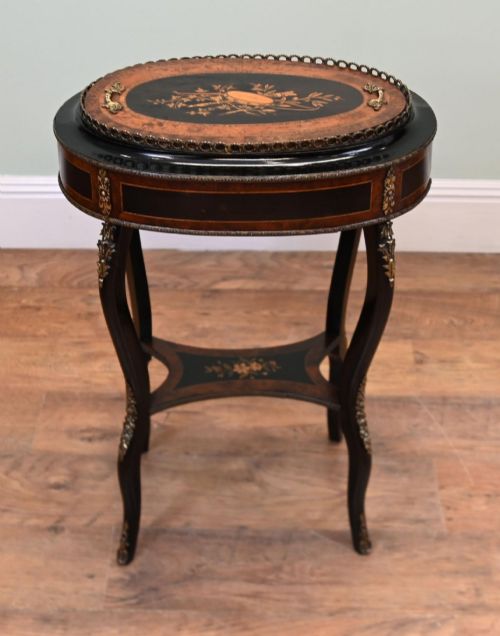
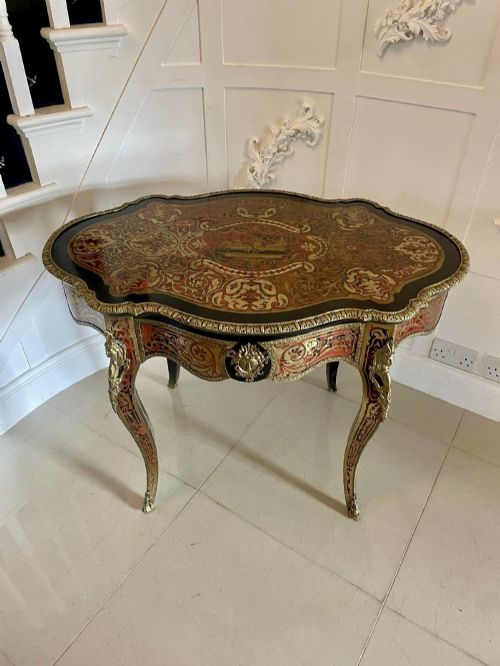
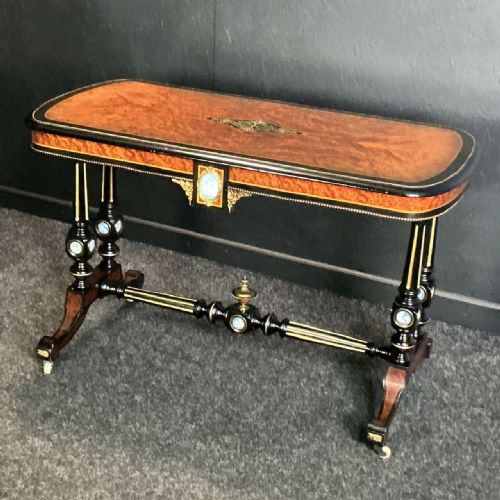
The version you are most likely to meet on this page combines ebonised wood with contrasting inlays like amboyna or walnut, often enriched by ormolu mounts. They appear frequently in nineteenth century periods alongside later adaptations from the early twentieth century.
Makers and workshops of the Victorian era produced substantial revival examples, while simpler forms relied on the silhouette of the frame and the polish of the dark finish. Their versatile proportions suit modern interior spaces just as well as formal historical room settings.
Materials and construction
Cabinet makers achieved the characteristic dark finish of a french ebonised occasional table by staining and polishing hardwoods to imitate ebony. This dark ground provided a dramatic canvas for decorative elements.
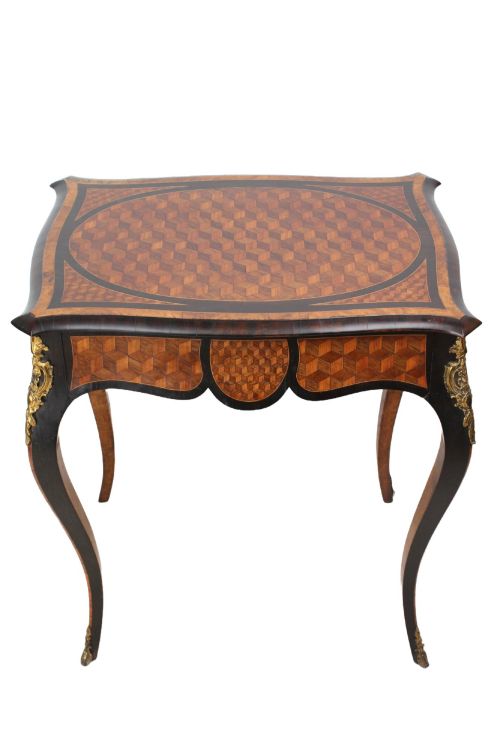
Surfaces frequently feature intricate marquetry and parquetry inlays using amboyna, walnut, and rosewood, creating geometric or floral patterns. Ormolu mounts and brass gallery rails add structural crispness and metallic contrast to the timber frames.
Some variations incorporate marble tops, porcelain plaques, or mirrored tiers, demonstrating the diverse techniques employed by nineteenth century artisans to elevate domestic furniture.
French Ebonised Occasional Table Retail Price Guide 2026
Typical asking prices for french ebonised occasional table among the pieces listed under this phrase on Sellingantiques today, from the lower quarter to the upper quarter. They describe what is for sale here now, not the wider market.
Some sewing tables still hide their original velvet lined compartments, waiting to surprise modern owners with lost sewing pins.
Assessing quality
The distinction between ordinary and exceptional examples rests upon the precision of the parquetry inlay and the depth of the ebonised finish. Superior pieces display seamless joints in the woodwork and crisply cast ormolu mounts rather than repetitive pressed brass.
Material selection dictates the upper tier of the range, where secondary timbers like amboyna or burr walnut are chosen for their striking grain patterns. The integration of Sevres style porcelain plaques or heavy marble tops further distinguishes the most ambitious workshops from standard production.
JAS Shoolbred·Gillows·Weisweiler
The French Ebonised Occasional Table Glossary
- Ebonised
- Wood treated with stain or pigment to simulate the dense, dark appearance of ebony. This finish became immensely popular during the nineteenth century for furniture mimicking antique luxury pieces.
- Ormolu
- Gilt bronze mounts applied to the angles, legs, and aprons of furniture for decorative emphasis. The technique involves applying a gold amalgam to cast bronze.
- Marquetry
- Decorative veneer patterns applied to a furniture carcass using varied woods, shells, or metals. Artisans cut these elements to form pictorial or abstract designs.
- Etagere
- A set of open display shelves supported by slender columns or uprights. These tiered pieces allowed for the presentation of small decorative objects in Victorian interiors.
- Parquetry
- Geometric wood inlay forming patterned surfaces like cubes or chequers. It differs from marquetry through its strict reliance on repeating angular shapes.
- Poudreuse
- A small dressing or writing table equipped with folding lids and internal compartments. They represent a specialised form of antique French multifunctional furniture.
French Ebonised Occasional Table: Frequently Asked Questions
How were these tables used originally?
These tables functioned as movable surfaces in principal rooms for holding lamps, writing correspondence, or displaying porcelain objects. Their portable nature allowed servants to reposition them according to the immediate needs of household guests.
In domestic settings, they sat beside chairs or against walls as ornamental accents rather than heavy dining furniture. Their varied forms, from tiered etageres to poudreuses, reflected specific social rituals of nineteenth century life.
Are marble top tables difficult to maintain?
Marble tops require gentle cleaning with damp cloths and neutral soaps to preserve the polished surface from staining. Acidic liquids can etch the stone over time if left unattended on the table.
Most marble slabs rest loosely within the wooden frame rather than being permanently fixed. This removable construction makes moving the furniture simpler during relocation or deep cleaning.
Can I use an antique etagere for storage?
Tiered etageres provide open display space rather than enclosed storage, making them ideal for books, ceramics, or plants. Their slender supports are engineered for lightness rather than heavy loads.
Placing them in living rooms or hallways allows the mirrored tiers and inlaid shelves to reflect light around the space. They work best when styled with a curated selection of decorative items.