





French Ebonised Console Table
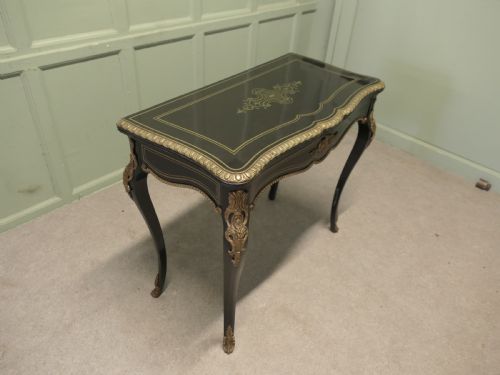
A french ebonised console table brings dark elegance and intricate brass or tortoiseshell inlay into a room, offering a striking focal point with distinct nineteenth-century craftsmanship.
French Ebonised Console Table
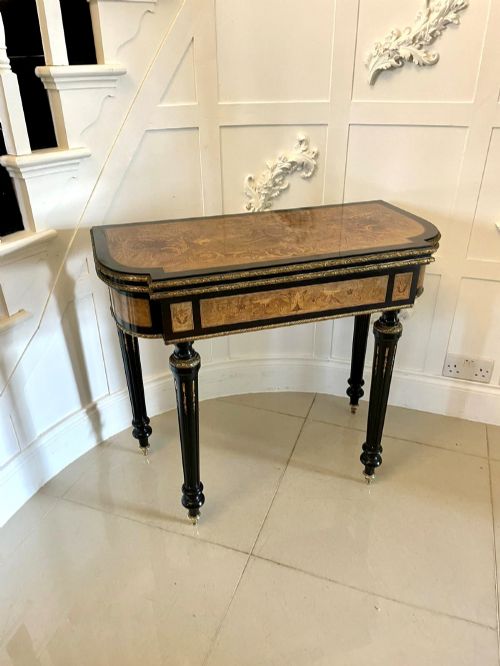
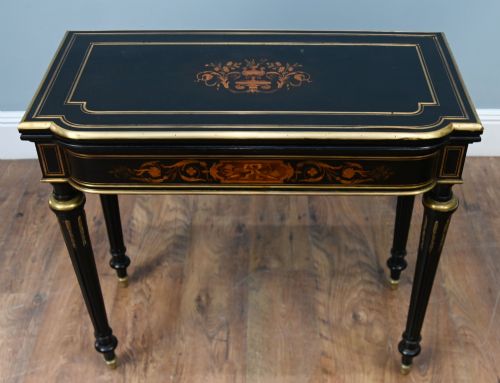
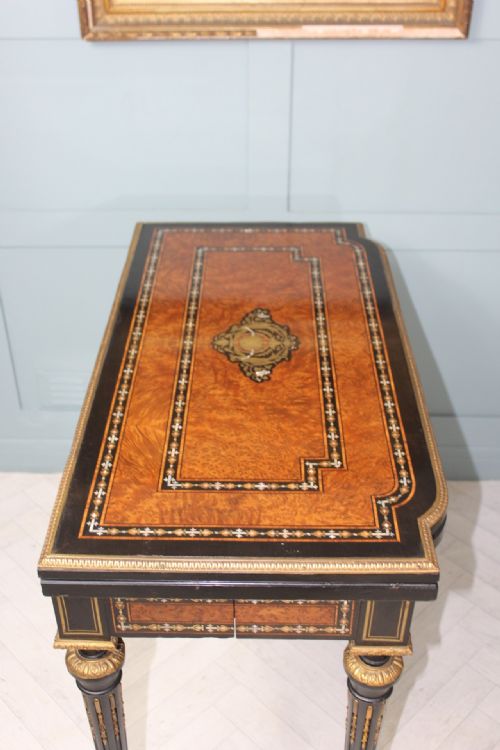
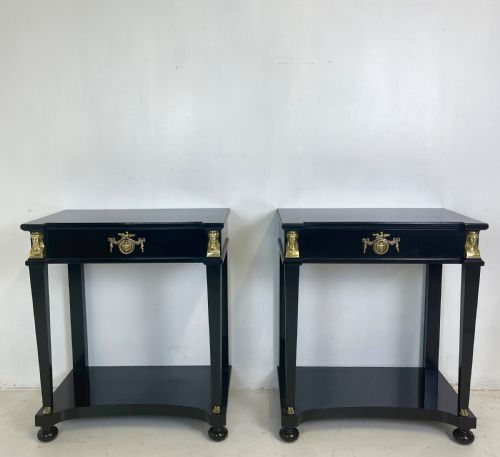
A french ebonised console table represents a sophisticated form of nineteenth-century furniture, often appearing on this page within revival styles such as Napoleon III, Louis XV, and Empire. These pieces function primarily as decorative side supports or fold-over games tables featuring marquetry and contrasting metal details.
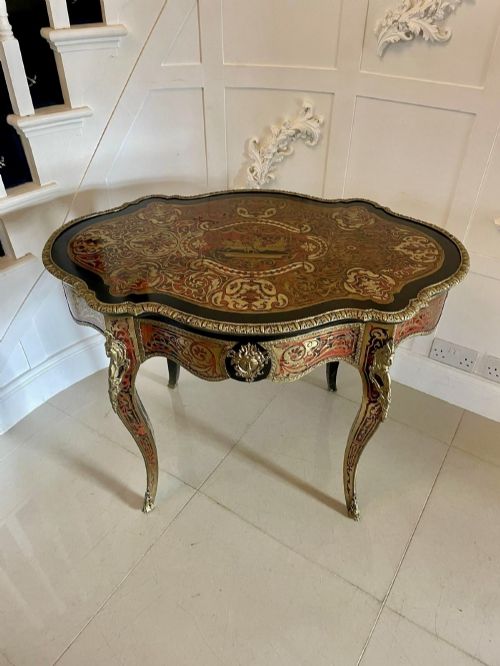
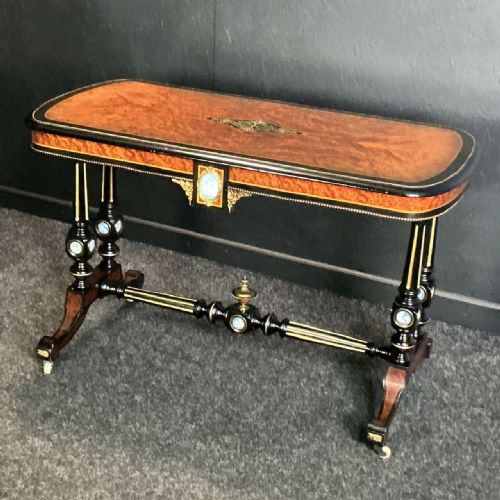
The materials recorded across these listings include ebonised wood combined with brass, ormolu, tortoiseshell, and porcelain plaques, reflecting the opulent tastes of the period. Forms range from kidney-shaped display tables to elaborate card and centre tables originating from the eighteen-sixties through to nineteen-hundred.
Materials and construction methods
The dark finish is achieved by ebonising timber to imitate costly ebony, providing a deep black surface that highlights applied metal mounts. Makers set brass, mother-of-pearl, and tortoiseshell directly into the wood using intricate marquetry techniques.
Ormolu mounts and porcelain plaques are frequently integrated into the design to add structural contrast and decorative brilliance. Burr walnut and amboyna also appear as secondary timbers, showcasing varied grain patterns beneath polished finishes.
Listings feature nineteenth-century dates ranging from eighteen-sixty to nineteen-hundred, spanning Napoleon III, Victorian, and various revival styles.
Distinctions in grade and execution
Quality separates through the precision of the marquetry and the crispness of the brass and ormolu mounts. Finer examples display seamless inlay work where metal and shell fit tightly without visible gaps.
The sophistication of the secondary timbers and the inclusion of painted porcelain plaques or detailed figural casting elevate certain pieces above standard production work. Structural integrity in the folding mechanisms of games tables also marks higher-tier manufacturing.
Edwards & Roberts
The French Ebonised Console Table Glossary
- Ebonised
- Wood treated to resemble heavy ebony. This dark finish creates a dramatic backdrop for metallic inlays.
- Ormolu
- Gilt bronze mounted onto furniture. It provides gilded highlights against the dark ebonised surfaces.
- Marquetry
- Fitted pieces of wood, brass, or shell forming decorative patterns. Craftsmen apply these veneers meticulously across tabletops.
- Boulle
- A specific form of marquetry using brass and tortoiseshell. This technique is named after the famous cabinetmaker Andre-Charles Boulle.
- Console table
- A table designed to stand against a wall. Many nineteenth-century versions double as folding card tables.
French Ebonised Console Table: Frequently Asked Questions
What is a french ebonised console table?
A french ebonised console table is a dark, highly decorative nineteenth-century furniture piece designed to stand against a wall or serve as a games table.
These items often feature intricate brass inlay, tortoiseshell, and gilt mounts in revival styles like Napoleon III and Louis XV.
How were these tables used originally?
Many of these tables served multifunctional purposes in grand nineteenth-century reception rooms, acting as display surfaces or card tables.
Folding tops allowed them to convert easily from slim console pieces into stable surfaces for evening games.
How do I identify the period?
Dating relies on stylistic markers such as Napoleon III revival motifs, brass boullework, and the specific combination of ebonised wood with amboyna or burr walnut.
Most surviving examples date from the mid to late nineteenth century, reflecting the revivalist tastes of that era.
Where should I place one?
These tables suit hallways, living rooms, or drawing rooms where their dark finishes and reflective brass inlays can catch the light.
They work particularly well against plain walls that allow the detailed marquetry and ormolu mounts to stand out.