





French Distressed Side Table
A French distressed side table brings the relaxed elegance of provincial houses and chateaus into a room.
French Distressed Side Table
A french distressed side table encompasses various small tables designed for domestic use, ranging from bedside cabinets and lamp tables to console and centre tables. These pieces originate primarily from the nineteenth and early twentieth centuries, alongside select eighteenth-century examples.
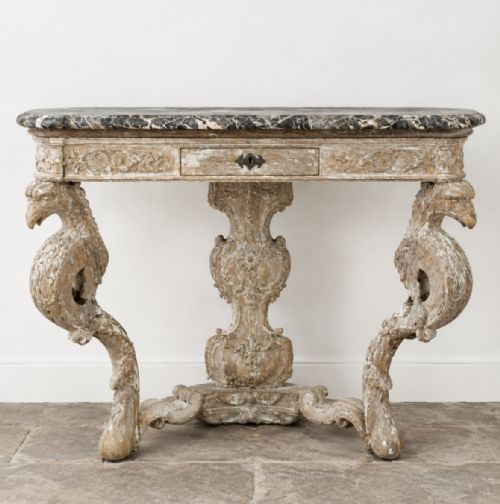
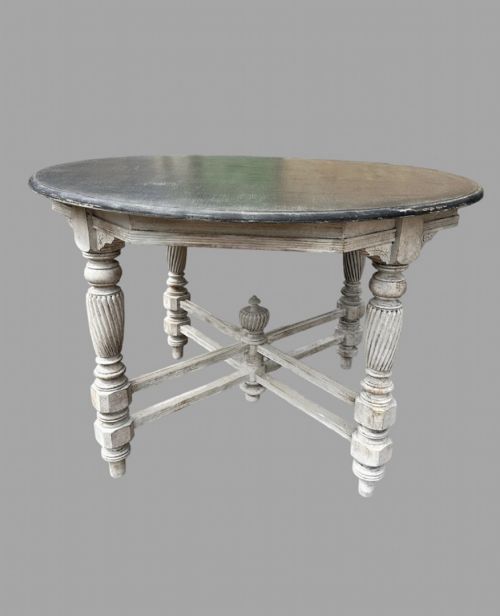
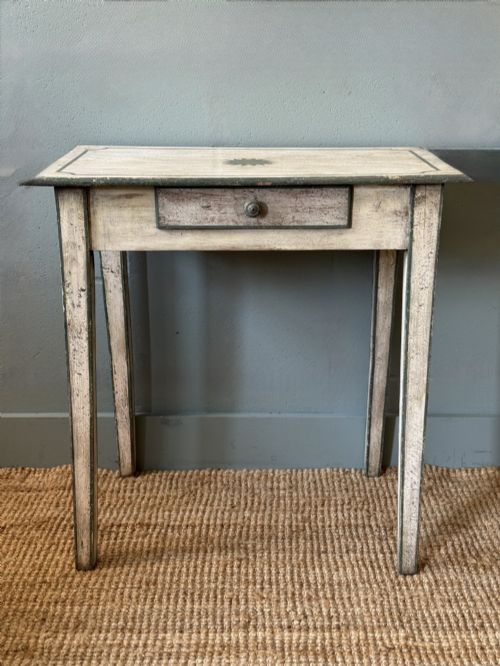
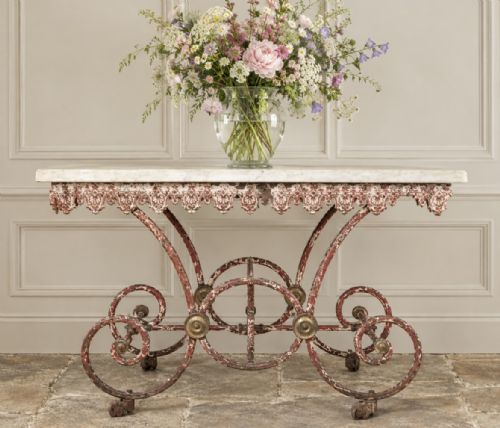
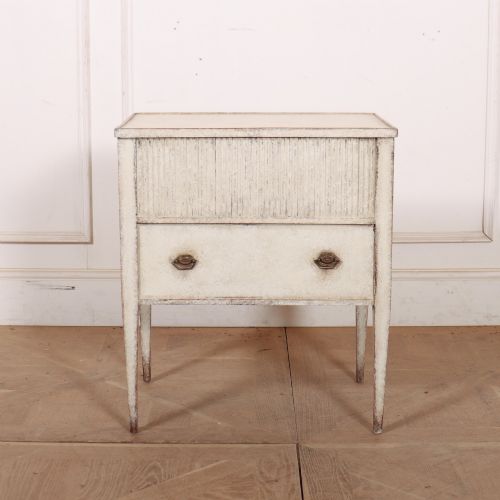
The versions most commonly met on this page feature painted wood surfaces with intentional weathering, often paired with marble tops, inset suede, or wrought iron bases. Forms span demi-lune consoles, round gueridons, and narrow side tables reflecting styles like French Provincial, Louis XVI, and Neoclassical.
Makers and craftsmen of the period produced these tables for diverse settings, including country houses, potting sheds, and formal salons. Their utility persists today as functional surfaces that introduce historic character and weathered texture to contemporary interiors.
What separates the fine from the ordinary
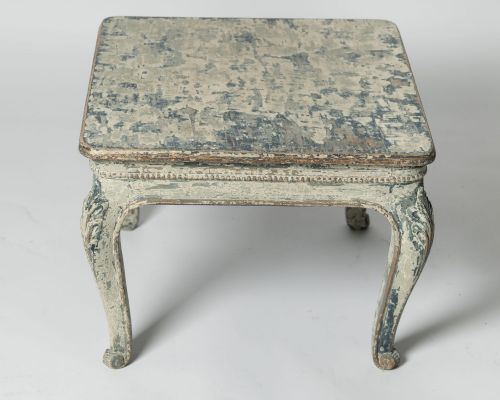
The distinction between standard utility items and superior examples lies in the integrity of the original materials and the sophistication of the surface patination. Tables retaining their unstripped, original paint layers command greater interest than those with modern repainting.
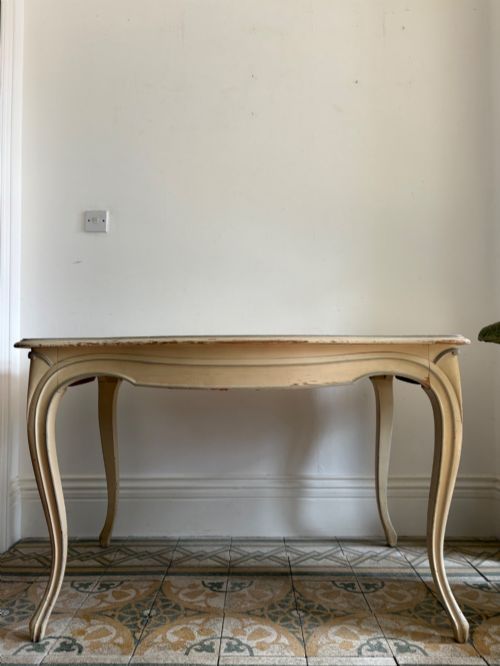
Proportion and structural detailing further divide the range, visible in the grace of cabriole legs, the carving of wooden frames, and the fit of heavy marble or inset suede tops. Tables featuring uncommon configurations, such as demi-lune shapes or paired sets, display higher design ambition.
The harmony between the underlying timber construction and the weathered surface finish determines overall visual success. Pieces showing organic, genuine wear across structural joints integrate more convincingly into interiors than heavy-handed or artificial distressing.
Listings feature items spanning the eighteenth century through the 1940s, executed in painted wood, marble, cast iron, and walnut.
The French Distressed Side Table Glossary
- Gueridon
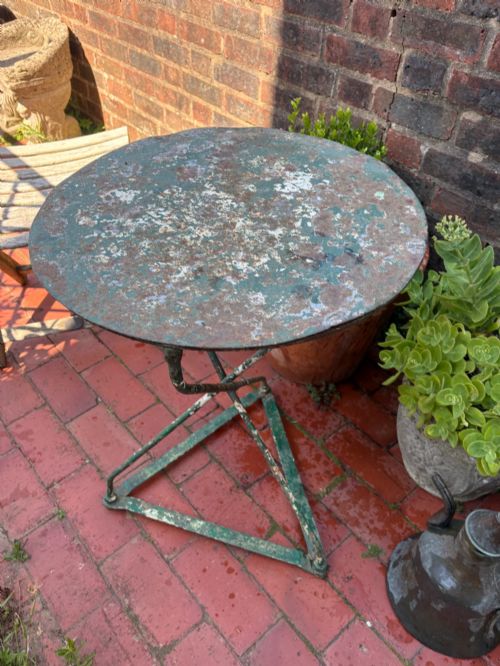
- A small French round table, typically supported by a central pillar or three legs. These tables often feature marble tops and painted cast iron bases.
- Demi-lune
- A half-moon shape used for console tables designed to sit flush against a wall. This form saves floor space while providing a decorative surface.
- Cabriole leg
- A furniture leg that curves out in a convex arc and tapers inward in a concave arc, mimicking an animal's leg. It is a defining feature of Louis XVI and provincial French styles.
- Console table
- A table fixed to a wall or designed to stand against one, frequently supported by legs at the front only. These served as decorative sideboards in grand rooms and hallways.
- Patina
- The surface appearance grown on materials through age, handling, and use. In these pieces, it manifests as softened paint and worn edges.
French Distressed Side Table: Frequently Asked Questions
Where should I place a French side table?
These tables adapt easily to various rooms, functioning as bedside cabinets, lamp surfaces in living spaces, or console tables in hallways. Their compact proportions allow them to fit into narrow spaces where larger furniture would overwhelm the room.
Pairing a marble-topped console with a mirror creates an effective focal point in an entryway. Alternatively, a small painted bedside table adds character and functional surface area to a bedroom.
How do I identify a true antique finish?
Authentic period pieces show layered paintwork with soft edges, subtle crazing, and gradual wear accumulated over generations of use. The underlying timber often shows through naturally in areas of frequent contact.
Inspect the transitions between paint layers and the texture of the wood beneath to understand the history of the surface. Genuine patination feels integrated with the material rather than freshly applied.
Can these tables be used outdoors?
Certain variations, such as iron garden tables, potting shed tables, and folding tables, were originally constructed for exterior or semi-protected garden environments. These pieces utilise weather-resistant materials like cast iron and copper.
Interior console and bedside tables featuring wood, marble, and suede require protection from moisture and direct weather exposure. Check the specific material composition of each piece before deciding on its placement.
What is the difference between a console and a side table?
Console tables were traditionally designed to stand against a wall, sometimes with wall-mounted support or front legs only, serving primarily decorative purposes in formal settings. Side tables are freestanding units built to be accessed from multiple angles.
In modern usage, the terms often overlap, but console tables tend to be narrower and longer. Both types share similar decorative painted finishes and provincial styling.