
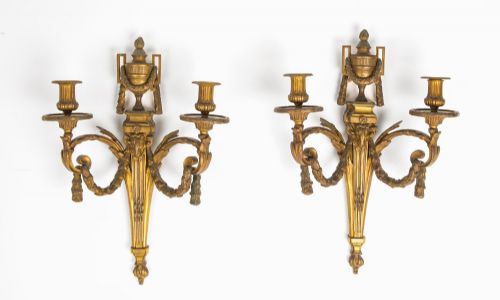


French Decorative Wall Lights
French decorative wall lights combine brass, gilt bronze, and carved wood to bring practical illumination and architectural grace to a room.
French Decorative Wall Lights
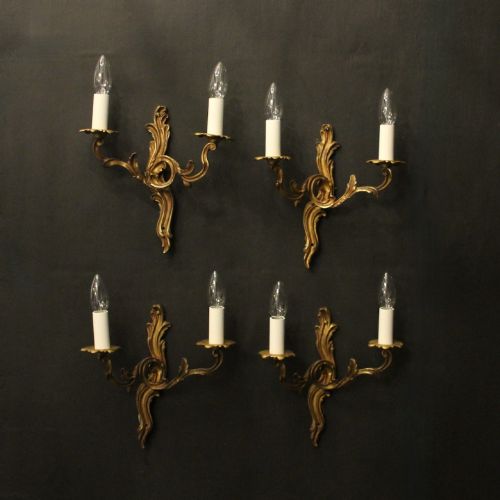
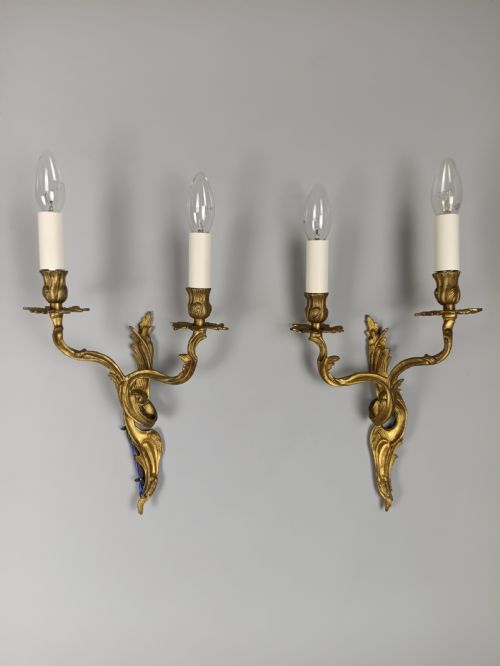
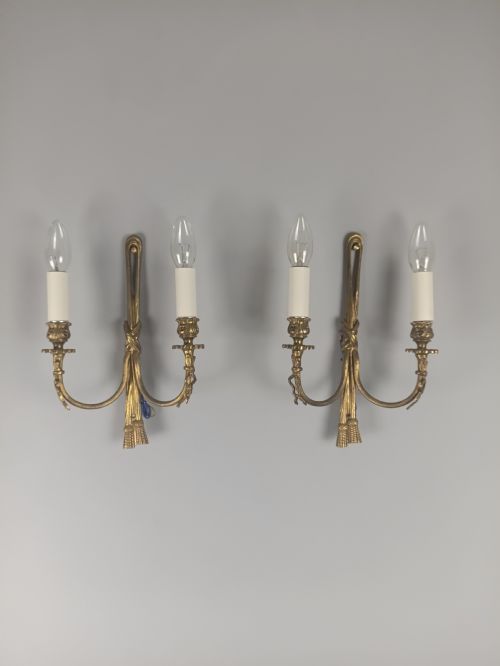
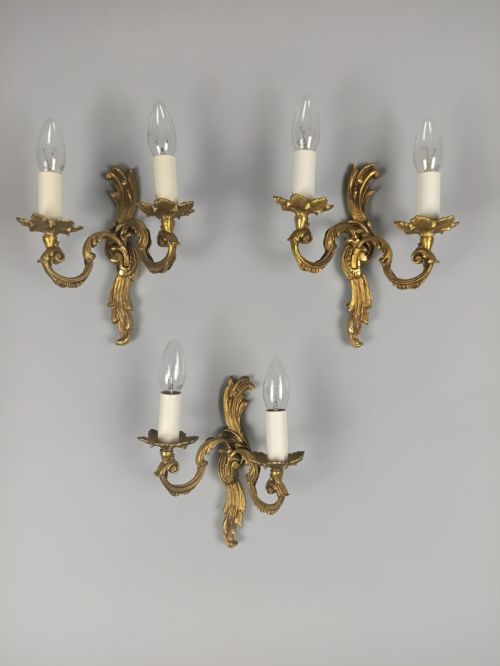
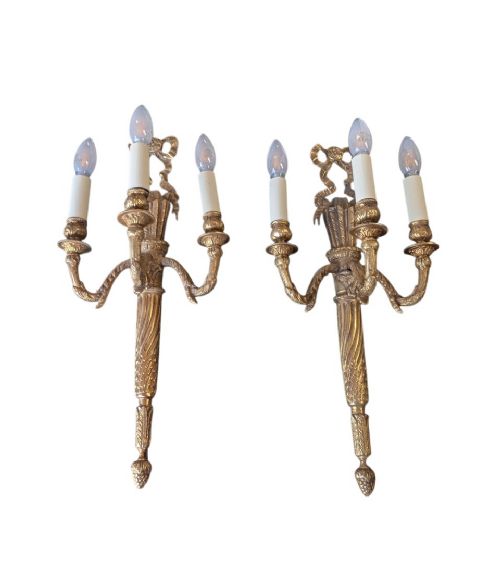
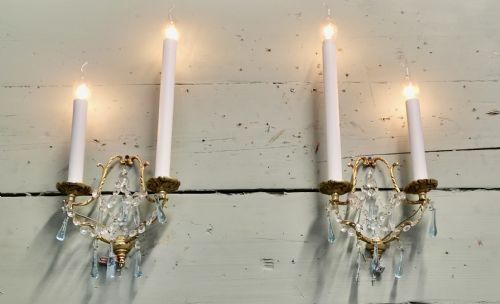
When you search for french decorative wall lights, you encounter fixtures designed to mount directly onto vertical surfaces, providing supplemental illumination while acting as focal points in a room. These pieces appear frequently as matched pairs, though sets of three or four emerge regularly from periods spanning the nineteenth century through the 1940s.
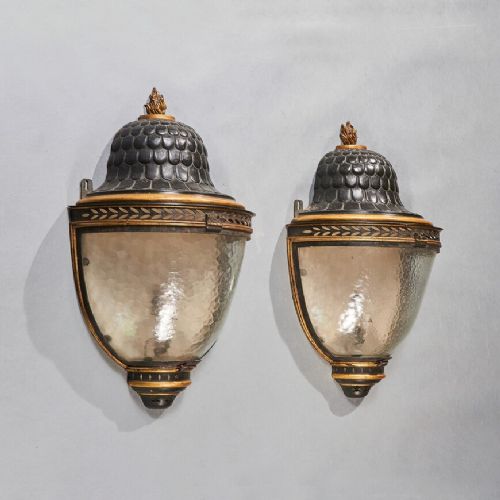
The forms vary widely across the selection, encompassing twin-arm sconces, multi-branched wall chandeliers, carriage lights, and wall lanterns. You also find specialised variations such as girandoles, which incorporate mirrors to reflect and amplify the light emitted by the candles or bulbs.
Stylistically, the selection draws heavily on continental design traditions, with French Rococo, Louis XVI, and Neoclassical influences predominating. Alongside these formal designs, you encounter painted tole peinte and polychrome fruit motifs that introduce softer, more domestic character to the wall.
How They Were Made
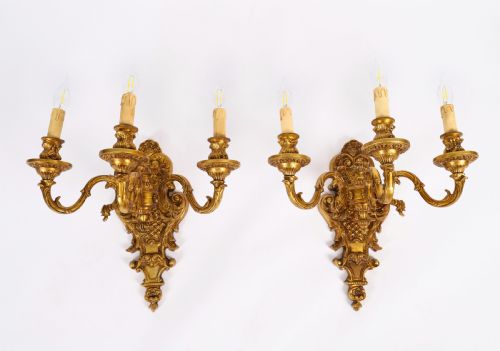
Maker workshops utilised casting, carving, and gilding techniques to fashion these fixtures from metals and woods. Gilt bronze, ormolu, and brass form the structural backbone of many examples, often shaped into scrolling arms, ribbon motifs, or ram's head masks.
Wooden alternatives rely on carved giltwood and gesso, building up intricate relief work that is subsequently gilded or painted. For tole peinte and polychrome pieces, artisans shaped sheet metal and applied layered pigments to achieve durable decorative surfaces.
Materials span gilt bronze, brass, wrought iron, gesso, and painted tole, reflecting diverse manufacturing traditions across French decorative arts.
What Varies in Quality
The distinction between ordinary and exceptional examples rests upon the crispness of the casting and the depth of the hand-chasing on metal components. Finer pieces display sharply defined ornamentation, such as delicate acanthus leaves or clean ribbon folds, whereas simpler castings lose definition in the secondary details.
In wooden and gesso pieces, quality reveals itself in the hand-carved execution of the frame and the harmonious application of the gilding. Greater sophistication appears when proportions feel balanced and structural elements integrate seamlessly with ornamental flourishes.
Maison Baguès
The French Decorative Wall Lights Glossary
- Ormolu
- Gilded bronze, where a layer of gold amalgam is applied to a bronze base through heat processing. This technique imparts a rich, lasting metallic lustre to nineteenth-century mounts and sconces.
- Girandole
- A branched wall light or sconce that incorporates a mirror plate. The reflective glass serves to multiply the ambient light cast into the room.
- Tole Peinte
- Painted sheet metal, commonly used in decorative lanterns and sconces. It allows for vibrant polychrome finishes and durable, rust-resistant domestic objects.
- Gesso
- A plaster-like mixture applied to wooden surfaces as a base for gilding or painting. It provides a smooth ground that artisans can carve and mould into relief ornament.
- Rococo Revival
- A nineteenth-century design movement characterised by asymmetrical C-scrolls, naturalistic plant forms, and flowing lines. It draws direct inspiration from eighteenth-century French court aesthetics.
French Decorative Wall Lights: Frequently Asked Questions
How do I hang heavy wall lights?
Heavy fixtures, particularly those cast in bronze or carved from gesso and giltwood, require secure attachment points directly into wall studs or appropriate masonry anchors. The weight distribution relies heavily on the backplate, which must sit flush against the wall surface to bear the load of multiple arms.
Professional installation is recommended for older wiring configurations and heavier multi-branch models. Ensuring the mounting bracket matches the weight capacity of the wall prevents sagging and protects the antique structure over time.
Are these lights wired for electricity?
Many surviving wall lights have undergone conversion to electricity at various points in their history to suit modern domestic requirements. Listings note diverse configurations, ranging from newly rewired setups to pieces retaining older electrical components that may need updating by an electrician.
When living with these pieces, you can choose to integrate them into standard wall circuits or opt for subtle cord setups depending on the mounting location. Consulting a qualified professional ensures the internal wiring safely accommodates contemporary bulb standards.
How do I clean gilt metal and bronze?
Maintaining gilt metal and bronze surfaces requires gentle dusting with a soft, dry cloth to remove everyday particles without disturbing the finish. Avoid using abrasive commercial metal cleaners, harsh chemical sprays, or excessive water, as these can strip away delicate gold leaf or patinated layers.
For stubborn accumulated grime, professional conservation advice is best sought to preserve the underlying metalwork. Regular, careful maintenance protects the original surface integrity and keeps the reflective quality of the gilding intact.
What is the difference between Rococo and Neoclassical styles?
Rococo designs emphasise asymmetrical movement, playful C-scrolls, and organic motifs like shells and foliage. The forms feel fluid, dynamic, and theatrical, reflecting the lighter decorative tastes of the mid-eighteenth century.
Neoclassical pieces, by contrast, return to strict symmetry, geometric balance, and classical architectural elements such as urns and fluting. This aesthetic draws inspiration from ancient Greek and Roman ruins, projecting greater formal restraint and dignity.