
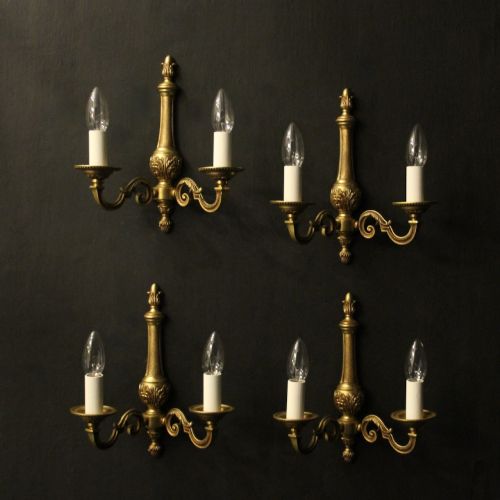
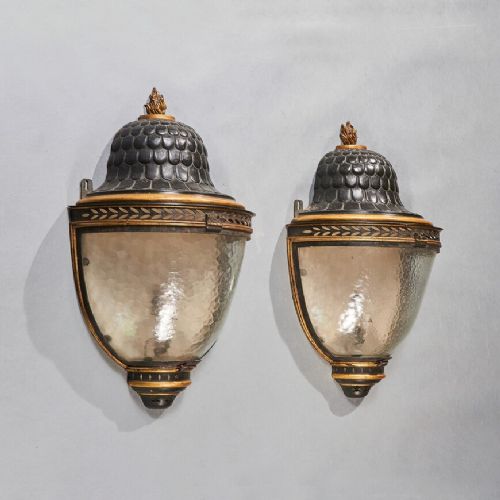
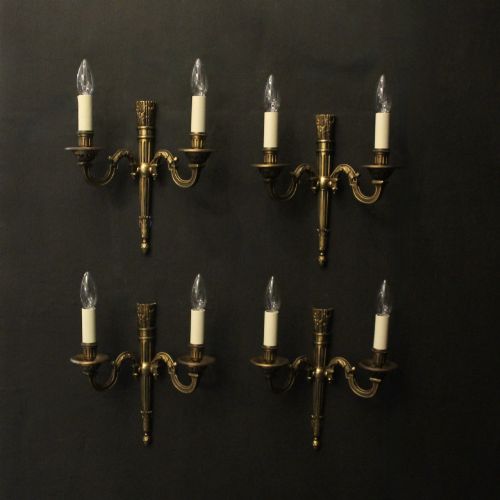
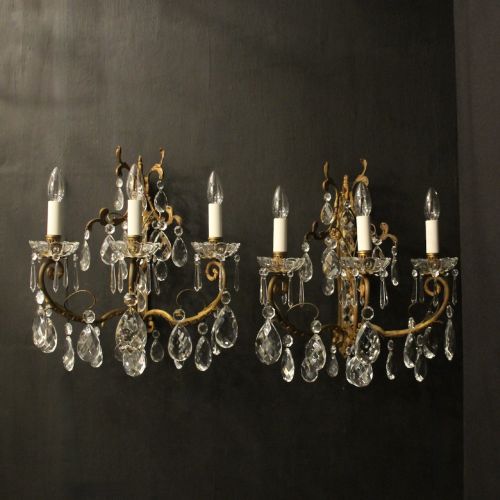
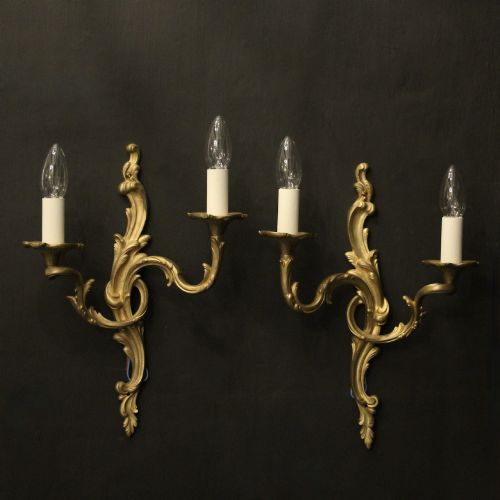
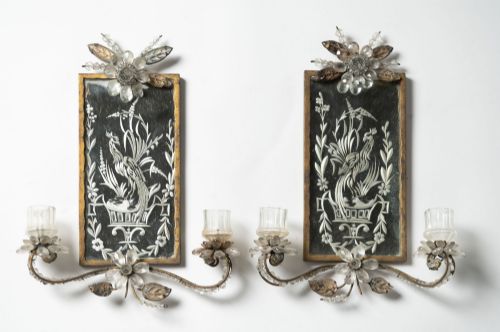
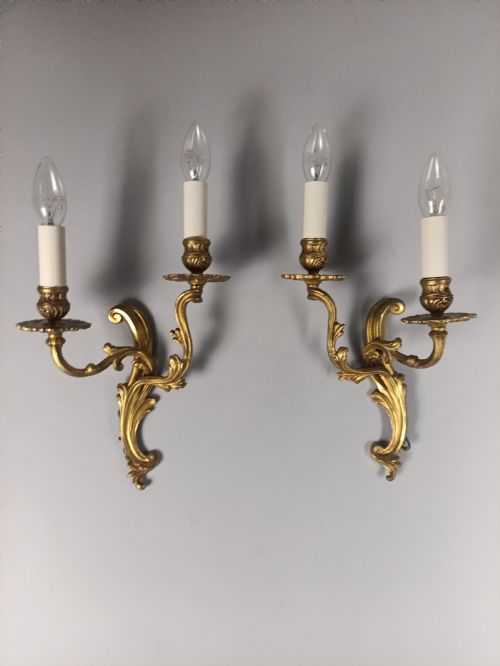


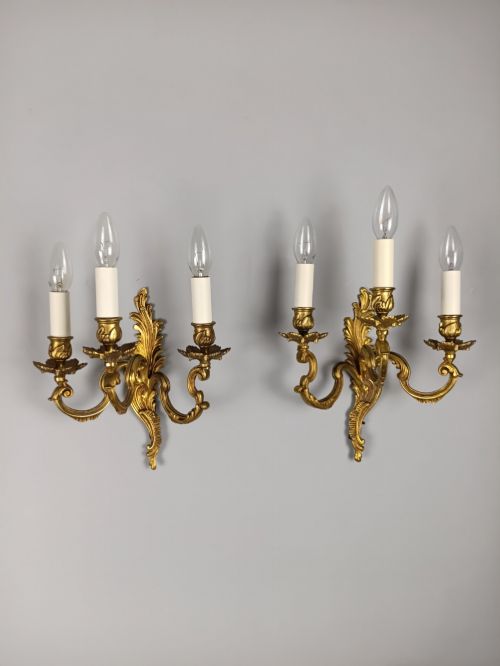
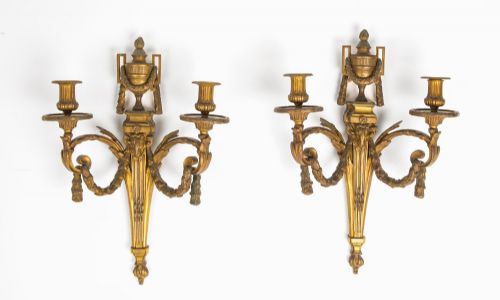

French Gilt Metal Sconces
French gilt metal sconces bring warmth and decorative focus to an interior, channelling centuries of continental design into practical wall lighting.
French Gilt Metal Sconces
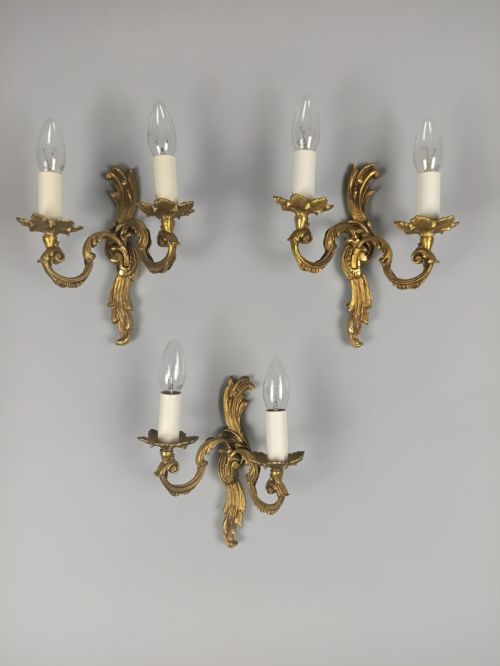
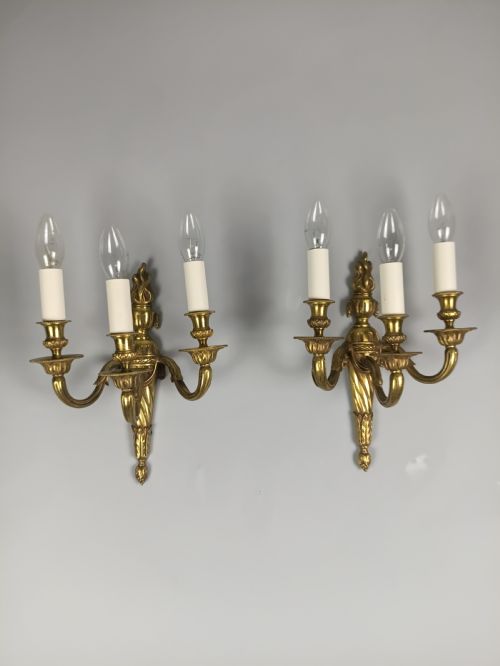
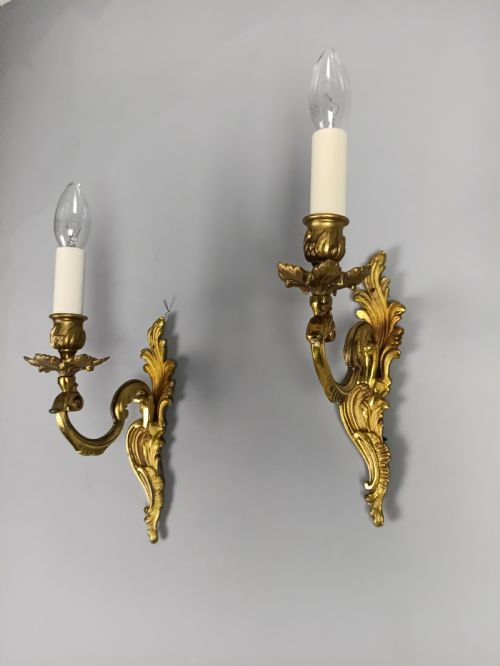
French gilt metal sconces combine structural metalwork with reflective surfaces and arm arrangements designed to project candle or electric light across a room. Buyers searching for french gilt metal sconces encounter wall-mounted lighting fixtures configured with single, twin, or multiple arms.
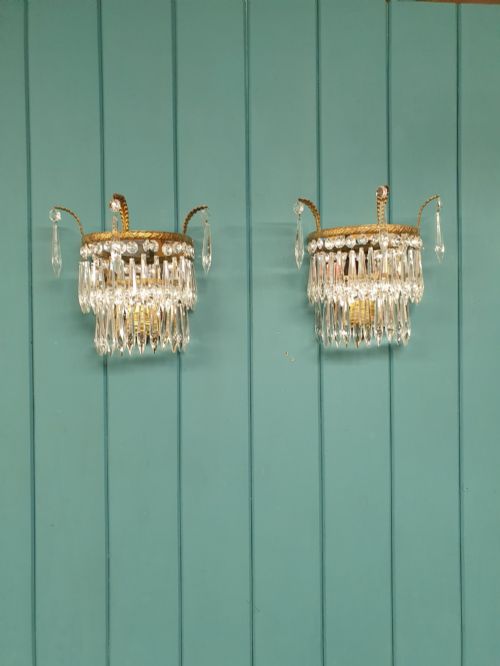
The objects span centuries of production, appearing in forms ranging from austere neoclassical motifs to exuberant rococo curves. Examples frequently incorporate cast bronze, brass, and toleware, often paired with crystal drops or integrated mirrors.
Pieces originating from the nineteenth and early twentieth centuries dominate the selection, reflecting sustained European demand for decorative wall lighting. Sets of matching pairs or larger groupings recur across the inventory.
Methods and Materials
Craftsmen utilised cast bronze, brass, and gilt metal as the primary structural bodies for these wall lights. Molten metal was poured into detailed moulds, capturing intricate botanical motifs, scrolls, and figural elements before undergoing surface gilding.
Ormolu application involved depositing a layer of finely ground gold amalgamated with mercury onto bronze, creating a durable golden lustre. Alternatively, applied leaf or liquid gilt finishes coated brass and iron structures.
Glass, crystal drops, and mirrored backplates were integrated to multiply the illumination cast by the candles or early bulbs. Toleware components introduced painted tin elements, adding colourful contrast to the metallic frames.
Several pairs feature cheerful cherubs peering out from the metalwork, proving that even eighteenth-century lighting took itself lightly.
Judging Quality
Superior examples demonstrate crisp definition in the metal casting, where acanthus leaves, masks, and scrollwork retain sharp edges and deep relief. Lesser pieces rely on softer, shallower castings that obscure fine detail and decorative nuance.
The application and depth of the gilding separate standard production from exceptional work, with genuine ormolu and thick gold leaf exhibiting a warm, rich tone that ages gracefully. Thinner metallic paints or worn platings expose the base brass or bronze substrate unevenly.
Structural integrity depends on how securely the arms attach to the backplate and whether the components remain true without bending. Heavier fixtures require robust backplates to support the weight of multiple branches and crystal adornments.
Maison Baguès
The French Gilt Metal Sconces Glossary
- Ormolu
- Finely chopped gold applied to a bronze base using a mercury amalgamation technique, creating a durable golden surface. This process was largely superseded in the nineteenth century by safer electroplating methods.
- Girandole
- An ornamental branched wall light featuring a mirrored backplate to reflect and amplify the illumination. The glass plate is often bevelled and decorated with etched motifs.
- Toleware
- Enamelled or painted sheet metal items, often tin, used to introduce colour and pattern into decorative objects. It appears frequently on French and Italian sconces.
- Rococo
- An ornate artistic style characterised by asymmetric scrolls, shell motifs, and naturalistic curves prevalent during the eighteenth century and later revived. It dominates the ornamentation of many antique wall lights.
- Neoclassical
- A later design movement drawing inspiration from classical antiquity, favouring symmetry, straight lines, ram's head masks, and urns. It provides a formal contrast to rococo exuberance.
French Gilt Metal Sconces: Frequently Asked Questions
How do I clean antique gilt metal sconces?
Dust the metal gently with a soft, dry brush or microfibre cloth to remove surface particles without disturbing the finish. Avoid abrasive cleaning agents, commercial metal polishes, or harsh chemical dips that strip away the original gilding.
For stubborn grime, use a slightly damp cloth with mild soap, drying the surface immediately afterwards. Take extra care around crystal drops and mirrored sections to prevent moisture seeping into the backing.
Were these sconces electrified later?
Many surviving wall lights from the nineteenth and early twentieth centuries were converted from candles to electricity as homes modernised. Wiring is typically routed through existing channels or discretely behind the backplate to preserve the exterior appearance.
Buyers should inspect the internal wiring of older fixtures and consult a professional electrician to ensure current safety standards are met. Original mounting points and backplates generally remain intact despite these utilitarian updates.
What rooms suit wall sconces best?
Wall lights provide ambient, directional illumination that complements primary ceiling fixtures in dining rooms, hallways, and living spaces. Placing them at eye level flanking a mirror or piece of furniture creates a balanced, layered lighting scheme.
In bedrooms, smaller single or twin arm sconces serve effectively as bedside reading lights when wired with appropriate lower-wattage bulbs. Their decorative metalframes ensure they remain sculptural wall art even when switched off.