




French Deco Dresser
These french deco dresser examples combine glass, ceramics and marble in compact storage and tabletop pieces for the home.
French Deco Dresser
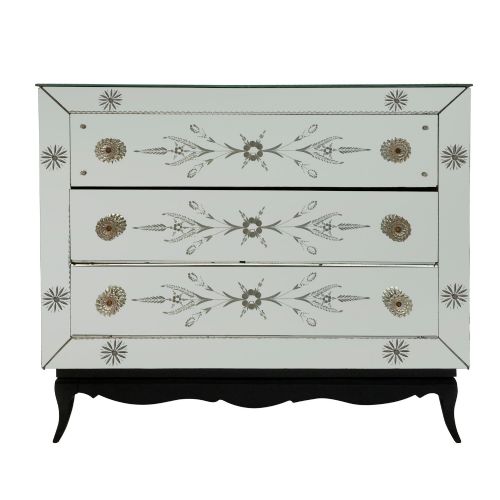
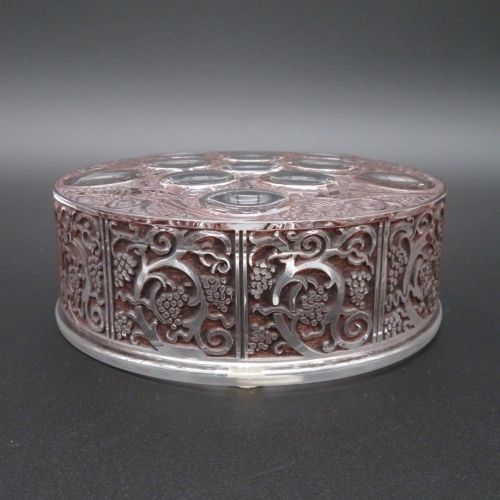
When you search for a french deco dresser, you are looking at items designed for storage and personal care from the early decades of the twentieth century. The selection ranges from small ceramic and glass powder boxes to large wooden chests of drawers, washstands and commodes.
You are most likely to meet ceramic powder bowls by Limoges, glass powder boxes and perfume bottles by René Lalique, alongside larger furniture pieces featuring marble tops and mirrored glass. These objects date primarily from the 1920s and 1930s, reflecting the dominant French Art Deco aesthetic of the period.
The forms span from small tabletop trinket boxes to substantial carved oak washstands and walnut breakfront cabinets. Each piece serves either to hold cosmetics on a dressing table or to provide bedroom storage with distinct geometric styling.
Materials and Construction
The smaller tabletop items rely heavily on ceramic, porcelain and glazed finishes, alongside moulded glass and opalescent glass produced by makers such as Lalique and Sabino. These materials allow for intricate surface moulding, relief decoration and vibrant coloured glazes characteristic of the period.
Furniture pieces utilise traditional cabinet timbers including carved oak and walnut, paired with functional and decorative elements like brass hardware, mirrored glass panels and polished marble tops. The combination of dense stone and warm wood provides both utility and the characteristic weight of French Art Deco furniture.
French Deco Dresser Retail Price Guide 2026
Typical asking prices for french deco dresser among the pieces listed under this phrase on Sellingantiques today, from the lower quarter to the upper quarter. They describe what is for sale here now, not the wider market.
Butterflies and half dolls decorate the lids of glass and ceramic powder boxes, bringing miniature sculpture to the dressing table.
Assessing Quality in French Art Deco Pieces
Quality in these items is determined by the clarity of the moulding in glass pieces and the precision of the glaze and ceramic body in pottery. Finer examples show crisp details in relief decoration, whether on a crystal powder box lid or a moulded perfume bottle.
For larger wooden furniture, quality rests on the selection of timbers like walnut and oak, the integration of marble tops, and the condition of mirrored glass panels. Superior pieces maintain crisp carving and solid structural integrity across drawers and commodes.
Rene Lalique·Sabino·Limoges
The French Deco Dresser Glossary
- Art Deco
- A style of design that emerged in the early twentieth century, characterised by sleek geometric shapes, stylised motifs and modern industrial materials. It dominates the aesthetic of both the furniture and tabletop items from this era.
- Opalescent glass
- A milky, translucent glass that appears to change colour depending on the light, frequently utilised by French makers for decorative perfume bottles and powder boxes. This technique creates a luminous depth within moulded designs.
- Commode
- A low piece of furniture featuring multiple drawers, used for storage in bedrooms or living spaces. In French pieces from this era, they often incorporate decorative wood veneers and marble surfaces.
- Powder box
- A small lidded container designed to hold loose cosmetic powder on a dressing table. They appear in ceramic, porcelain and crystal formats with moulded decorative tops.
French Deco Dresser: Frequently Asked Questions
What materials are common in French Art Deco furniture?
The furniture items from this era commonly utilise solid oak and walnut for the primary structure and cabinetry.
Many pieces also incorporate polished marble for tops and mirrored glass panels to enhance the geometric aesthetic.
How do I identify a period powder box?
Period powder boxes typically appear in moulded crystal, opalescent glass or glazed ceramic with distinct decorative motifs on the lids. They date predominantly from the 1920s and 1930s.
Many feature signatures or factory marks from makers such as Lalique or Limoges on the base.
What is the difference between a commode and a washstand?
A commode is primarily a chest of drawers designed for general bedroom storage, often topped with marble in French Deco examples.
A washstand is built specifically to hold washing basins and water jugs, frequently constructed from carved oak.