

French Crystal Pendant Light
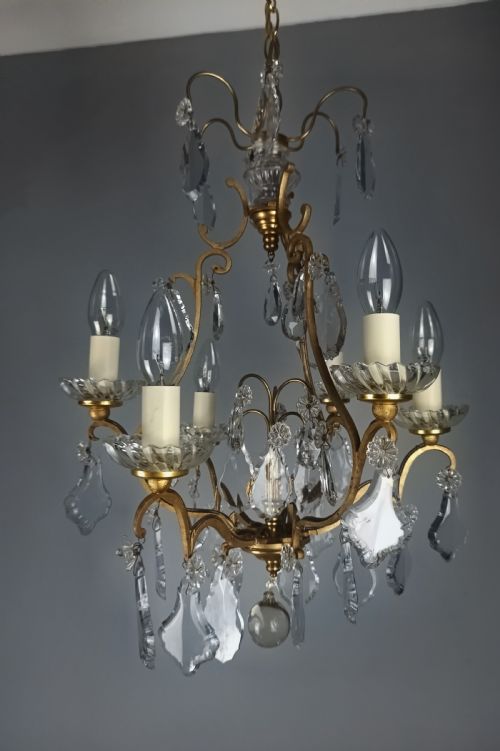
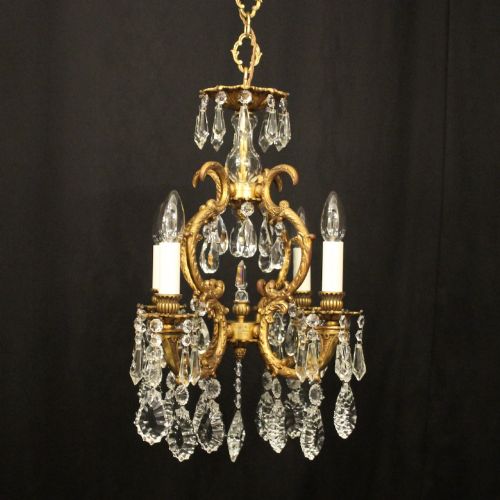
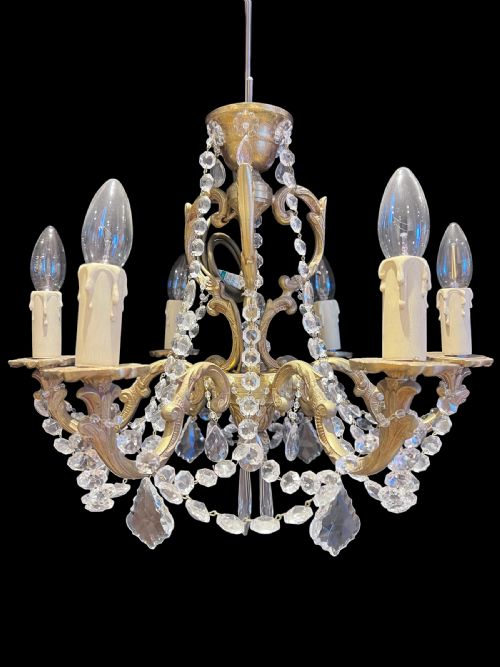
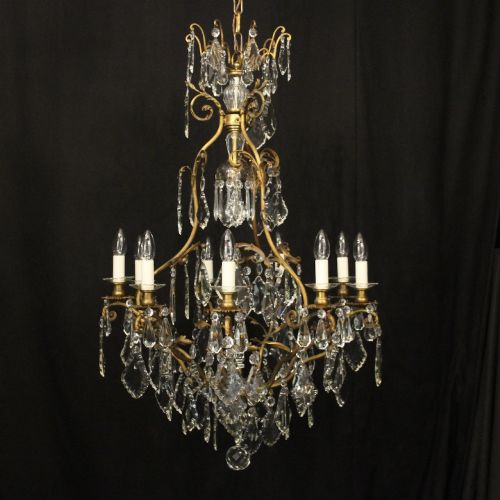
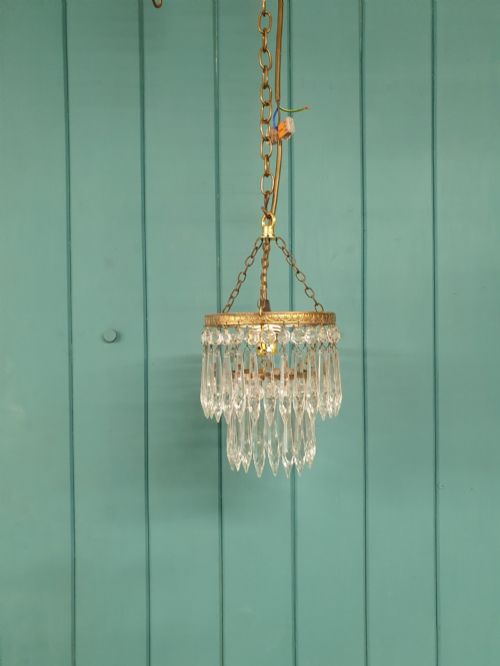
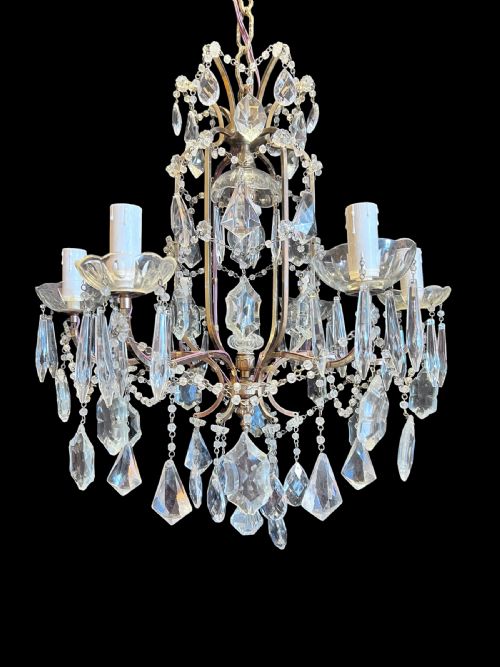
These french crystal pendant light fixtures bring nineteenth-century and early twentieth-century elegance to a room through cut glass and gleaming metal frames.
French Crystal Pendant Light
A french crystal pendant light brings together historical metalwork and reflective glass elements to illuminate interior spaces. When searching this phrase, buyers encounter pieces spanning the nineteenth century through the 1930s, including Edwardian designs and early twentieth-century creations.
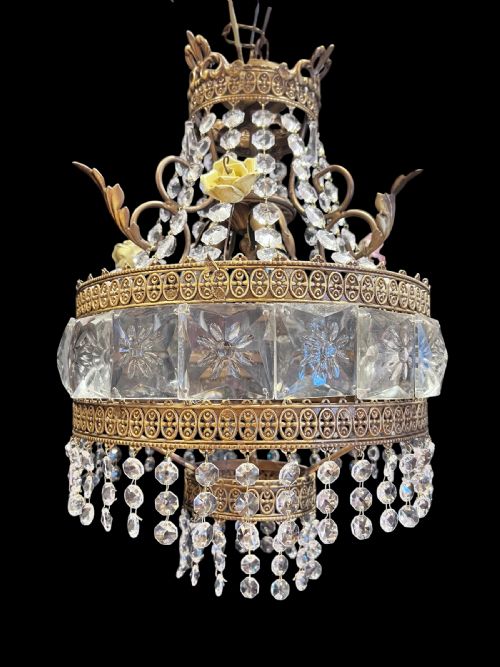
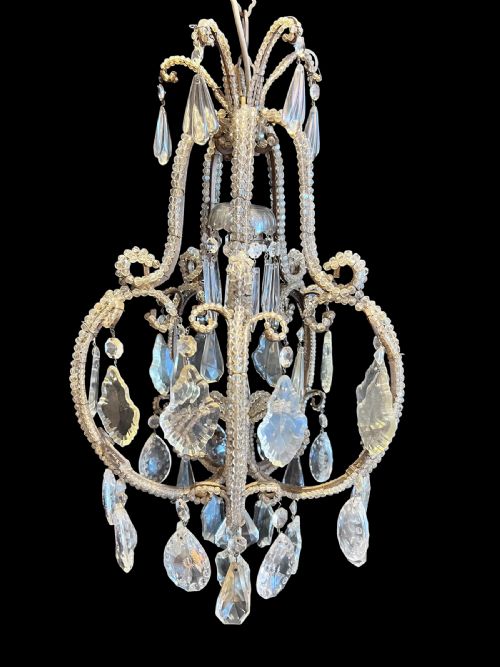
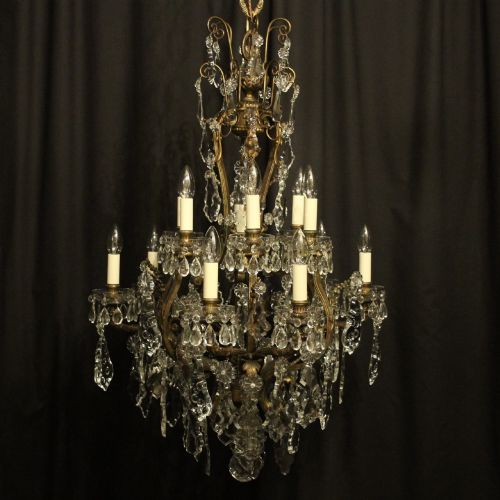
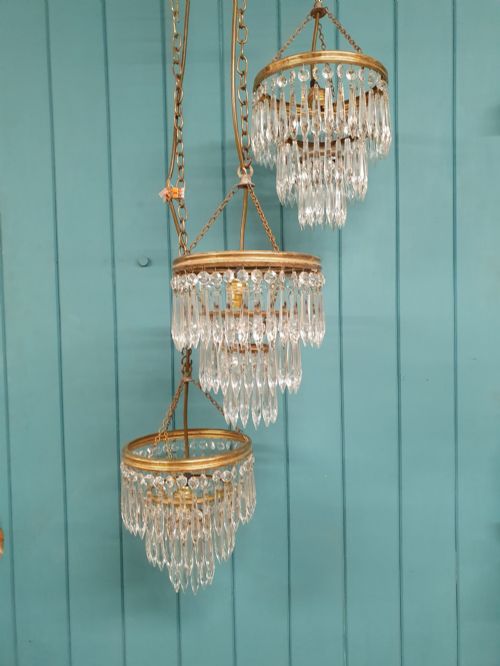
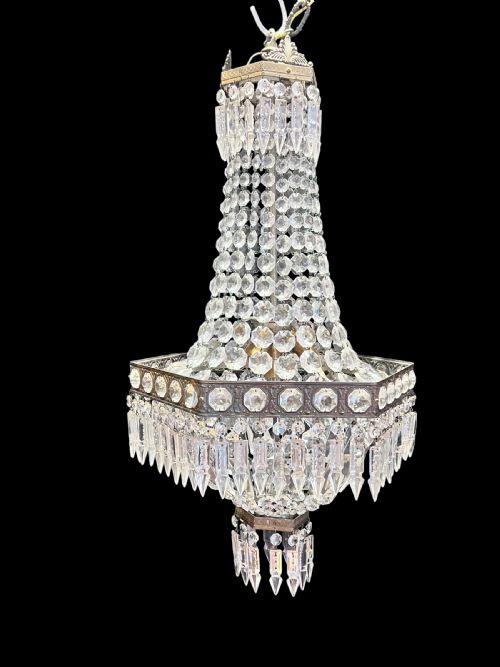
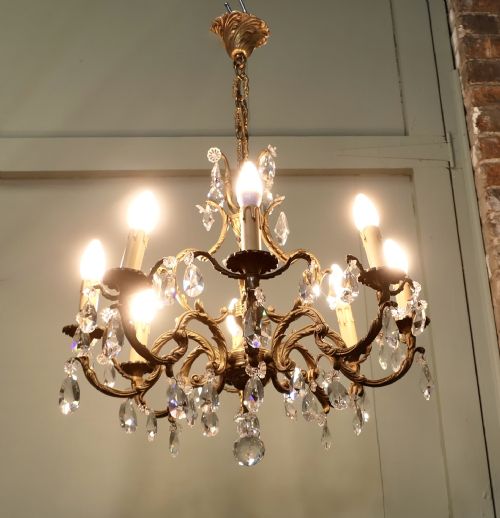
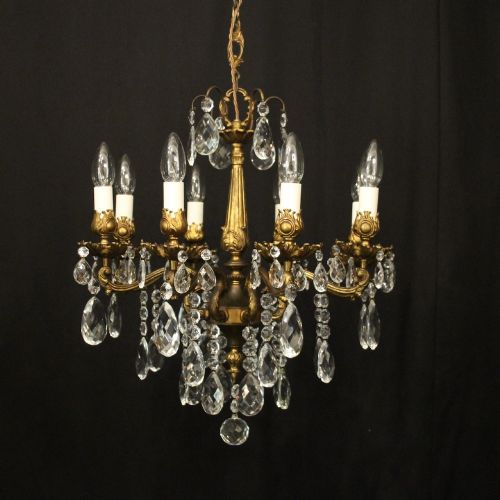
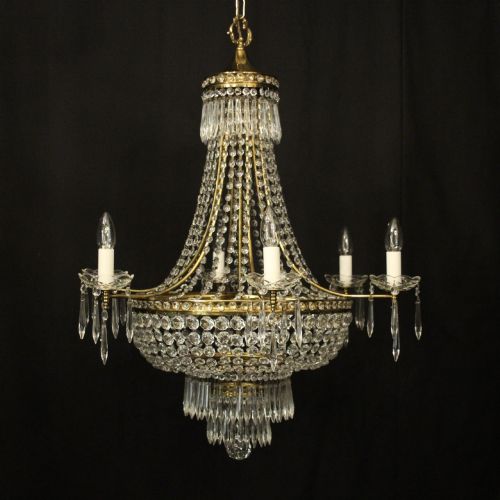
The selections on this page draw heavily on French Chateau, French Empire, French Rococo, and Louis Revival styles. Forms range from compact dome top chandeliers and small spike designs to grand multi-light tent and waterfall configurations.
Makers and designers from these periods utilised brass, bronze, gilt metal, and tolewear as structural foundations. These frames support cascading crystal drops, beads, and lustres that catch and refract the light.
Materials and construction
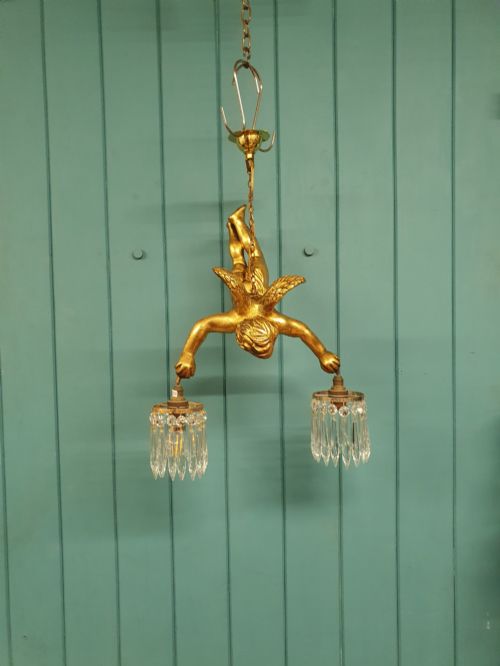
Frames are cast or wrought in brass, bronze, and gilt metal, providing sturdy support for numerous candle arms or bulb holders. Some pieces incorporate tolewear or spelter details, often shaped into figures such as cherubs or embellished with floral motifs.
The hanging components rely on cut glass and crystal, shaped into spikes, coffin prisms, beads, and teardrops. These glass elements are wired or pinned to the metal framework to create the characteristic tent and waterfall profiles seen in Empire and Louis Revival examples.
Materials documented across the pieces include gilt bronze, brass, tolewear, and cut crystal glass.
Distinctions in quality
Quality rests in the weight and clarity of the crystal components and the crispness of the metal casting. Heavier gilt bronze frames and deeply cut glass prisms demonstrate superior craftsmanship compared to simpler stamped brass alternatives.
The complexity of the design also separates standard pieces from finer examples. Elaborate multi-tier tent and waterfall structures with numerous arms and intact crystal lustres represent higher tiers of period production.
The French Crystal Pendant Light Glossary
- Tent and waterfall
- A lighting configuration where upper crystal strands form a tent shape over lower cascading drops resembling a waterfall. This style gained popularity during the French Empire period.
- Lustre
- A cut glass pendant or hanging crystal droplet suspended from a chandelier to enhance light reflection. These often feature in nineteenth-century and Edwardian fixtures.
- Spike chandelier
- A fixture characterised by upright glass or crystal spikes projecting vertically from the central structure. They appear frequently in early twentieth-century designs.
- Tolewear
- Painted or lacquered sheet metal utilised for decorative sections of a light fixture. It introduces colour and varied textures to the brass and crystal elements.
- Plafoniere
- A ceiling-mounted lighting fixture set flush or close to the ceiling rather than suspended on a long chain. These provide downward illumination using cut glass bowls or panels.
French Crystal Pendant Light: Frequently Asked Questions
How do I hang a heavy antique chandelier?
Heavenscale fixtures require secure anchorage into ceiling joists using appropriate steel mounting brackets and hardware. Professional installation ensures the electrical wiring and weight distribution safely support the brass and bronze frame.
Once secured, the hanging chain or rod is adjusted to the desired height. Crystal drops and lustres are usually attached last to prevent damage during the mounting process.
How do I clean crystal pendants safely?
Maintenance involves wiping individual glass drops with a mild solution of warm water and professional glass cleaner using a soft cloth. Removing crystals from the frame allows for thorough cleaning without risking the vintage metalwork.
Avoid submerging wired frames or antique gilt surfaces in liquid. Regular dusting with a soft feather duster keeps the glass refracting light effectively between deeper cleans.
What rooms suit a tent and waterfall light?
These grand fixtures suit dining rooms, entrance halls, or living spaces with sufficient ceiling height to accommodate their cascading proportions. Smaller dome top or single-light designs fit more intimate spaces like bedrooms or studies.
Matching the scale of the room to the width and arm count of the fixture maintains balanced interior proportions.
How do I date an antique glass fixture?
Dating relies on examining the manufacturing techniques, metal alloys, and wiring methods used in the piece. Edwardian and early twentieth-century examples often combine machine-cut glass with characteristic brass or gilt frames.
Stylistic cues such as Louis Revival ornamentation or Empire tent structures point towards specific historical design revivals prevalent from the nineteenth century into the 1930s.