

French Crystal Ceiling Light
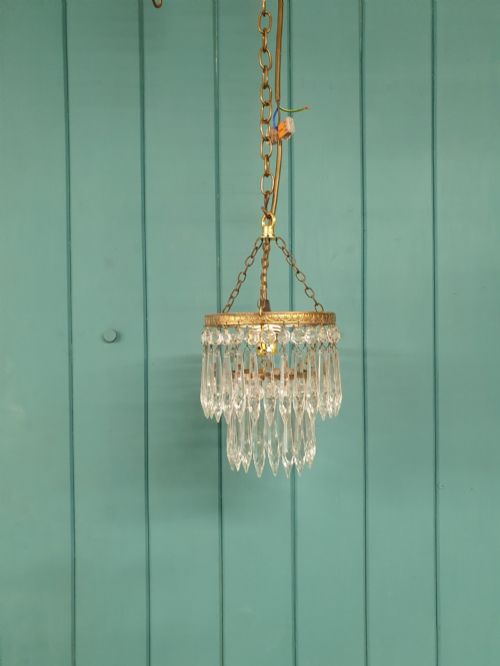
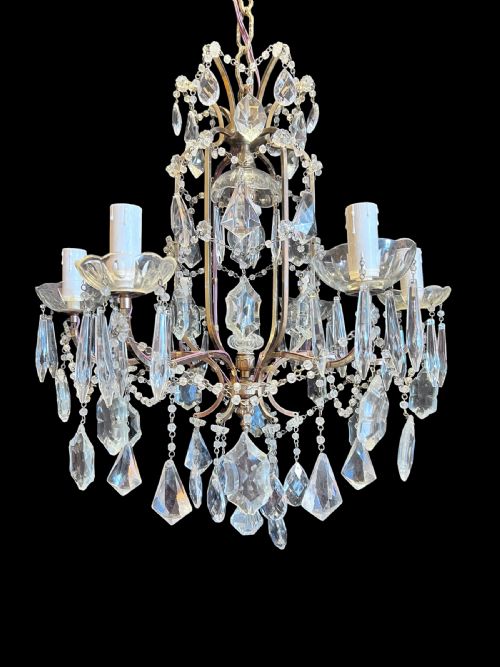
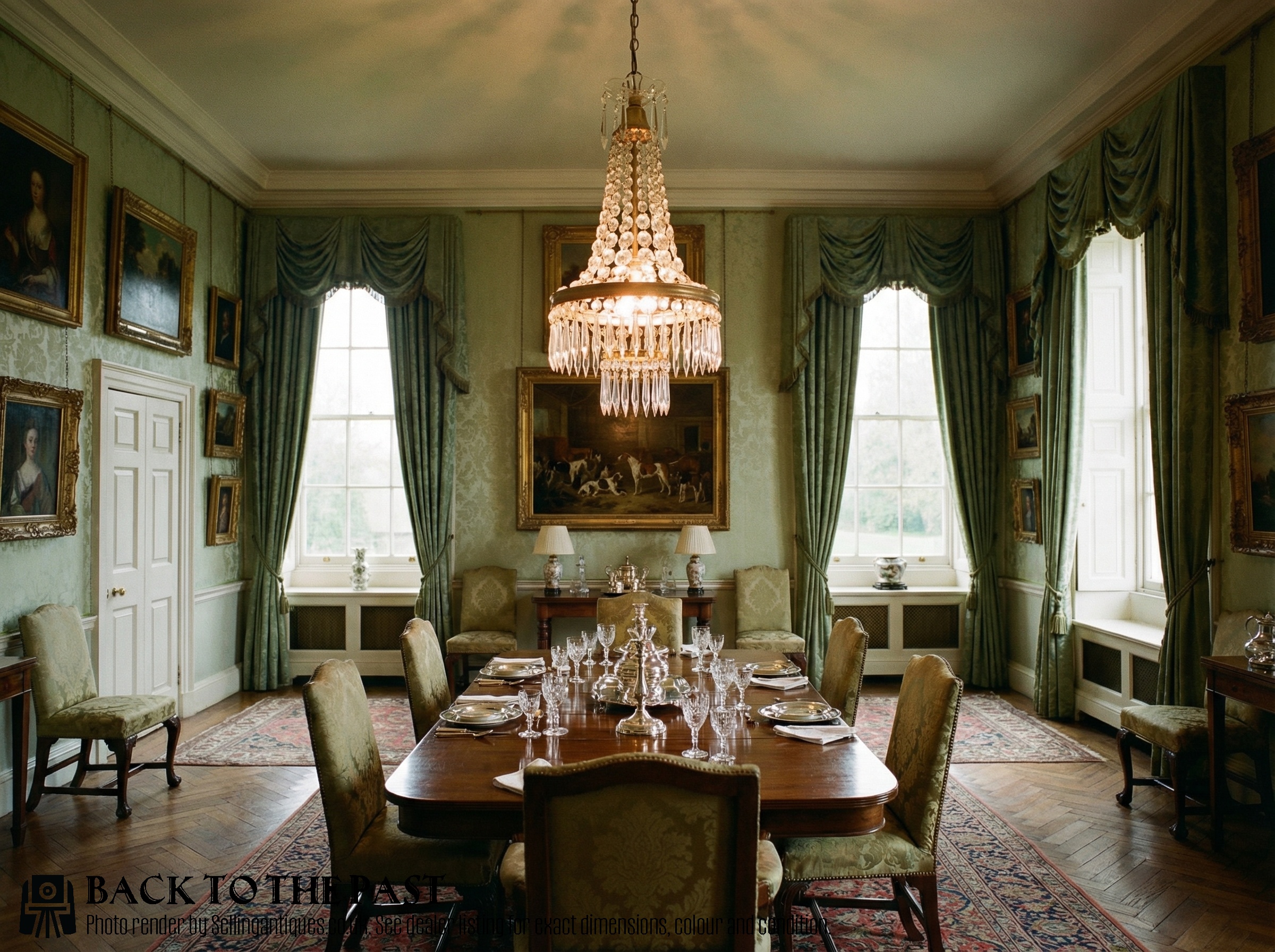
A french crystal ceiling light brings together cut glass drops and brass frames to scatter bright light across a room.
French Crystal Ceiling Light
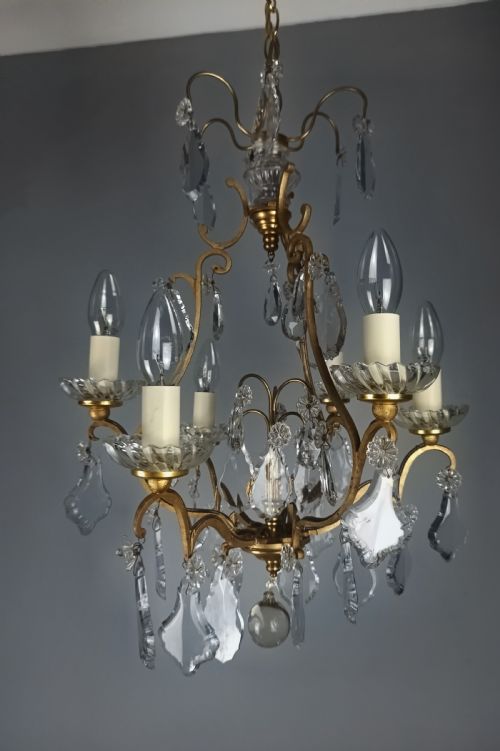
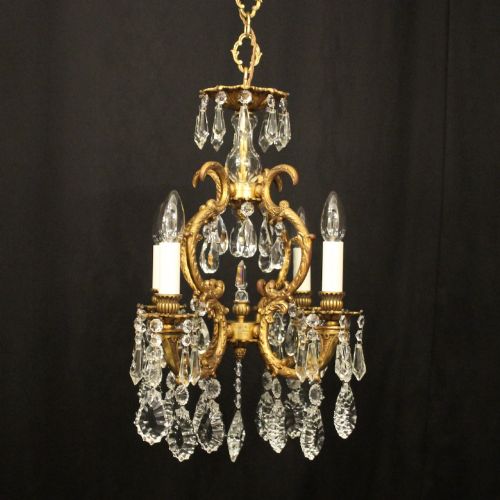
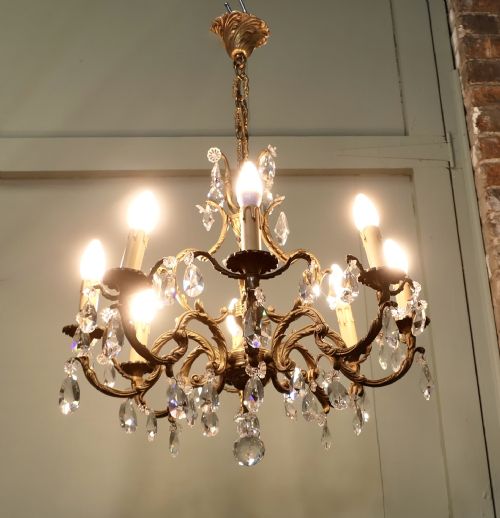
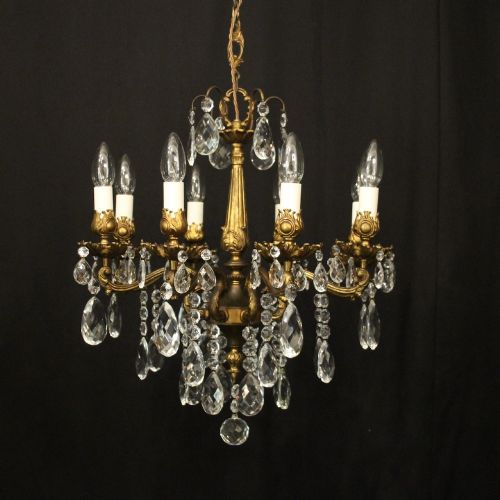
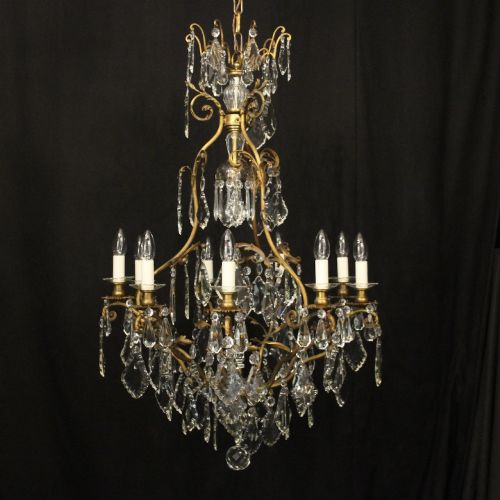
A french crystal ceiling light typically takes the form of a chandelier, pendant, or flush mount designed to hang from overhead and reflect illumination through glass elements. Buyers searching for a french crystal ceiling light encounter pieces originating from the nineteenth century through the early twentieth century, spanning periods like the Edwardian era and the nineteen-twenties.
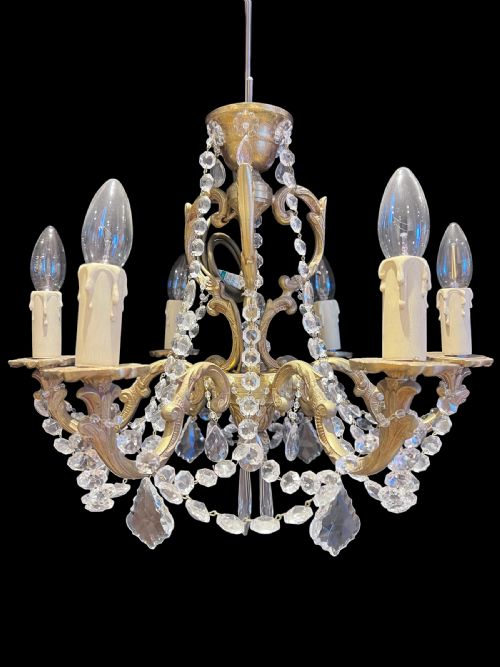
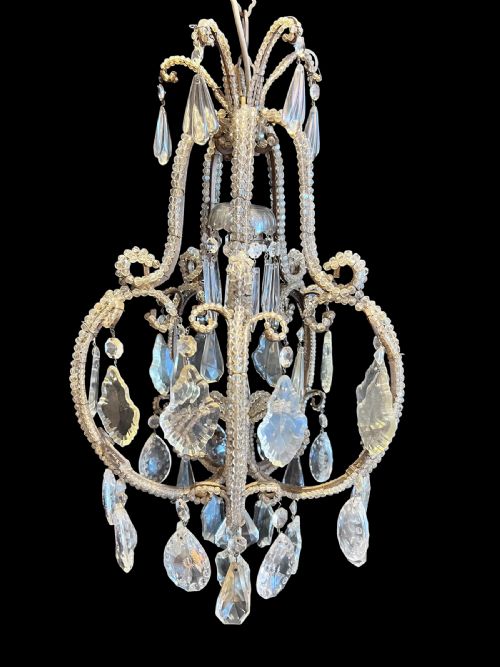
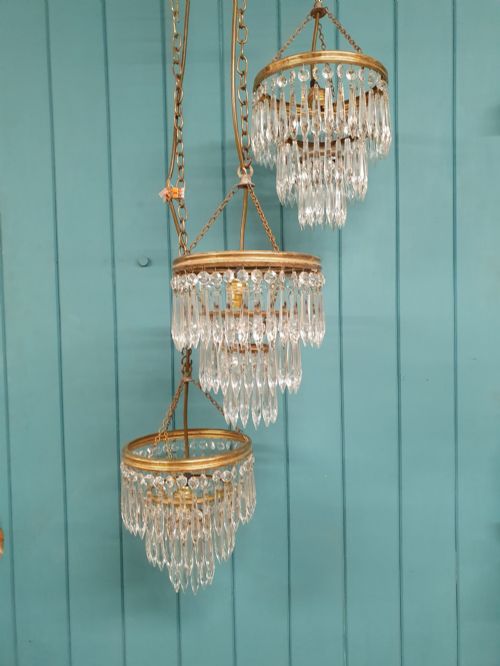
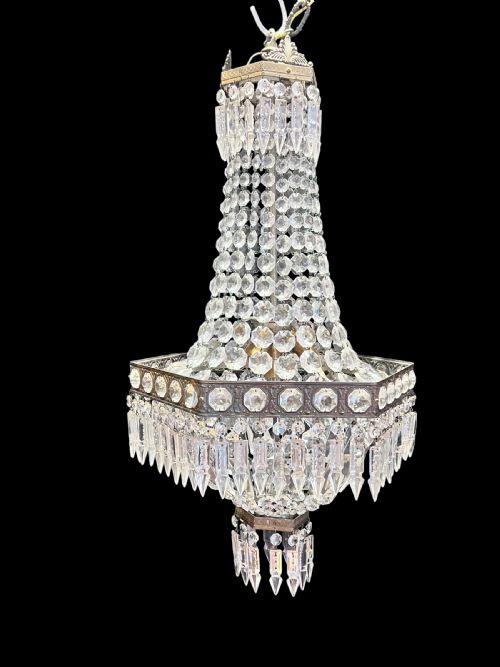
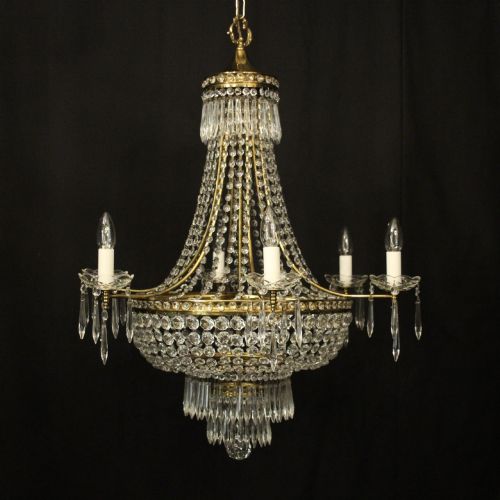
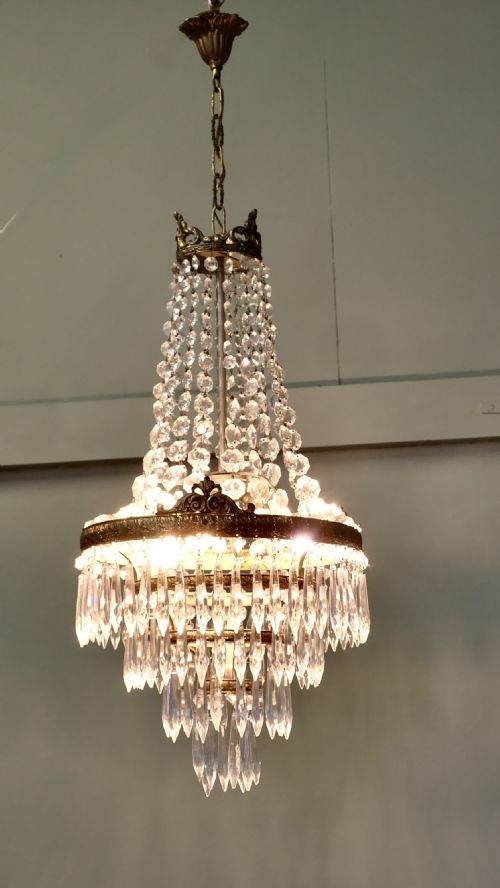
The most common formats on this page include multi-arm chandeliers, basket fixtures, and tent and waterfall designs decorated with lustres and prisms. Examples range from small single-light plafonieres to grand ballroom fixtures carrying numerous lights and elaborate brass or gilt frames.
Materials and construction
Frames are constructed from brass, bronze, spelter, and metal, often finished with gilding or silvering to create a metallic sheen. These structural elements support the weight of numerous glass components while providing the armature for electrical or candle lighting.
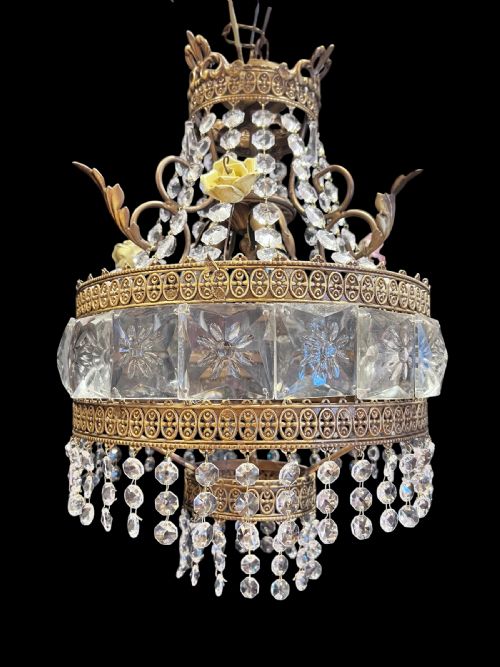
Decoration relies on cut glass, crystal, and crystal glass formed into prisms, beads, teardrops, and coffin shapes, sometimes supplemented by porcelain flowers or painted tolewear. Lustres and drops are suspended from the metal frames using wire or pins to form dense cascades and drapes of glass.
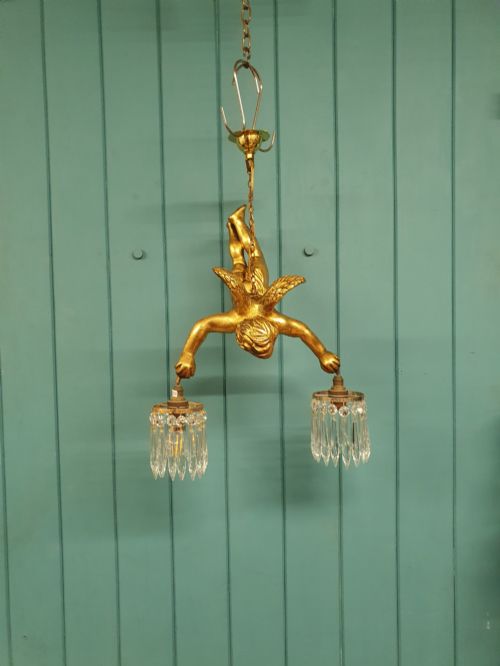
Gilded cherubs and winged cupids occasionally peek out from the brass work to support the crystal chains.
Evaluating quality and design
Quality reveals itself in the depth of the metal casting and the precision of the glass cutting, which determines how sharply the light refracts through each pendant. Heavier brass frames and complex multi-tiered configurations, such as tent and waterfall structures, require greater architectural skill to assemble than simple single-light flush mounts.
The sophistication of the decorative details, from winged cherubs and leaf motifs to coloured crystal accents and gilt finishes, separates standard production pieces from the finer examples found in the range.
The French Crystal Ceiling Light Glossary
- Chandelier
- A branched ceiling light designed to hold multiple bulbs or candles and distribute light across a space. These fixtures often incorporate elaborate hanging crystals and decorative metal arms.
- Waterfall
- A cascading arrangement of glass drops or crystals that flow outward from a central point, creating a layered visual effect. This style is frequently seen in grander empire designs.
- Lustre
- A cut glass or crystal pendant hung from a lighting fixture to catch and refract light. Lustres come in various shapes including teardrops and spikes.
- Plafoniere
- A shallow or flush-mounted ceiling light fitted close to the ceiling rather than suspended on a long chain. These fixtures suit rooms with lower ceiling heights.
- Tolewear
- Painted or lacquered metalware that adds colour and decorative contrast to lighting fixtures. It often appears alongside crystal drops in specific regional styles.
French Crystal Ceiling Light: Frequently Asked Questions
What styles are available?
The selection includes styles such as French Empire, French Rococo, Louis Revival, and Edwardian designs. These pieces often feature gilded brass or bronze paired with extensive crystal draping.
Individual items range from simple single-light fixtures to large multi-arm ballroom chandeliers with tent and waterfall configurations.
How do I choose the right size?
Size is determined by the height of your ceiling and the floor area of the room where the light will hang. Smaller spaces or lower ceilings benefit from compact flush mounts, plafonieres, or small spike chandeliers.
Larger rooms can accommodate multi-tier chandeliers or multi-arm fixtures that extend further down into the space.
What periods do these lights come from?
The available lighting spans from the nineteenth century through the early twentieth century, including Edwardian pieces and items dated across the nineteen-tens, twenties, and thirties.
Design characteristics often reflect earlier historical revivals such as Louis XV and French Chateau styles applied to twentieth-century manufacturing.
How were these fixtures mounted?
Most hanging models suspend from ceilings via chains connected to a ceiling rose, while flush mounts secure directly against the ceiling surface. These methods allow both grand hanging chandeliers and compact dome fixtures to distribute light effectively.
Wiring and rewiring are common tasks for older fixtures to meet contemporary electrical standards while retaining their antique metal and crystal framework.