



French Court Painting
French court painting encompasses portraits and interior scenes capturing aristocracy, executed in oil, enamel, and porcelain across multiple centuries.
French Court Painting
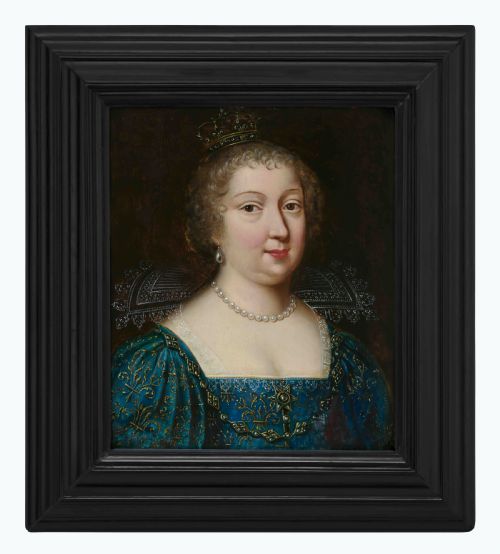
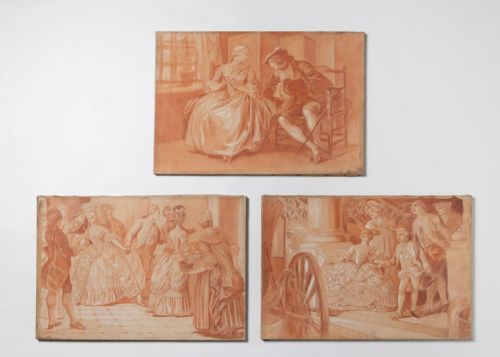
French court painting encompasses oil paintings on canvas and wooden panel, portraying aristocratic subjects and palace interiors from the seventeenth century onward. Buyers exploring this category frequently encounter nineteenth-century interpretations alongside earlier works, capturing the opulence of Versailles and royal households.
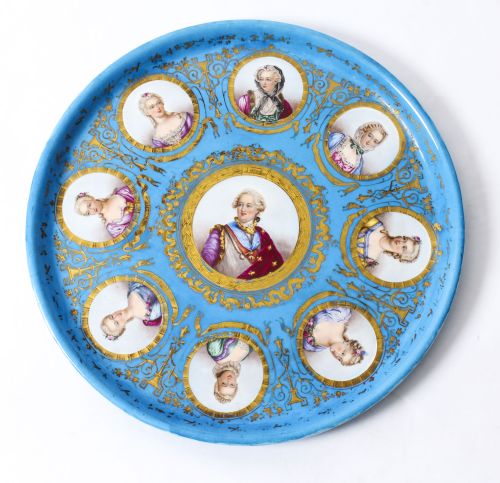
Beyond flat paintings, the selection spans porcelain figures, decorative figurines, table lamps, and charger plates influenced by court aesthetics. These diverse objects share a fascination with historical dress, courtly leisure, and ornate domestic settings from various periods.
The visual vocabulary draws heavily from revival movements, incorporating Rococo and Baroque influences into both canvas works and three-dimensional ceramic groups. Pieces range from intimate panel portraits of nobility to large interior scenes depicting courtiers at play.
How they were made
Canvases and wooden panels received layers of oil paint to build rich figurative compositions, often framed with gilding and gold leaf. Ceramic pieces such as porcelain figures and charger plates utilised meticulous hand painting and delicate lace application.
Workshops employed specialised techniques like chrystoleum production alongside traditional ceramic firing and glazing methods. Artisans applied gilt embellishments to porcelain bases and wooden frames to heighten the opulent appearance.
Courtiers found time for both afternoon tea and competitive chess matches within the crowded canvas interiors of Versailles.
What varies in quality
Execution in brushwork and facial expression distinguishes standard decorative items from superior portraits attributed to known circles or followers of established painters. Fine porcelain groups demonstrate greater precision in hand-painted detail and intricate biscuit or lace ceramic rendering.
Materials and framing contribute significantly to overall standard, particularly the presence of genuine gold leaf, heavy gilding, and period frames. The subtlety of interior perspective and depth within oil paintings separates accomplished compositions from mass-produced interpretations.
Bourdois and Bloch·Letu and Mauger·La Coutille Factory·Henri and Charles Beaubrun·Pierre Gobert
The French Court Painting Glossary
- Chrystoleum
- A method of applying a hand-coloured print to glass and then melting away the paper base before oil painting the reverse. This technique created layered, translucent images popular during the nineteenth century.
- Biscuit porcelain
- Unglazed ceramic fired to a matte, marble-like finish that highlights fine sculptural detail. Makers utilised this material extensively for delicate figurative groups and decorative figures.
- Gilding
- The application of gold leaf or powder to surfaces including wooden frames, porcelain mounts, and canvas details. This process provided the opulent metallic sheen associated with royal interiors.
- Rococo Revival
- A nineteenth-century artistic movement that resurrected the ornate, asymmetrical scrollwork and playful elegance of the eighteenth-century French court. Pieces in this style emphasise elaborate decoration and pastel palettes.
- Panel painting
- An artwork executed on a rigid wooden support rather than stretched canvas. This traditional backing was common in earlier centuries before canvas became the dominant medium.
French Court Painting: Frequently Asked Questions
What is a french court painting?
French court painting refers to artworks depicting nobility, royal portraits, and palace interiors produced across the seventeenth, eighteenth, and nineteenth centuries. The category also embraces related decorative ceramics and porcelain figures capturing the same aristocratic aesthetic.
These pieces reflect the shifting political and artistic tastes of France, from Baroque splendour to later revival movements.
How do I date a painted porcelain figure?
Dating porcelain involves examining factory marks, the composition of the ceramic body, and the style of hand-painted decoration. Nineteenth-century revival pieces often emulate earlier eighteenth-century forms but display distinct manufacturing techniques.
Base markings and specific ceramic bodies, such as biscuit or glazed porcelain, offer further clues to the period of origin.
Where were these paintings displayed?
Original works hung within royal residences, chateaux, and wealthy townhouses to project status and cultural refinement. Interior scenes often recorded the actual architecture and social rituals of spaces like Versailles.
Later Victorian and revival pieces were designed for domestic drawing rooms seeking to replicate historic grandeur.
How do I care for oil paintings on wood?
Oil paintings on wooden panels require stable humidity and temperature to prevent the wood from warping or cracking over time. Direct sunlight and sudden environmental changes should be avoided to protect the paint layer and any applied gilding.
Gentle dusting with a soft, dry brush maintains the surface without introducing moisture.