




French Countryside Art
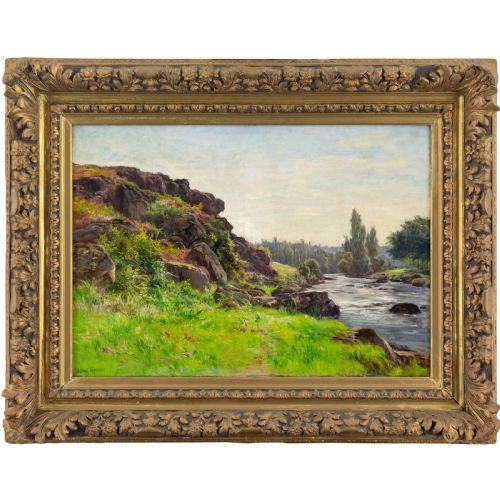
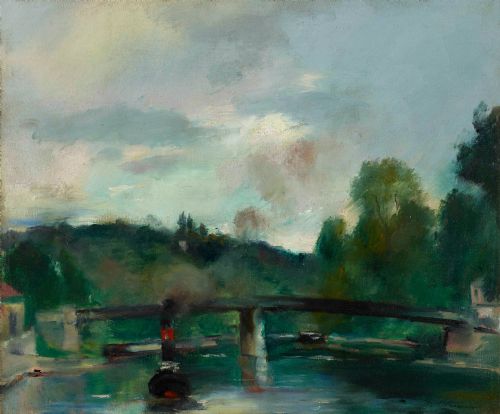
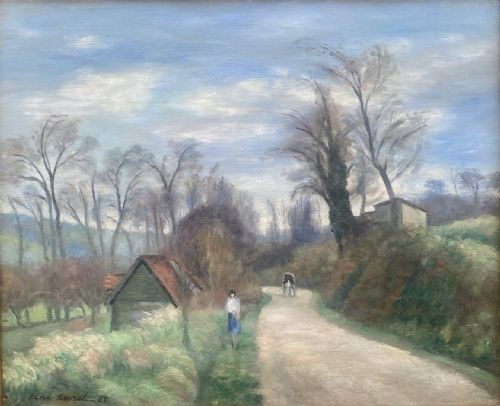
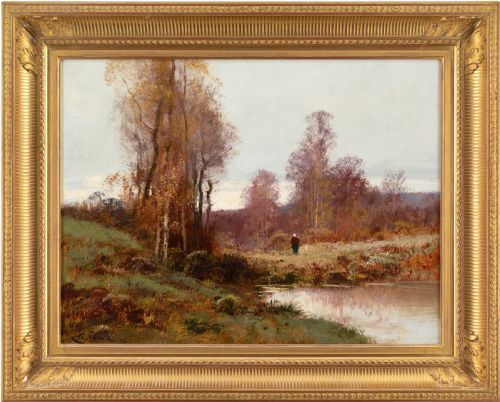
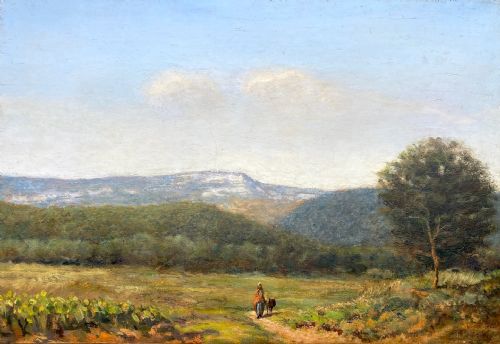
These pieces of French countryside art capture pastoral life and rural landscapes across the nineteenth and twentieth centuries.
French Countryside Art
French countryside art gathers oil paintings, pastels and charcoal drawings depicting rural scenes, rivers, orchards and farmhouses across France. When you explore French countryside art, you encounter regional depictions ranging from Normandy and Provence to Corsica and the Isere.
The selections span distinct periods from the nineteenth century through the decades of the nineteen-fifties and nineteen-sixties. Painters working in Impressionist, Post-Impressionist and Fauvist styles dominate the visual record.
Landscape subjects feature prominently, portraying winding paths, riverbanks, cattle, olive trees and agricultural labour. Canvases and panels record the changing light of rural France through varying decades.
Materials and Methods
Makers apply oil paint onto canvas, wood panels and boards using visible brushwork and layered pigments. Canvases frequently sit within wooden and gesso frames.
Draftsmen employ charcoal and pastel mediums on paper to render atmospheric effects like windy days and evening light. Supporting substrates vary from simple wood panels to heavy stretched canvases.
French Countryside Art Retail Price Guide 2026
Typical asking prices for french countryside art among the pieces listed under this phrase on Sellingantiques today, from the lower quarter to the upper quarter. They describe what is for sale here now, not the wider market.
Listings feature oil on canvas, wood panels, pastel on paper, and charcoal drawings spanning the 1890s to the 1960s.
Assessing Quality
Quality rests upon the handling of light, brushwork confidence and compositional depth rather than subject matter alone. Works demonstrating distinct regional colour palettes and assured handling stand apart from standard decorative pieces.
The integration of the supporting frame, the preservation of the original paint surface and the clarity of provenance distinguish higher tier works from ordinary regional landscapes.
Gabriel Mathieu·Henri Ottmann·Rene Levrel·Charles Clair·André Prévot-Valéri·Mario Pinetti·Pierre Emmanuel Eugene Damoye·Jeffrey Pratt·Henri Therme·Martin Lamotte·Delâtre·Charles Edmund Rene His
The French Countryside Art Glossary
- Post-Impressionism
- An artistic movement extending Impressionism while rejecting its limitations, focusing on symbolic content and heavier brushwork. Painters used vivid hues and thick paint to express emotional response to rural scenes.
- Fauvism
- A style characterised by strong painterly qualities and bold colours applied straight from the tubes. Practitioners prioritized individual expression over representational values.
- Gesso
- A paint mixture consisting of a neutral binder mixed with chalk, pigment, or plaster. It serves as a prepared surface for wood panels and frames before gilding.
- Pastel
- A dry painting medium in the form of a stick, consisting of powdered pigment and a binder. Works executed in this medium rely on paper supports and protective glazing.
French Countryside Art: Frequently Asked Questions
What periods do these artworks represent?
The works span from the nineteenth century through the mid-twentieth century, capturing shifting aesthetic movements. Dates extend from the eighteen-nineties into the nineteen-sixties.
Represented periods encompass late nineteenth century pastoral traditions alongside modernist interpretations from the interwar decades and beyond.
Which regions of France appear most often?
Painters record rural subjects across Normandy, Provence, Corsica and the Isere region. Coastal areas and southern landscapes feature frequently.
Specific locales include the river Orne, the Alpilles, and various unnamed farmhouses and country paths across the French countryside.
What painting techniques do artists use?
Makers primarily apply oil paint to canvas, panel or board, utilising impressionist and post-impressionist brushstrokes. Some works employ pastel or charcoal on paper.
Surface textures vary from smooth academic finishes to thick, expressive applications of pigment characteristic of colourist and fauve approaches.
How do I display these framed pieces?
Many examples retain period wooden and gesso frames that complement the painting style. Wall placement should account for direct sunlight to protect oil pigments and paper supports.
Ensuring stable indoor humidity preserves both the wooden stretchers and the integrity of the canvas or panel.