


French Country Stool
These French country stool examples combine rustic timber frames with low seating forms, offering practical utility and enduring vernacular charm.
French Country Stool
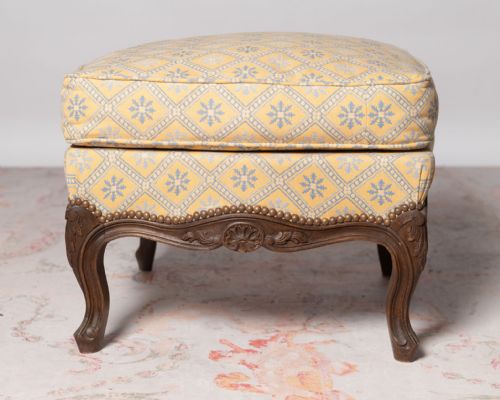
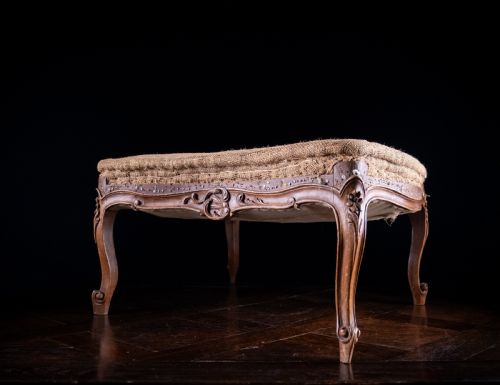
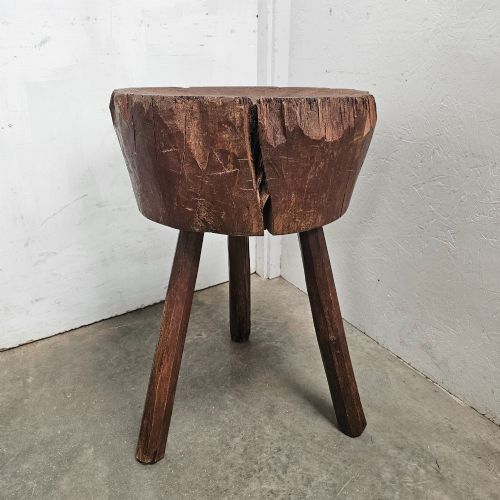
A French country stool encompasses low rustic seating, heavy game blocks, and carved footstools originating from nineteenth and early twentieth century rural contexts. Buyers searching for a French country stool find utilitarian forms ranging from primitive milking seats to upholstered Louis XV style footstools.
The selection frequently includes beech, oak, and elm pieces displaying vernacular rural styles alongside painted wooden surfaces. Simple milking stools and chunky game blocks sit alongside refined footstools featuring original tapestry or fabric seats.
How they were made
Construction relies heavily on solid hardwoods like oak, beech, elm, and cherry shaped into sturdy frames and heavy blocks. Joinery techniques prioritize functional durability, utilising pegged legs and thick timber tops suited to demanding daily use.
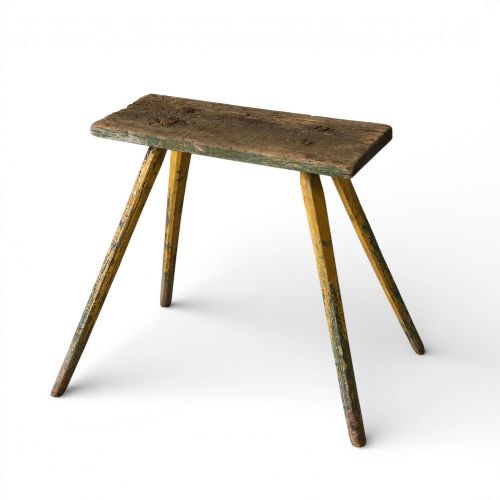
Surfaces often feature original paint finishes, natural wood patination, or brass details, while upholstered variants incorporate traditional textile coverings such as linen and tapestry.
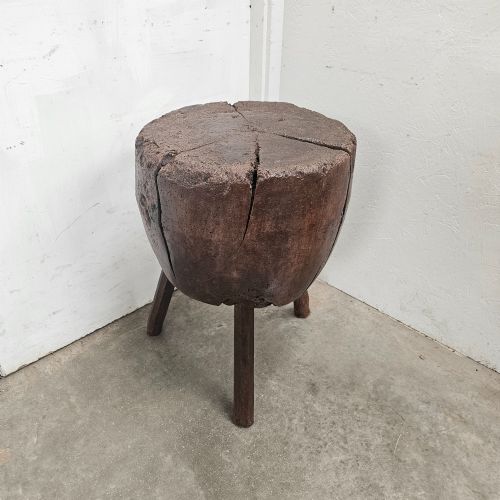
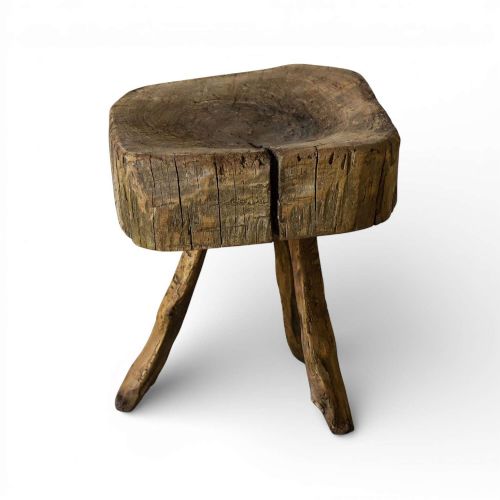
Several heavy game blocks stand proudly on wonderfully gnarled legs straight from the French forest floor.
What varies in quality
Quality differences emerge in the character of the timber and the integrity of original structural elements like gnarled legs or carved details. Pieces retaining honest surface patination, original paint, or period upholstery carry greater authenticity than later adaptations.
The degree of hand-carving and the presence of vernacular flourishes separate simple utilitarian seating from more decorative revival styles.
The French Country Stool Glossary
- Vernacular rural style
- Describes unpretentious objects made by local craftspeople using regional materials for everyday domestic or agricultural purposes.
- Louis XV style
- A decorative aesthetic characterised by asymmetrical curves, natural motifs, and elegant cabriole legs.
- Game block
- A dense section of tree trunk or heavy timber utilised in food preparation or rural trade tasks.
- Milking stool
- A small, simple three-legged seat designed for stability on uneven agricultural floors during dairy work.
- Cabriole leg
- A furniture leg featuring a double curve that bends outward at the knee and inward at the ankle.
French Country Stool: Frequently Asked Questions
Are these stools comfortable to sit on?
Many primitive wooden designs prioritize sturdy utility over cushioning, functioning well as occasional seats or decorative surfaces.
Upholstered variants and footstools provide softer seating through traditional padding and fabric or tapestry covers.
How do I date a piece?
Dating relies on assessing wood patination, tool marks, construction methods, and stylistic indicators such as carved cabriole legs.
Evidence points largely to nineteenth and early twentieth century origins across various French rural workshops.
Can I use them as small tables?
Sturdy game blocks and flat-topped stools easily double as compact side tables or plant stands in domestic interiors.
Their substantial timber construction provides a stable surface for holding daily items.
What is the difference between styles?
Vernacular and primitive pieces display plain, utilitarian construction suited to rural farmhouses and game preparation.
Louis XV and XVI revival styles incorporate decorative carving and refined upholstery reflecting formal domestic interiors.