

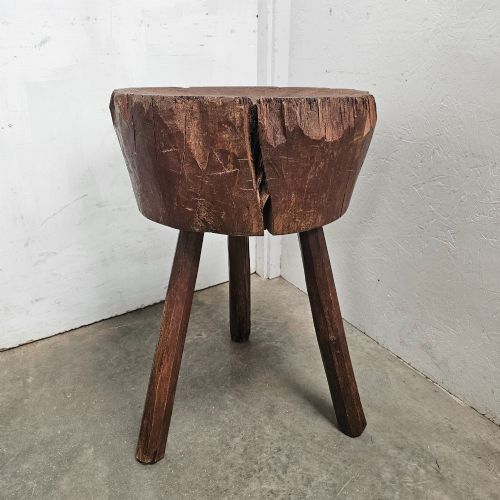


French Butcher Block Table
These heavy-duty french butcher block table examples bring genuine working utility and rustic warmth to a kitchen.
French Butcher Block Table
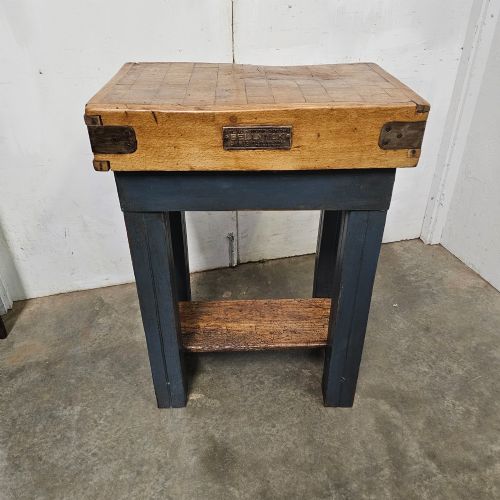
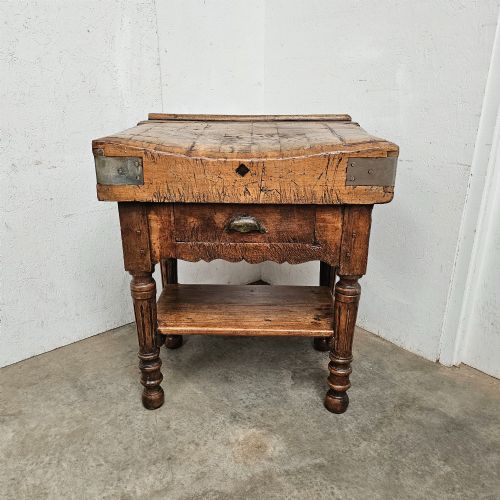
A french butcher block table is a robust preparation surface designed originally for professional meat cutting and now sought after for domestic kitchens. The selection on this page spans the nineteenth century through to the early twentieth century, taking in styles from rustic country to french industrial.
Origins lean heavily toward provincial and vernacular rural workshops where utility dictated form. Pieces range from unpretentious working tables to refined examples featuring metal mounts and original stands.
How They Were Made
Construction relies upon dense hardwoods selected for durability and resistance to heavy blows. Beech, oak, elm, hornbeam, and sycamore provide the heavy working surfaces, joined tightly to endure decades of commercial use.
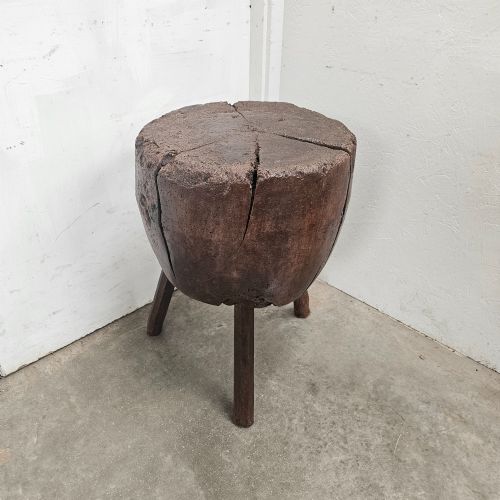
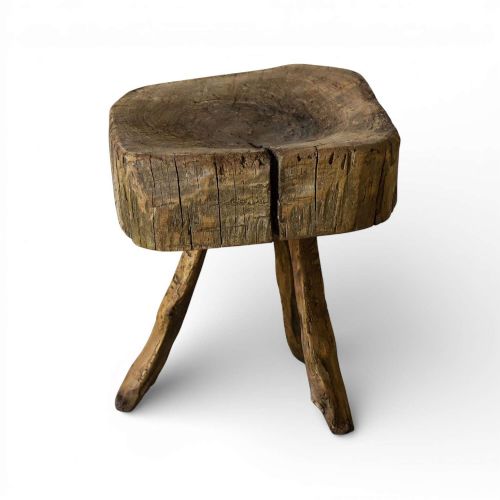
Bases are constructed from complementary timbers or supported by iron and metal mounts. Some examples feature original gnarled legs or trestle structures that anchor the massive weight of the top above.
French Butcher Block Table Retail Price Guide 2026
Typical asking prices for french butcher block table among the pieces listed under this phrase on Sellingantiques today, from the lower quarter to the upper quarter. They describe what is for sale here now, not the wider market.
Some nineteenth-century game blocks arrive bearing the quiet indentation marks of centuries of country kitchen preparation.
What Varies in Quality
Quality rests in the integrity of the timber block and the originality of its support structure. Thick, end-grain or stave tops that retain their heavy proportions demonstrate superior commercial provenance.
The relationship between the top and its base determines the character of the piece. Retaining original gnarled legs, decorative wooden bases, or period metal mounts distinguishes a piece intended for serious preparation from a later adaptation.
Trussant & Cie·Hennes France
The French Butcher Block Table Glossary
- Game Block
- A specialised heavy block traditionally used for preparing game rather than general butchery. These pieces often feature particularly thick timber sections.
- Trestle Table
- A table structure where the top is supported by two or more trestles, comprising uprights and horizontal feet. This form allows maximum legroom beneath heavy working surfaces.
- Vernacular Rural
- A style category describing items made locally by tradesmen using regional materials without academic architectural pretension. These objects prioritize straightforward functional utility.
- French Provincial
- Design originating from the regions outside Paris, combining practical construction with modest decorative flourishes. It offers a softer aesthetic than formal Parisian furniture.
- Scrubbed Finish
- A surface texture achieved through repeated vigorous cleaning with water and stiff brushes, removing softer grain and leaving the harder timber raised and pale.
French Butcher Block Table: Frequently Asked Questions
How do I clean a french butcher block table?
Maintain the timber surface by scraping away dried debris and wiping with a damp cloth and mild soap. Avoid soaking the heavy wood in water to prevent splitting.
Regularly nourish the hardwood top with food-safe mineral oil to preserve the grain and keep the surface sealed against moisture.
Can I use these for daily food preparation?
Many buyers continue to use antique blocks for chopping and food preparation just as their original owners did. The dense hardwoods like beech and elm provide durable surfaces.
Ensure the surface is properly sanitized and oiled before preparing food on nineteenth-century timber.
How do I date a butcher block?
Dating relies on examining the construction methods of the base and the wear patterns on the timber top. Hand-cut joinery and original iron mounts often point to nineteenth-century origin.
Compare the timber species and leg style against documented provincial furniture of the period to narrow down the decade.
Are the tops removable from the bases?
Many historical blocks feature heavy freestanding tops that rest securely on their bases by gravity alone. This heavy construction made it easier to transport and maintain the timber.
Some industrial or later variants feature fixed frames, so check the specific construction before attempting to lift the top.