

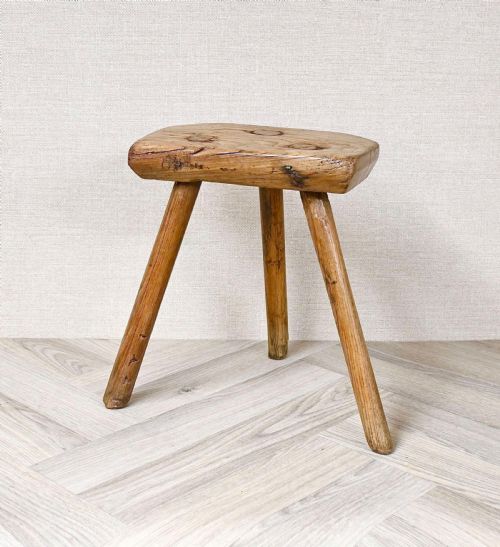
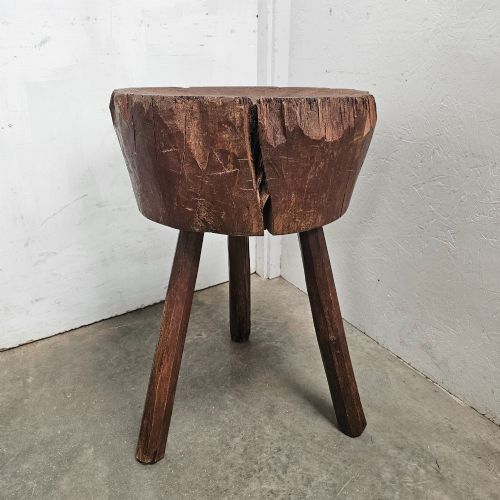


Primitive Tripod Wood Stool
These primitive tripod wood stool examples are honest rural seats and chopping blocks built for utility, offering buyers a tactile connection to historical country life.
Primitive Tripod Wood Stool
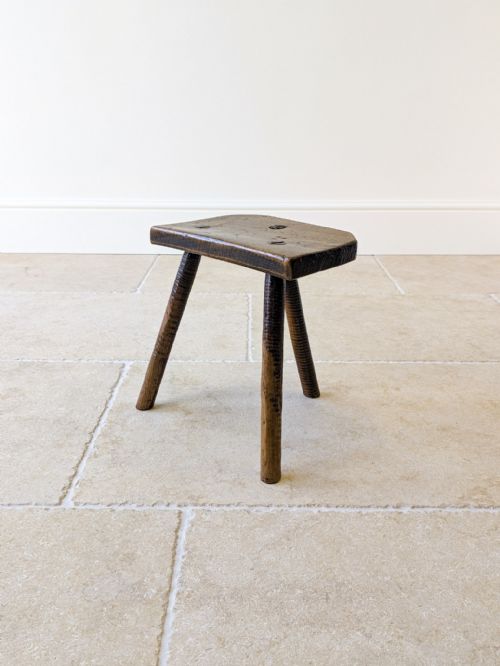
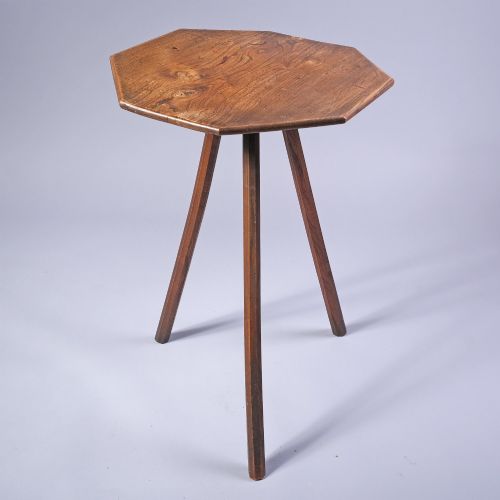
A primitive tripod wood stool sits at the intersection of rural utility and simple domestic craft. These objects take the form of milking stools, cutler's stools, game blocks, and occasional tables supported by three legs.
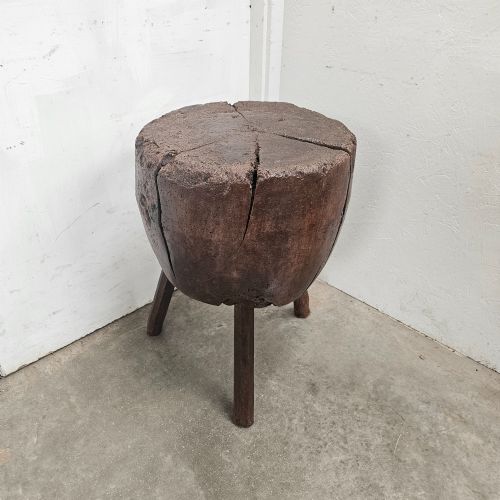
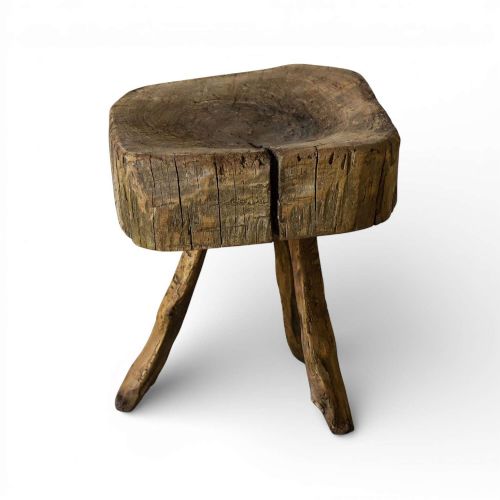
Buyers will most frequently meet nineteenth-century examples such as chopping blocks on gnarled legs and rustic occasional tables. Each survivor demonstrates the straightforward approach of rural makers who prioritised function above all else.
How They Were Made
Makers utilised solid timbers including oak, beech, ash, elm, and solid walnut to build these functional items. Selecting native woods meant utilising what grew locally for the workshop or farm.
Construction relies on straightforward joinery where three legs join directly to a thick wooden seat or block. Gnarled natural branches and sturdy turned supports provide stability without elaborate ornamentation.
Primitive Tripod Wood Stool Retail Price Guide 2026
Typical asking prices for primitive tripod wood stool among the pieces listed under this phrase on Sellingantiques today, from the lower quarter to the upper quarter. They describe what is for sale here now, not the wider market.
The listings span the eighteenth and nineteenth centuries, featuring timbers such as oak, ash, elm, and solid walnut in regional styles.
What Varies in Quality
Quality rests in the character of the timber and the honesty of the construction. Pieces hewn from dense elm or richly grained walnut hold greater presence than softer woods.
The charm of the support structure dictates visual success. Original gnarled legs and patinated surfaces distinguish a superior vernacular survivor from a routine utilitarian object.
The Primitive Tripod Wood Stool Glossary
- Vernacular
- Architecture or furniture built by local craftsmen using traditional methods and local materials, rather than following academic architectural styles. This approach defines the rustic character of these country pieces.
- Game Block
- A heavy wooden block traditionally used in French kitchens for preparing game and meat. These massive chopping surfaces often double as low tables.
- Milking Stool
- A low three-legged seat designed for stability on uneven agricultural floors. Their simple tripod construction prevented rocking during daily chores.
- Patina
- The surface sheen and colour developed through decades of handling, cleaning, and exposure to light. It serves as visual proof of an object's age and heavy use.
Primitive Tripod Wood Stool: Frequently Asked Questions
What were primitive tripod stools used for?
These pieces served practical roles in rural homes, dairies, and workshops. Milking stools provided a stable seat for farm labourers during daily chores, while heavier blocks functioned as butcher's surfaces.
Craftsmen also utilised low tables for specific trades such as cuttinglery work. Their simple forms were dictated entirely by the demands of manual labour.
How do I live with a rustic stool?
These items integrate easily into modern interiors as side tables, plant stands, or sculptural accent pieces. Their modest scale allows them to fit beside a chair or in a hallway.
Keep them away from direct heat sources to prevent the old timber from splitting. Regular light dusting preserves the historic surface without harming the dry timber.
How can I tell the age of these pieces?
Dating relies on observing tool marks, timber shrinkage, and the nature of the wear. Eighteenth and nineteenth-century items display the specific hand-working methods of regional carpenters before industrial standardisation.
Examine the underside and the joints where the legs meet the seat for evidence of primitive construction techniques. Original surfaces and honest wear patterns offer the clearest clues to period origin.
What is a game block?
A game block is a heavy chopping surface constructed from thick timber, commonly beech or oak. French kitchens utilised these substantial blocks for preparing game.
They stand on sturdy legs, often featuring gnarled natural supports that give them a sculptural quality. Their robust construction allowed them to withstand heavy daily chopping.