





French Country Oak Bed
A french country oak bed brings rural warmth and robust joinery to a bedroom, offering solid timber construction and regional character.
French Country Oak Bed
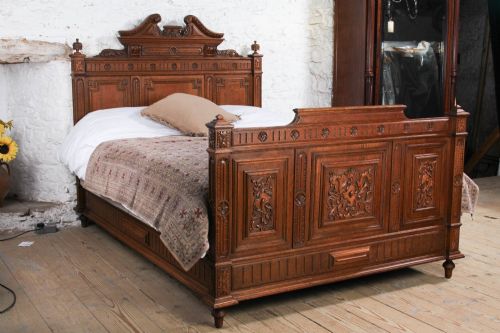
A french country oak bed represents traditional European carpentry, utilising heavy timber and vernacular styling from regional workshops. Buyers searching for a french country oak bed encounter robust frames originating from the late nineteenth and early twentieth centuries, spanning periods such as 1880, 1890, 1900, 1910, and 1920.
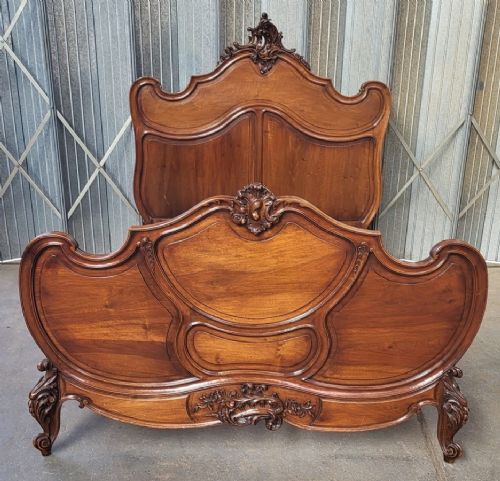
The forms vary across this selection from standard double and king size bedframes to daybeds, window seats, and cabinets adapted from closed bed fronts known as lits-clos. Regional influences emerge strongly through styles like French Provincial, Henri II Revival, Louis XV, Louis XVI, and Breton Folk Art.
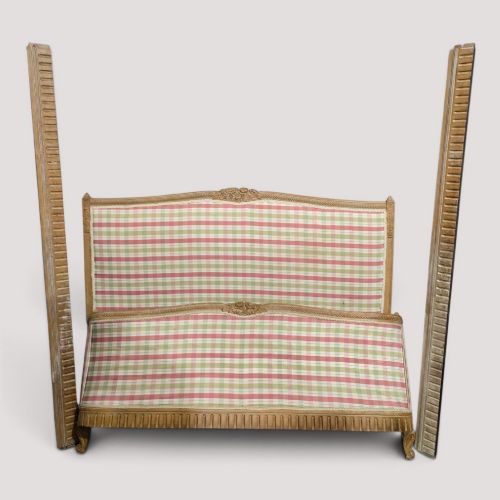
Most examples rely on solid oak and chestnut construction, though some pieces feature limed wood or bleached finishes alongside textile and linen blend elements. These variations reflect both the original provincial workshop practices and subsequent surface treatments applied to lighten the timber.
Materials and construction
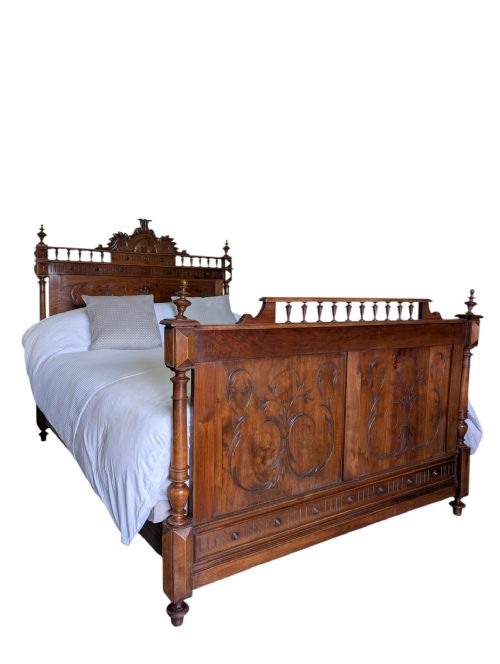
Makers built a french country oak bed using solid oak and chestnut timbers, selected for structural strength and resistance to warping in rural homes. Panels and headboards received hand-carved ornamentation that drew upon local folklore and classical revival motifs.
Surface treatments range from natural waxed grain to later bleached or limed wood finishes that soften the dark tone of the original timber. Textile and linen blend elements frequently appear in newly upholstered components or integrated daybed cushions.
French Country Oak Bed Retail Price Guide 2026
Typical asking prices for french country oak bed among the pieces listed under this phrase on Sellingantiques today, from the lower quarter to the upper quarter. They describe what is for sale here now, not the wider market.
One exceptional listing transforms an entire nineteenth-century Breton closed bed front into a functional cabinet.
Assessing quality
The distinction between ordinary and superior pieces lies in the depth and crispness of the hand carving on the headboards and footboards. Master carvers in regions like Brittany delivered intricate floral and geometric motifs with sharp relief, whereas lesser examples show softer, more mechanical execution.
Proportion and timber selection also divide the range, with superior frames utilising dense, straight-grained solid oak rather than mixed secondary woods. The integration of period architectural elements, such as turned posts or panelled bed fronts, dictates the structural integrity and visual weight of the piece.
The French Country Oak Bed Glossary
- Lit-clos
- A traditional enclosed box bed from Brittany designed to retain heat during cold winters. Later pieces are often converted into cabinets or decorative furniture.
- Breton Folk Art
- A regional design style characterised by dense geometric carving, wheel motifs, and depictions of local rural life. It frequently appears on nineteenth-century oak furniture from western France.
- Limed wood
- A finishing technique where a special compound is brushed into the open grain of oak to create a lighter, weathered appearance. This treatment highlights the natural texture of the timber.
- Louis XV Style
- A decorative aesthetic marked by asymmetrical curves, cabriole legs, and naturalistic scrollwork. In bed frames, this translates to flowing headboard contours and subtle floral carvings.
French Country Oak Bed: Frequently Asked Questions
How do I fit a modern mattress?
Many antique frames pred standard modern mattress dimensions, meaning custom slatted bases or mattress supports may be necessary to ensure a secure fit within the wooden rails.
Checking the internal width and length before purchase allows you to plan any necessary adjustments for contemporary bedding.
Are these beds difficult to assemble?
Most period French beds utilise traditional iron bed bolts and tenon joints that slot together simply with a spanner. Having two people manage the heavy solid wood components makes assembly straightforward.
Keeping the original metal fixings well-oiled ensures the frame remains stable and square once positioned in the bedroom.
How should I clean the oak?
Dusting regularly with a dry, soft cloth prevents particulate buildup in the deep hand-carved recesses of the woodwork. Avoiding harsh chemical sprays protects the historic waxed or bleached surface finishes.
Applying a traditional beeswax occasionally nourishes the solid oak and maintains a soft, natural sheen across the timber.
How do I distinguish regional styles?
Breton pieces usually display dense geometric wheel carvings and heavier architectural proportions derived from local folklore. Louis XV and provincial styles favour flowing serpentine curves and floral motifs.
Observing the specific carving motifs and timber types helps connect a frame to its original French province of manufacture.