





French Country Fine Art
These French country fine art pieces bring pastoral landscapes and rustic interiors into your rooms through oils, watercolours, and engravings.
French Country Fine Art
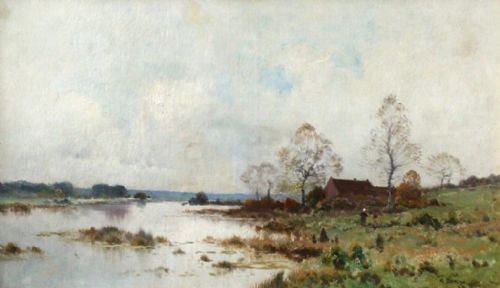
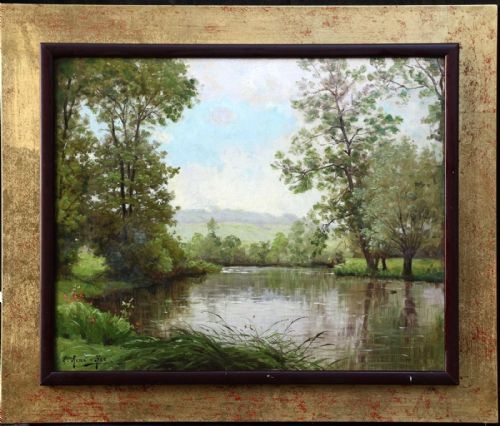
When you search for French country fine art, you encounter oil paintings, watercolours, and engravings capturing rural landscapes, pastoral scenes, and country houses. These works span from the eighteenth century through the Victorian era into the nineteen-thirties and nineteen-forties, reflecting shifting aesthetic movements across generations.
The selections on this page lean heavily towards nineteenth-century French schools, Barbizon landscapes, and post-impressionist rural views. You find works depicting winding paths, riverbanks, fishermen, and equestrian scenes created by listed European painters and their circles.
Framed prints and wall art complement the original canvases, offering varied scales from intimate watercolours to large landscape oils. Each piece records a distinct rural vista or hunting scene rendered through traditional European techniques.
What varies in quality
The distinction between standard works and superior pieces rests on the handling of light, atmospheric perspective, and the confidence of the brushwork. Masterpieces demonstrate a sophisticated command of tone, particularly in capturing the nuances of moonlight, river reflections, and rolling hills.
The execution of the surrounding frame also influences the overall standard, with original gilded gesso frames holding greater integrity than later replacements. The reputation of the artist, whether a recognised member of the Barbizon school or a documented salon exhibitor, further distinguishes the tier of the work.
The selection includes rural landscapes, river scenes, and equestrian subjects by French painters and printmakers.
Paul Désiré Trouillebert·Jean-Baptiste Joseph Pater·Henri Joseph Harpignies·Alphonse Robert·Pierre Emmanuel Eugene Damoye·Charles Edmond Rene His·C de Falens
The French Country Fine Art Glossary
- Barbizon School
- A nineteenth-century French art movement characterised by a commitment to naturalism and plein-air landscape painting. Artists associated with this group focused on the realities of the countryside rather than idealized classical settings.
- Gesso
- A plaster-like mixture applied to wooden frames as a base for moulding ornamental details before gilding. It provides a smooth surface that takes gold leaf effectively.
- Post-Impressionism
- An art movement extending roughly from the late nineteenth century to the early twentieth century that rejected impressionist concern for natural light in favor of more expressive forms and symbolic content.
- Engraving
- A printmaking technique where an artist incises a design onto a metal plate to hold ink. The resulting plate is pressed onto paper to produce detailed graphic works.
French Country Fine Art: Frequently Asked Questions
How do I identify a Barbizon school painting?
Barbizon school paintings typically display earthy tones, soft natural light, and unidealised rural landscapes focusing on forests, fields, and rivers.
Look for loose yet controlled brushwork that prioritises atmosphere and the everyday realities of the French countryside over grand historical narratives.
Where should I hang a large landscape oil?
Large landscape oils suit prominent wall spaces in reception rooms or hallways where they can serve as a central focal point without competing with surrounding furniture.
Ensure the room receives balanced ambient light to appreciate the subtle tonal shifts in the sky and foliage without causing distracting glare on the canvas.
Are these watercolours sensitive to light?
Watercolours on paper are susceptible to fading if exposed to direct, strong sunlight for prolonged periods.
Position these works away from south-facing windows and consider framing them with UV-protective glass to preserve the delicate pigments of the paper.
How do I care for antique gilt wood frames?
Antique gilt wood and gesso frames require gentle dusting with a soft, dry brush to prevent the accumulation of dirt in the carved crevices.
Avoid using liquid cleaners, polishes, or damp cloths, as moisture can damage the underlying gesso and cause the gold leaf to flake off.