




French Country Buffet Cabinet
A french country buffet cabinet brings rustic utility and provincial charm to a room, offering substantial timber storage shaped by regional tradition.
French Country Buffet Cabinet
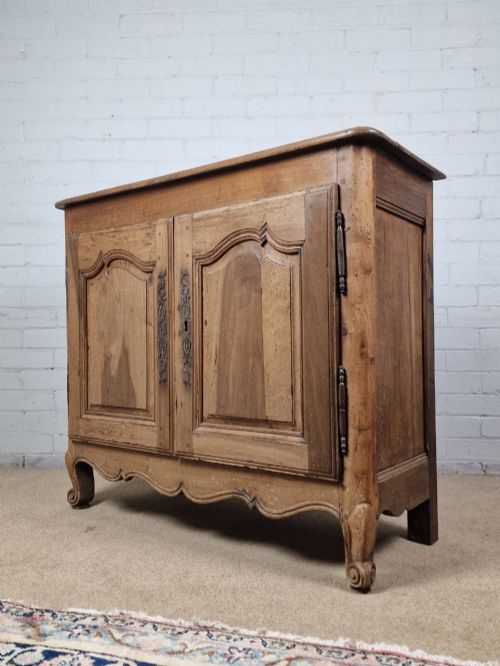
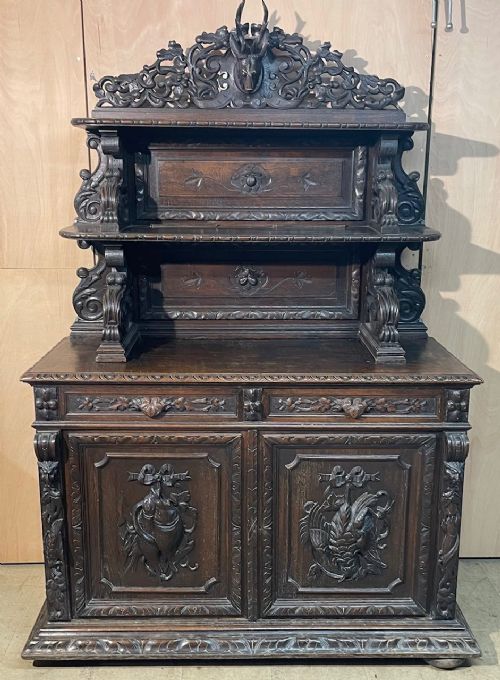
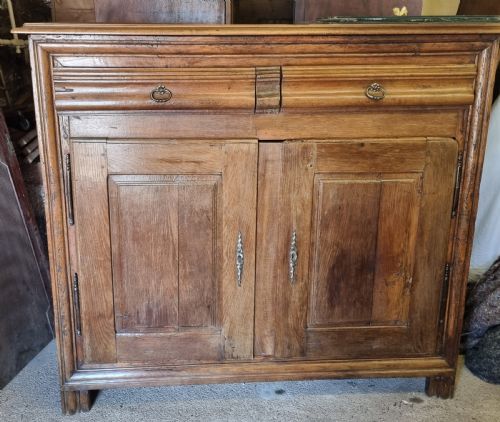
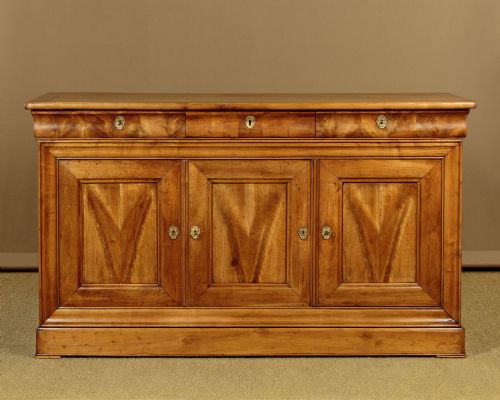
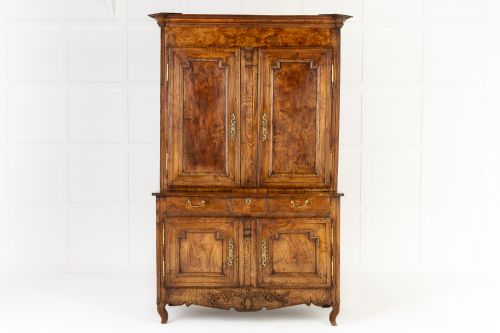
A french country buffet cabinet encompasses a range of robust storage forms, from low sideboards and enfilades to towering deux corps and housekeeper cupboards. These pieces originate primarily from the eighteenth and nineteenth centuries, reflecting the distinct utilitarian needs of provincial homes across various regions.
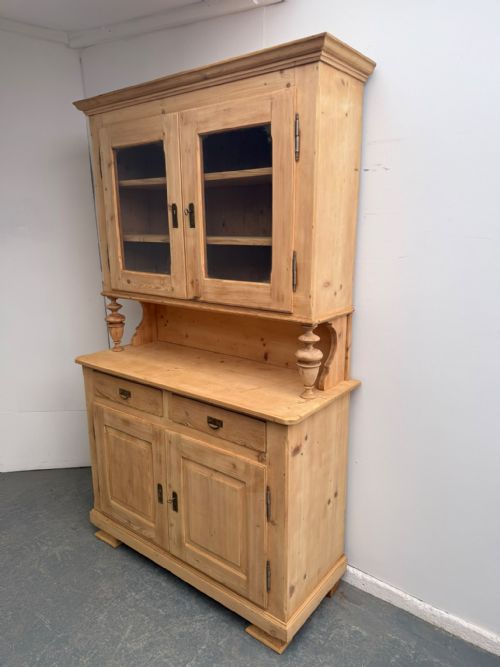
The most common examples encountered here are constructed from native timbers like oak, cherrywood, and walnut, often retaining simple lines or regional carved details. Buyers regularly find low sideboards alongside two-part dressers, providing surface space and enclosed shelving for dining rooms and kitchens.
Materials and Construction
Cabinet makers utilised heavy domestic hardwoods including oak, cherrywood, ash, elm, and walnut, frequently pairing them with structural ironwork and brass hardware. These solid timbers were joined using traditional panelled methods to withstand daily domestic use.
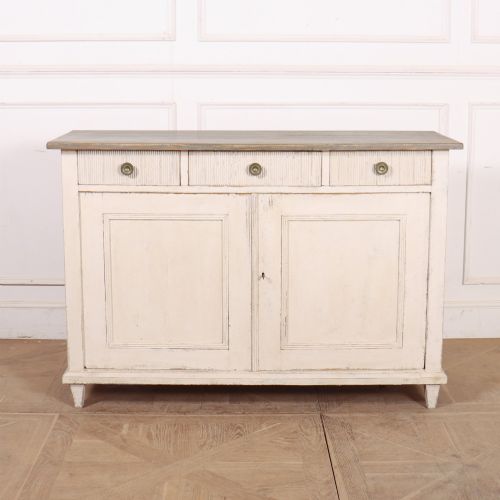
Surfaces were frequently finished with wax or left as plain timber, while select later pieces incorporate marble tops or painted finishes. The resulting construction relies on the natural grain and density of the wood for longevity.
Housemaid cupboards once stored linens and baking stores, keeping household supplies safe from curious farmyard mice.
Distinctions in Quality
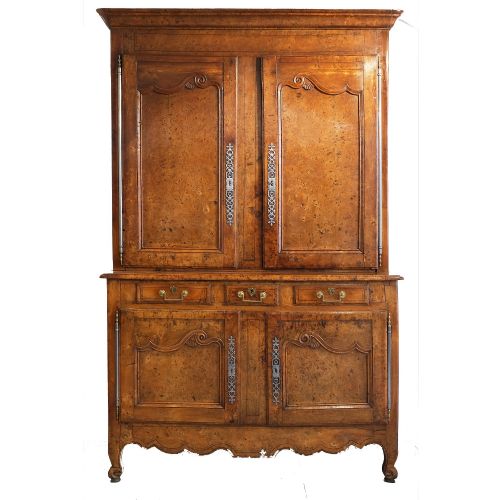
Quality rests upon the selection of timber and the proportion of the carcass, with burr elm and figured cherrywood standing apart from standard utility pine or mixed hardwoods. Finely carved panels and well-integrated original brass or iron hardware elevate an example beyond basic domestic joinery.
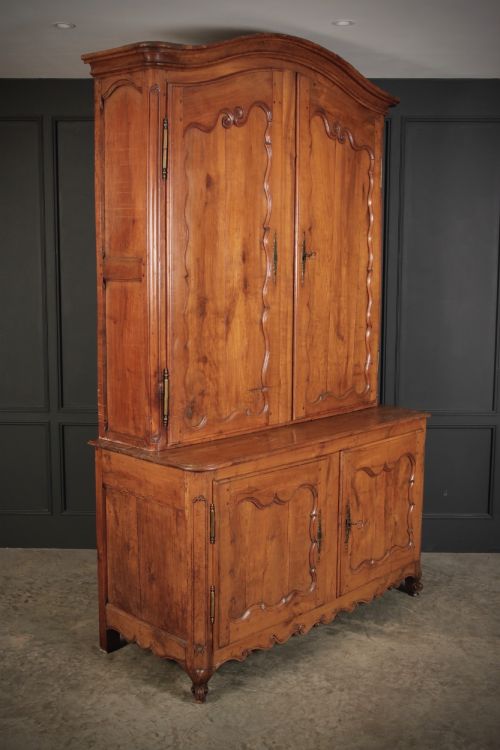
The integrity of the original two-part structure, particularly in towering deux corps or dressers, marks the difference between a unified provincial statement and a heavily altered piece. Superior examples maintain balanced proportions and honest patination gained from centuries of use.
The French Country Buffet Cabinet Glossary
- Enfilade
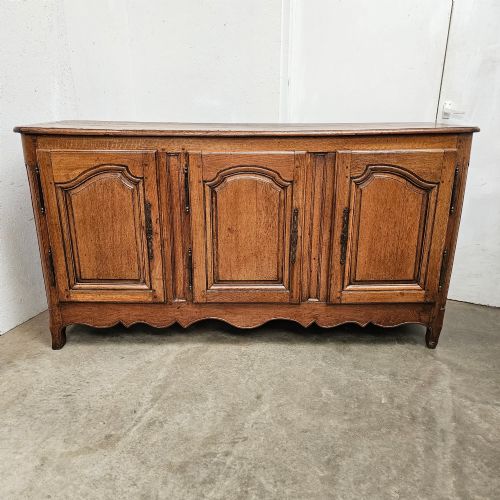
- A long sideboard typically featuring three doors, designed for dining room service. This form provides extended surface space and deep internal capacity.
- Deux Corps
- A tall two-part cupboard or dresser comprising a lower buffet base beneath an upper cabinet section. These large storage pieces often dominate a provincial interior.
- Buffet Vaisseillier
- A traditional storage unit combining a lower buffet with an upper plate rack or display shelves. It served as both storage and display for kitchenware.
- Fruitwood
- A collective term for timber sourced from fruit-bearing trees such as cherry or pear. Cabinet makers valued these woods for their warm tone and smooth grain.
French Country Buffet Cabinet: Frequently Asked Questions
What rooms suit a french country buffet cabinet?
These substantial storage pieces sit naturally in kitchens, dining rooms, and wide hallways where daily utility and surface space are required. Their deep proportions accommodate crockery, linens, and provisions.
Lower enfilades and sideboards also function well in living areas as serving stations or media consoles. Tall cupboards provide vertical storage without occupying excessive floor space.
How do I identify an 18th century piece?
Eighteenth century examples typically display hand-planed surfaces, pegged joinery, and heavy regional timbers like oak and ash. The proportions tend to be robust and unpretentious.
Details such as forged iron hinges and hand-cut panels point toward earlier provincial workshops. Later nineteenth century pieces often introduce softer fruitwoods and different surface treatments.
How should I care for timber surfaces?
Maintain waxed or polished timber surfaces by applying natural beeswax periodically to nourish the dry wood. Avoid placing solid wood furniture near direct heat sources to prevent splitting.
Use dry or slightly damp cloths for routine dusting rather than chemical polishes. Preserving the natural patina relies on gentle and consistent upkeep.
Are marble tops original to these cabinets?
Marble tops appear frequently on later nineteenth and early twentieth century pieces, particularly commodes and select sideboards. They offered a durable, wipe-clean surface for food preparation or washing.
Earlier provincial cupboards relied entirely on timber tops shaped from the same wood as the carcass. When assessing a piece, check that the stone sits flush within the frame.