



French Coiffeuse Dressing Table
A french coiffeuse dressing table brings a touch of continental elegance to a bedroom, offering a surface and mirror designed for morning routines.
French Coiffeuse Dressing Table
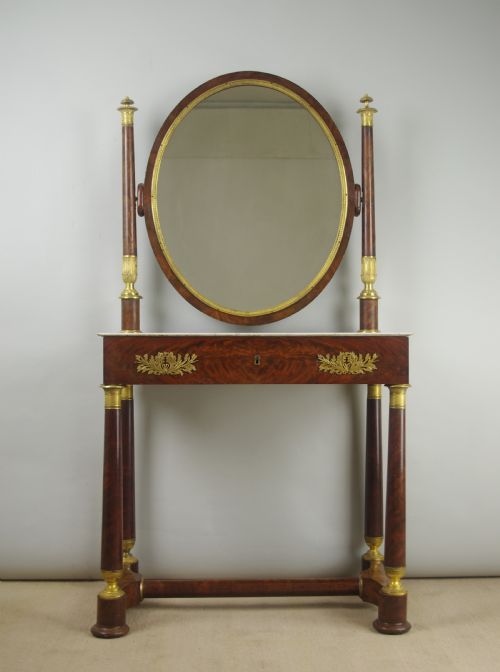
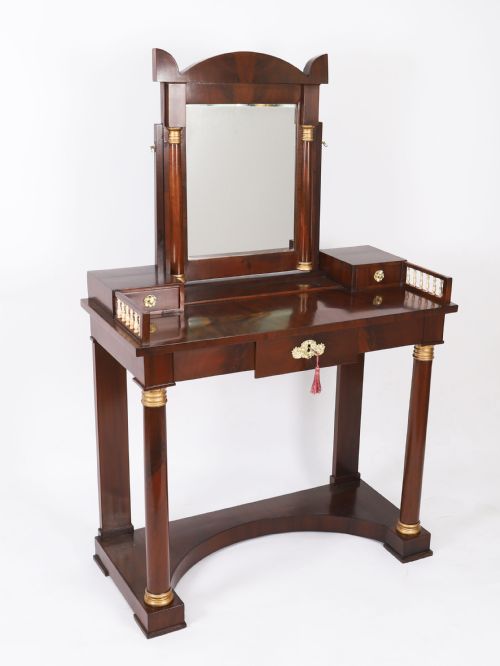
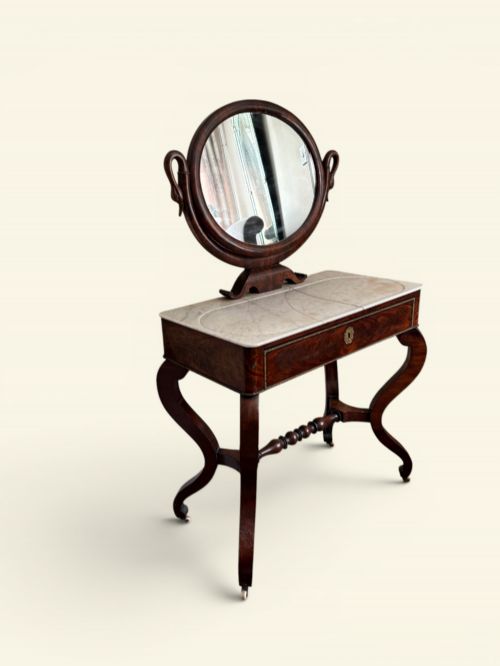
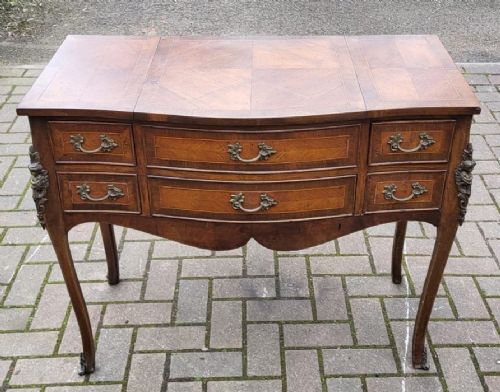
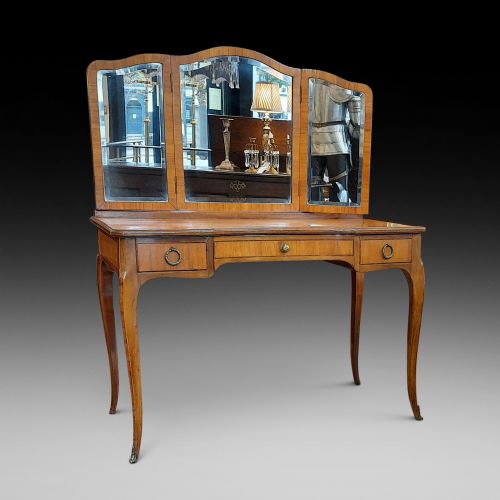
A french coiffeuse dressing table functions as a dedicated piece for grooming and personal preparation, taking forms such as the traditional poudreuse or the larger vanity setup. These items appear across several historic periods, stretching from the eighteenth century through to the early twentieth century.
Buyers browsing this selection will encounter varied regional designs, including pieces influenced by French Empire, Louis XV, Louis XVI, and Napoleon III styles. Side tables and dressing tables with integrated mirrors dominate the available inventory, often accompanied by matching surface compartments.
Woods like mahogany, kingwood, rosewood, and walnut form the structural core of these items, frequently paired with decorative veneers. Craftsmanship from these eras prioritises both functional storage and striking silhouette proportions.
How they were made
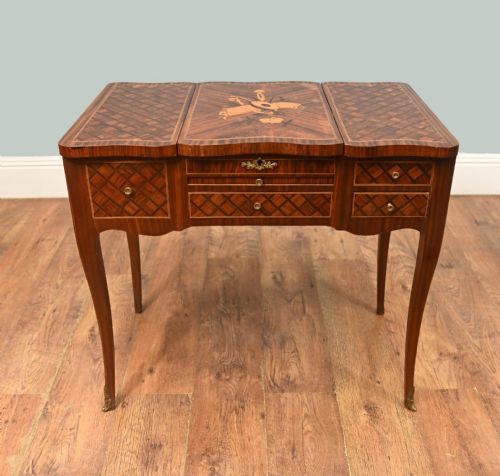
Cabinet makers utilised dense hardwoods such as mahogany and walnut for the foundational frames, applying delicate veneers of kingwood, rosewood, and tulipwood to the exterior surfaces. Marquetry inlay and crossbanding techniques frequently decorate the drawer fronts and tops of these dressing tables.
Metalwork played a vital role in the construction, with ormolu, gilt bronze, and brass mounts fixed to corners, legs, and aprons to accentuate the contours. Marble tops also appear on select pieces, requiring precise stone-cutting and levelling to sit flush against the wooden carcase.
Some dressing tables hide mirrors that pop up at the touch of a secret spring, ready for covert powdering.
What varies in quality
The sophistication of the decorative mounts and the intricacy of the timber veneers largely separate standard examples from finer works. Finely cast ormolu mounts with crisp chasing display superior craftsmanship compared to plain or heavily worn brass alternatives.
Maison Pretot Paris
The French Coiffeuse Dressing Table Glossary
- Poudreuse
- A type of French dressing table featuring a hinged top that opens to reveal a mirror and storage compartments. These pieces were specifically designed for powdering wigs and applying cosmetics in the eighteenth and nineteenth centuries.
- Ormolu
- Gilt bronze ornamentation applied to the mounts, feet, and handles of fine furniture. This decorative technique involves fusing gold to a bronze base through mercury gilding or electroplating.
- Kingwood
- A dense, heavily figured exotic timber native to Brazil, prized for its rich dark brown colouring and golden streaks. Cabinet makers utilised it extensively as a veneer on high-end French furniture.
- Marquetry
- The art of applying small pieces of veneer to a structure to form decorative patterns and pictorial designs. Craftsmen used various contrasting woods to achieve detailed floral or geometric motifs.
French Coiffeuse Dressing Table: Frequently Asked Questions
What is a French coiffeuse?
A French coiffeuse is a traditional dressing table designed for personal grooming, typically equipped with a surface, drawers, and often a built-in or folding mirror.
These tables frequently include compartments for storing cosmetics and brushes, reflecting their original purpose in historic boudoirs.
How do I date a dressing table?
Dating relies on identifying stylistic markers, construction methods, and materials associated with specific periods like the French Empire or Louis XV revival. Examining the hardware, secondary timbers, and types of veneer provides further clues to the decade of manufacture.
Comparative analysis with documented pieces from makers such as Maison Pretot also helps narrow down the timeframe.
Where were these tables used?
Historically, these dressing tables stood in the private bedchambers or dressing rooms of stately homes and townhouses. They served as personal stations for morning routines and correspondence.
Today, they function well in modern bedrooms as dedicated vanity desks or feature side tables.
What woods were commonly used?
Cabinet makers predominantly worked with mahogany, walnut, and oak for the primary carcase and structural elements of the furniture. Exotic hardwoods like kingwood, rosewood, and tulipwood were sliced into thin veneers for decorative surfaces.
Inlays and crossbanding often combined these contrasting timbers to create visual depth.