


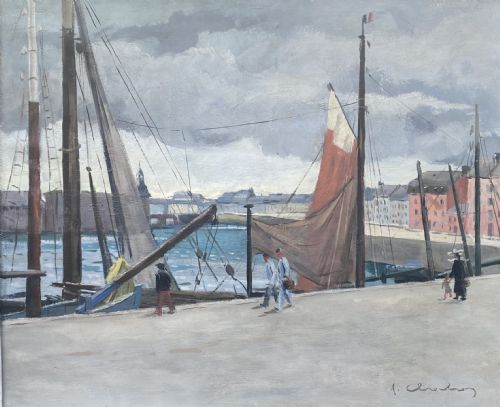
French Coastal Scene Painting
A french coastal scene painting captures harbours and shores along the Atlantic and Mediterranean, offering intimate windows into maritime life.
French Coastal Scene Painting
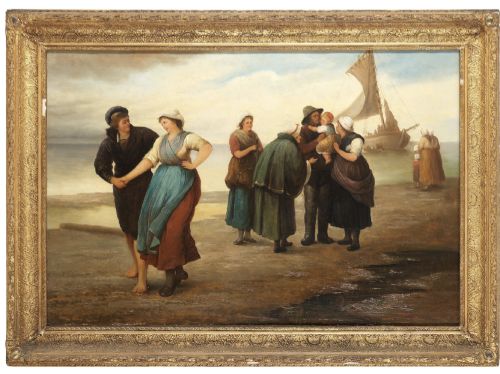
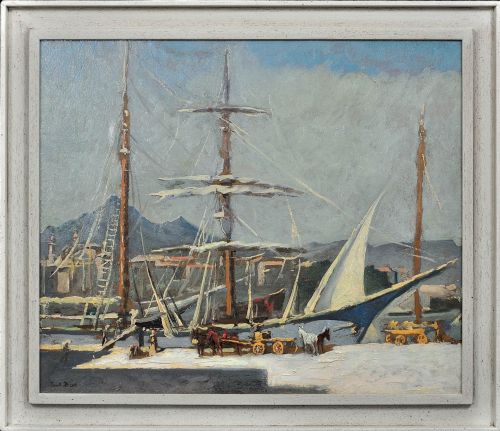
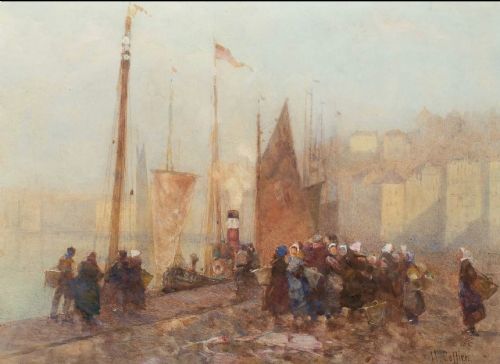
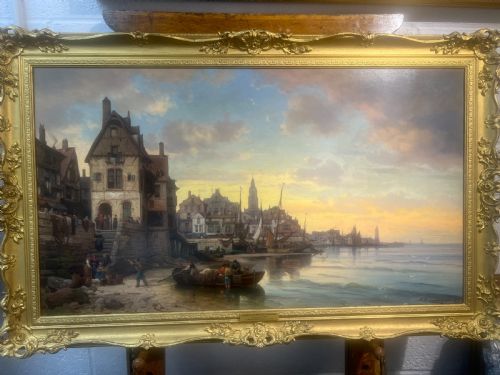
A french coastal scene painting focuses on harbours, fishing ports, and shores, often capturing figures returning from voyages or gathering seaweed along the water. These works span from the nineteenth century through the mid-twentieth century, encompassing periods like 1900, 1930, and 1960.
Buyers will encounter various regional settings, from the rugged shores of Brittany and Normandy to the sunlit waters of the French Riviera and Cannes. The compositions range from nineteenth-century French school depictions to later post-impressionist, fauve, and modernist interpretations.
The objects appear primarily as oil paintings on canvas or wood, alongside watercolours on paper. Many arrive in period wood frames that complement the maritime subject matter.
Materials and technique
Artists relied on oil paint and watercolour applied to canvas, wood panels, or paper supports. The medium dictated the handling, with oils allowing for rich, built-up textures in seascapes while watercolours captured luminous coastal light.
Brushwork varies from the measured detail of nineteenth-century academic schooling to the dynamic, liberated strokes of post-impressionism, fauvism, and mid-century abstraction.
One canvas captures a wonderfully specific seaside snapshot: a boxer, a photographer, and a lady in white sharing the shore.
Evaluating quality in coastal works
Quality rests in the handling of atmospheric light and the confidence of the brushwork, where master colourists manage tonal harmony between sea, sky, and shore. Stronger pieces display a clear command of perspective and spatial depth within harbour promenades and bustling ports.
The preservation of the original paint surface and the character of the associated frame influence the overall integrity of the piece.
Paul Bret·Hector Caffieri·Charles Euphraisie Kuasseg·Paul Delvaux·Raymond Picque·William Lee Hankey·Cecil Rochfort D'Oyly-John·Henri Ottman·Yves Brayer·Augustus William Enness·Henri Cadiou·Andre Foneche
The French Coastal Scene Painting Glossary
- Fauvism
- A style characterised by vibrant, non-naturalistic use of colour and bold brushstrokes. It appears in early twentieth-century coastal works focusing on light and pigment.
- Post-Impressionism
- An artistic development following impressionism that explores emotional response and structural form through distinct colour application. Many harbour scenes on this page utilise this approach.
- Provenance
- The documented history of ownership attached to an artwork. It helps establish authenticity and traces the journey of a painting through time.
- Maritime
- Pertaining to the sea, ships, and coastal navigation. This genre forms the core subject matter of these seaside and harbour paintings.
- Gouache
- An opaque watercolour medium often mixed with gum. It provides solid fields of matte colour in works on paper.
French Coastal Scene Painting: Frequently Asked Questions
Where were these coastal scenes painted?
Artists painted these scenes along various shores, including the rocky cliffs of Brittany and Normandy, as well as Mediterranean ports in Cannes, Marseille, and Provence.
Specific regional light influenced the palettes, shifting from muted northern tides to sun-drenched southern harbours.
How do I care for an oil painting on canvas?
Keep the artwork away from direct sunlight and steady humidity fluctuations to protect the canvas and the underlying oil paint from cracking.
Dust the surface gently with a soft, dry brush and avoid using any liquid cleaners on the paint layer.
Are watercolours framed differently than oils?
Watercolours on paper require framing behind glass to protect the delicate medium from moisture and airborne pollutants.
Oil paintings on canvas are typically housed in open wood frames that allow the textured paint surface to breathe.
How can I tell a 19th-century work from a mid-century piece?
Nineteenth-century paintings generally employ traditional academic realism and muted, naturalistic tones for maritime subjects.
Mid-century works often embrace modernist abstraction, fauvist colour choices, and looser, more expressive brushwork.