


French Clock Garniture Set
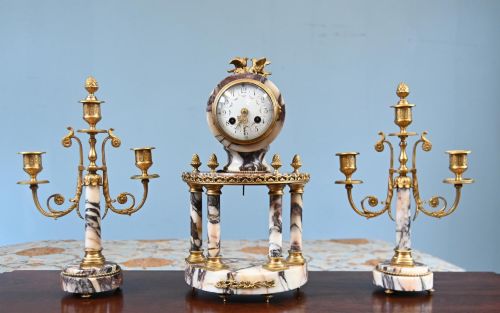
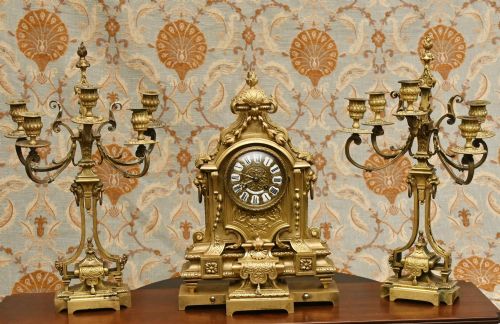
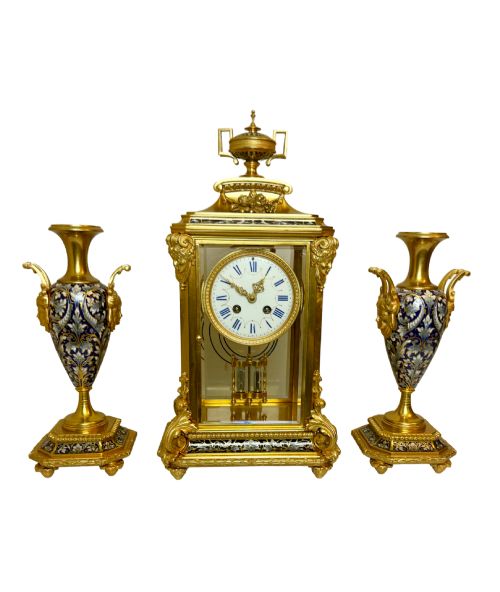
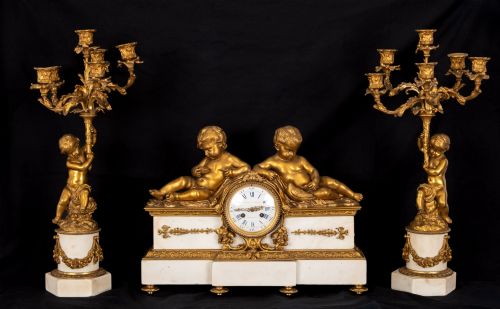
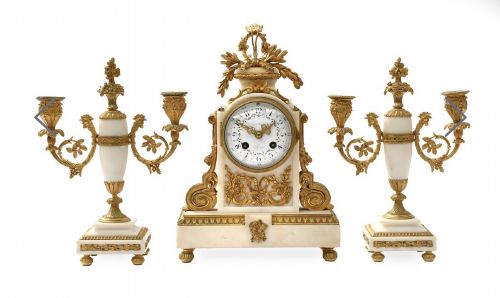
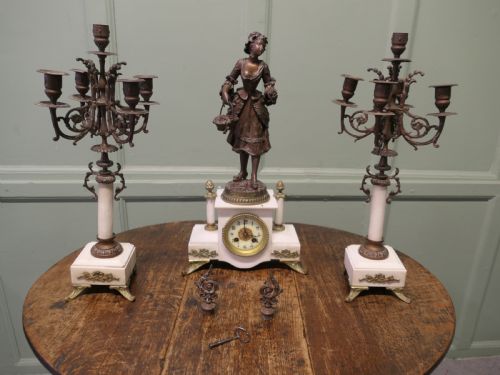
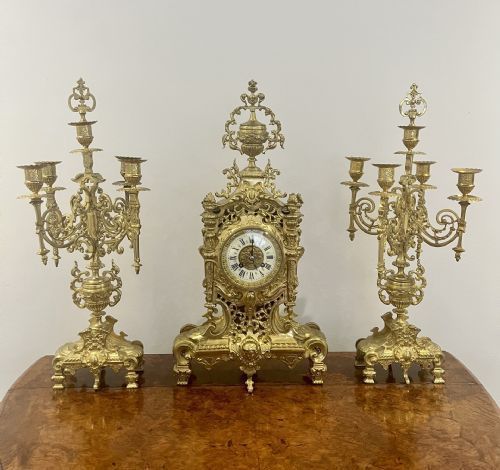
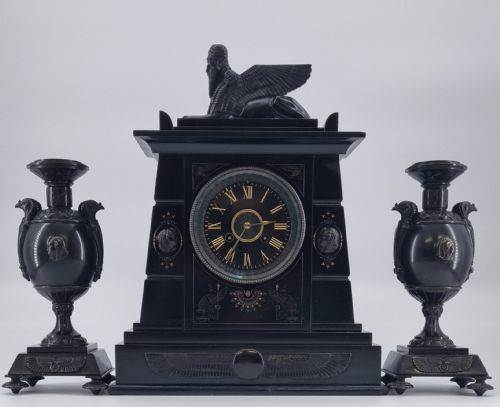
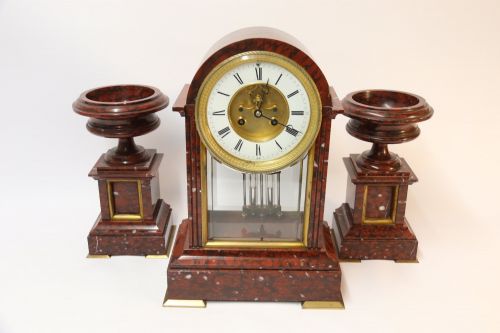
A french clock garniture set brings a central mantel timepiece together with matching sidepieces like urns or candelabras to anchor a grand room.
French Clock Garniture Set
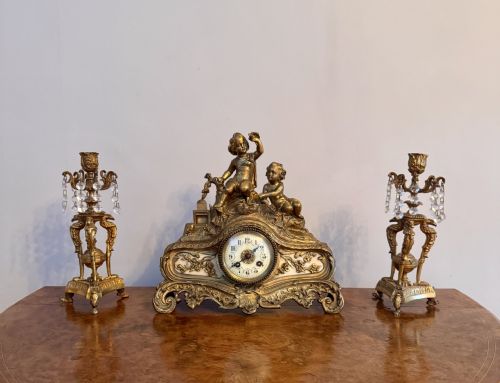
A french clock garniture set consists of a central mantel clock accompanied by a matched pair of sidepieces, most commonly urns, candelabras or vases designed to sit in symmetry. These ensembles emerged primarily during the nineteenth century, reflecting a strong demand for balanced mantel decoration across formal drawing rooms and parlours.
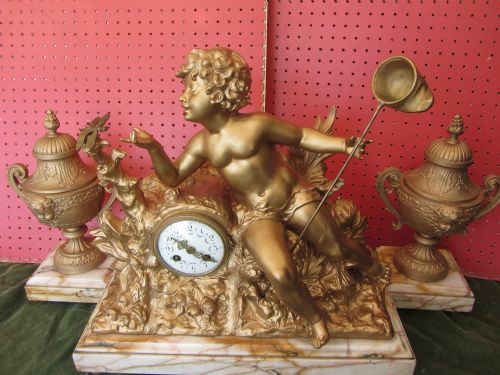
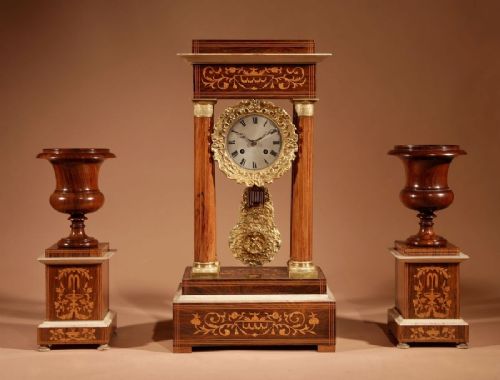
The most common examples encountered on this page date from the nineteenth century, spanning periods from the 1860s through to later revival styles and early twentieth-century Art Deco interpretations. Buyers encounter forms ranging from imposing portico clocks with matching side vases to compact marble and ormolu arrangements flanked by cherub figures.
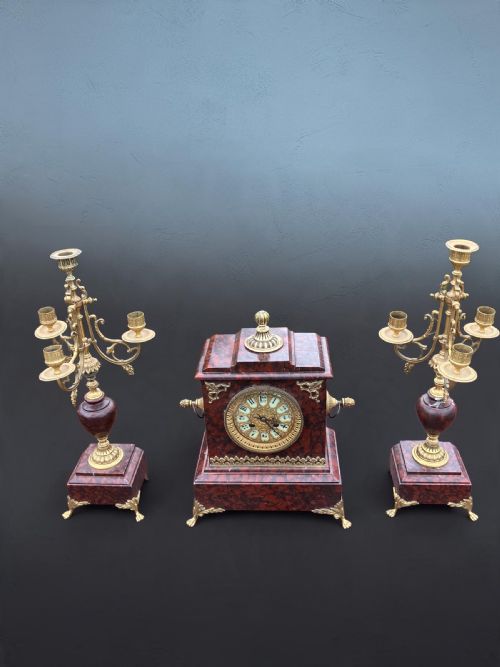
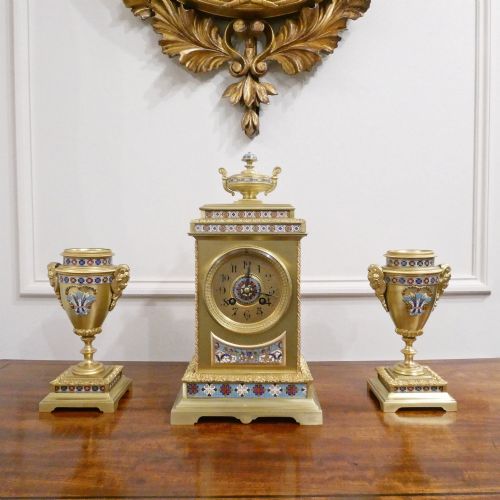
The flanking pieces mirror the materials and decorative vocabulary of the central clock, creating a unified visual statement on a fireplace or sideboard. Variations in the matched sidepieces include multi-light candelabras, classical urns, and figural bronzes that repeat the motifs of the main timepiece.
Materials and construction
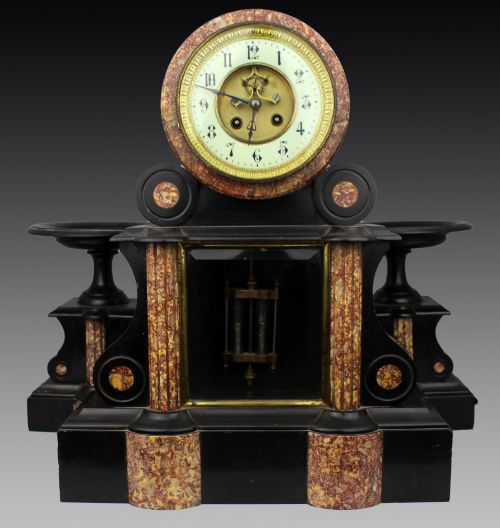
Foundational structures rely heavily on natural stones such as black, white, and block marble, alongside slate and onyx, which provide a heavy, stable base for the metalwork. These stone elements are frequently combined with cast metals like bronze, brass, and gilt ormolu to create contrasting textures and rich colouration.
Surface decoration incorporates fired enamel dials, intricate champlevé enamel panels, and delicate porcelain inserts, often painted with floral scenes or classical figures. Ormolu components involve mercury gilding or electroplating on bronze bases, while glass domes sometimes preserve the delicate finish of the ensemble.
French Clock Garniture Set Retail Price Guide 2026
Typical asking prices for french clock garniture set among the pieces listed under this phrase on Sellingantiques today, from the lower quarter to the upper quarter. They describe what is for sale here now, not the wider market.
Several sets include athletic greyhounds keeping watch beside the dial, proving that even formal mantelpieces occasionally embraced a sporting hound.
Assessing quality
Quality rests in the crispness of the bronze chasing and the depth of the gilding, where hand-finished metalwork displays sharp relief and subtle textural contrasts rather than soft, uniform casting. The weight and selection of the marble or onyx base also signal ambition, with denser stones and harmonious colour matching elevating the piece.
The sophistication of the movement and the integration of signed maker components distinguish finer works from standard production. Enamel dial execution, the presence of matching numbers across components, and the sculptural detail of flanking figures like cherubs or animals determine the upper tier of these ensembles.
Japy Frères·Samuel Marti·Henry Dasson
The French Clock Garniture Set Glossary
- Garniture
- A set of matching decorative objects designed to be displayed together, typically comprising a central clock and two flanking urns or candelabras.
- Ormolu
- Finely ground high-carat gold applied to a bronze base using a mercury amalgamation technique or subsequent electroplating, producing a rich golden lustre.
- Champlevé
- An enamelling technique where troughs or cells are hollowed out of a metal surface and filled with vitreous enamel before firing.
- Portico clock
- A mantel timepiece housed within a architectural frame supported by four or more columns, often featuring a suspended pendulum.
- Candelabra
- A branched candlestick designed to hold multiple tapers, frequently used as the matching sidepieces in a garniture set.
French Clock Garniture Set: Frequently Asked Questions
What is a french clock garniture set?
A french clock garniture set is a coordinated grouping of three matching mantel ornaments, featuring a central clock flanked by twin decorative pieces like urns or candelabras.
These ensembles were designed to create a balanced, symmetrical display on drawing room mantelpieces during the nineteenth and early twentieth centuries.
How were garniture sets displayed?
Sets were traditionally arranged across a fireplace mantel, with the tall clock placed squarely in the centre and the two matching sidepieces positioned symmetrically on either side.
Some delicate examples were also housed beneath glass domes to protect the gilt bronze and enamel surfaces from dust and tarnishing.
What materials are used in these clocks?
Construction typically combines heavy stones such as black marble, white marble, slate, or onyx with cast metals like bronze, brass, and gilded ormolu.
Additional decorative elements often include porcelain panels, champlevé enamel work, and fired white enamel clock dials with delicate numeric markings.
How do I identify different styles?
Styles range from ornate nineteenth-century Louis XVI and Renaissance revivals featuring cherubs and heavy gilding to streamlined geometric forms from the Art Deco period.
Examining the architectural motifs, bronze casting quality, and auxiliary decorative techniques helps place a set within its specific historical decade.