
French Chateau Pendant Fixture
A french chateau pendant fixture brings substantial illumination and grand scale to a room, drawing the eye upwards with cascading crystal and metalwork.
French Chateau Pendant Fixture
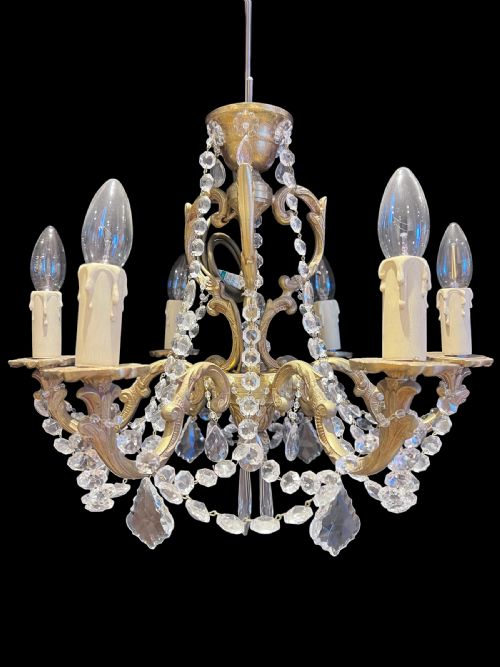
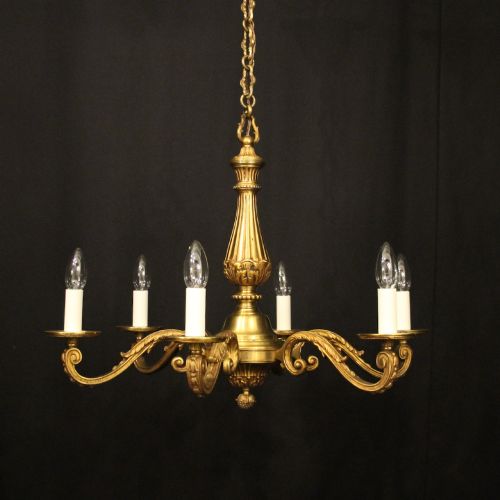
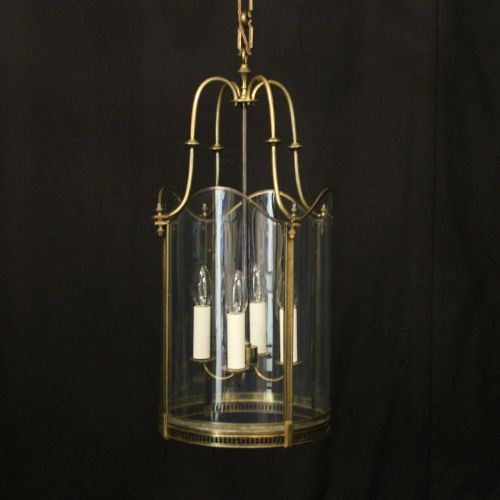
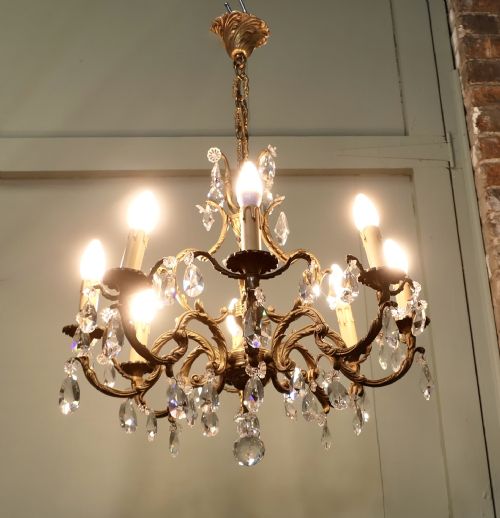
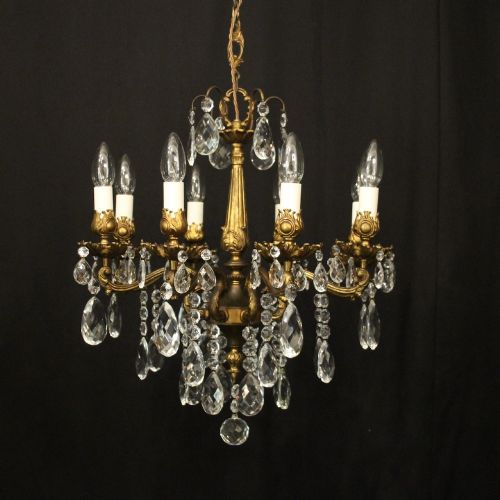
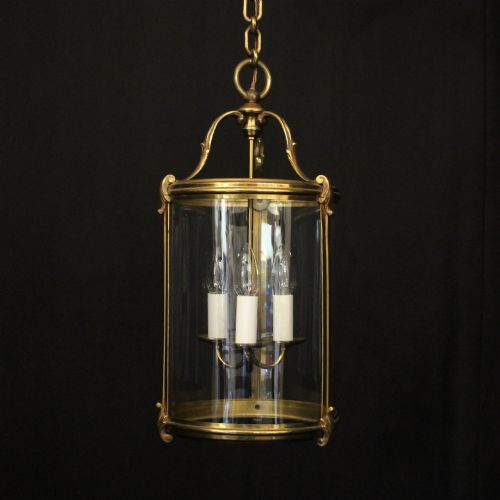
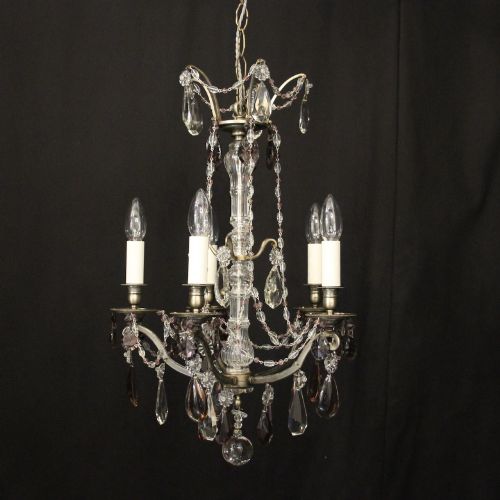
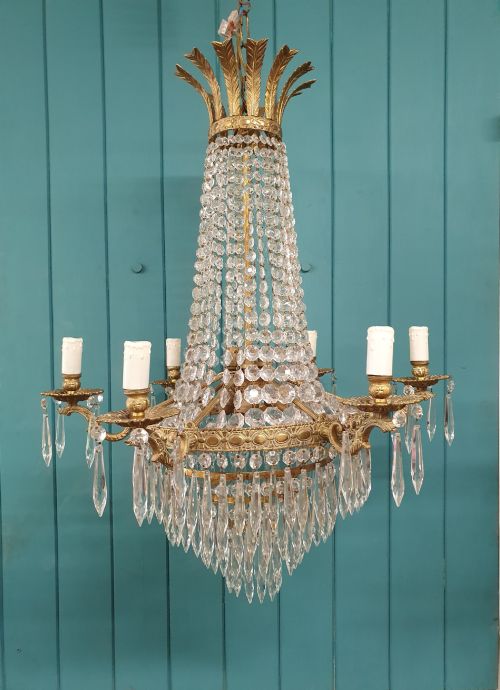
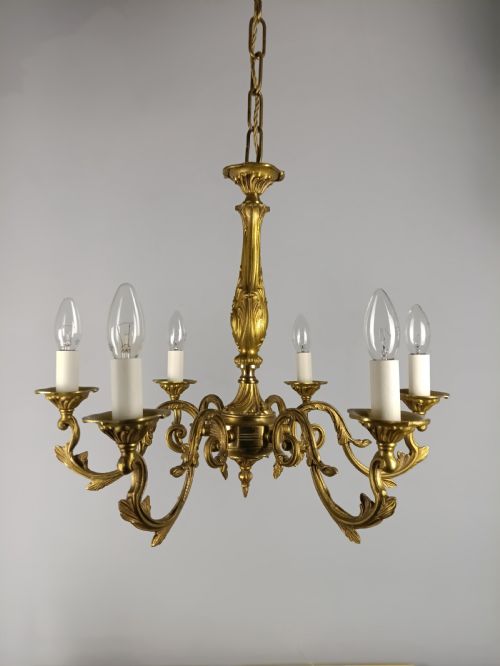
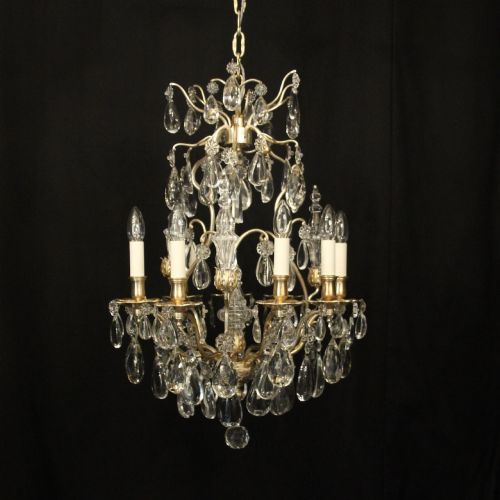
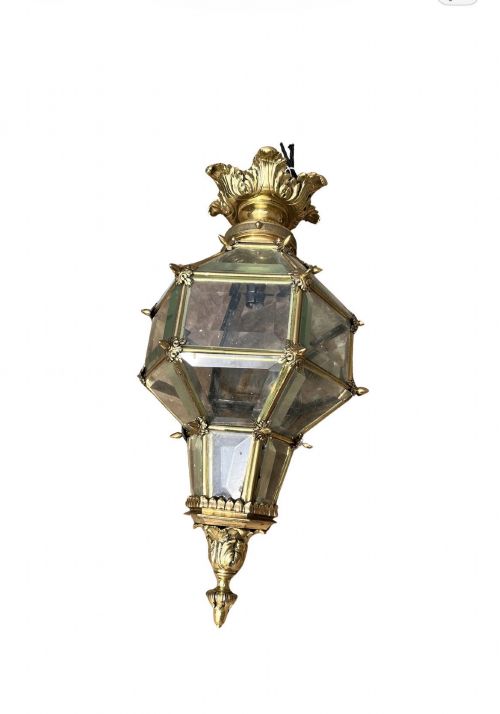
A french chateau pendant fixture encompasses grand ceiling lights, chandeliers, and hall lanterns originating primarily from the late nineteenth century through the early twentieth century. Buyers encounter multi-arm chandeliers and convex hall lanterns reflecting French Rococo, Louis Revival, and Neoclassical styles.
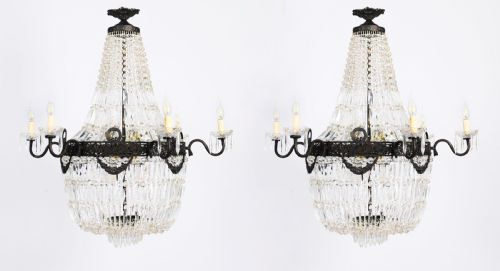
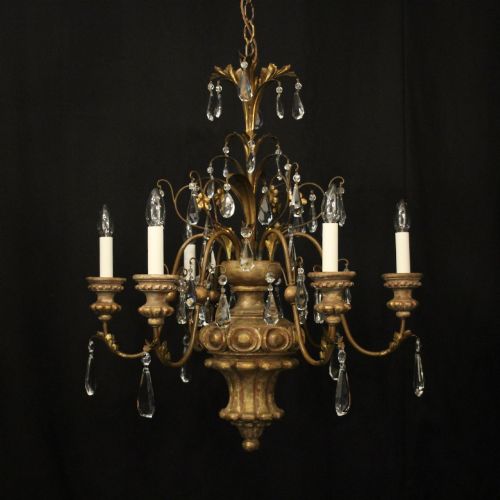
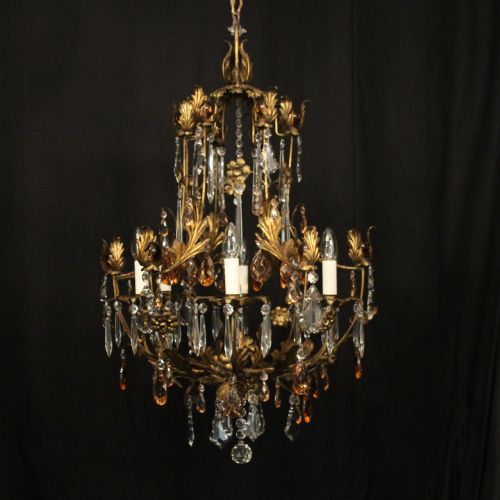
The selection on this page demonstrates forms ranging from intimate three-light pendants to fourteen-light ballroom tent chandeliers. These pieces incorporate distinct regional interpretations, including Italian Florentine designs alongside traditional French models.
Materials and Construction
Metal structures rely heavily on brass, bronze, and gilt or silver-gilded brass, often shaped into leafy frames or intricate scrolling arms. Workshops applied gilt finishes to bronze and brass to catch and reflect candlelight or early electric illumination.
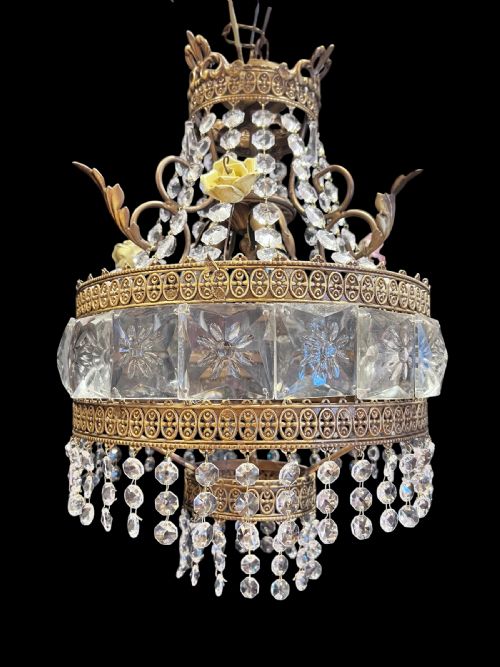
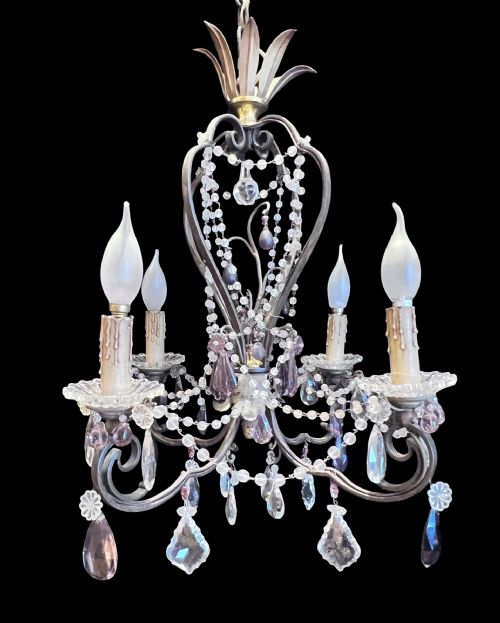
Glass and crystal elements, including cut crystal drops, lustres, and coloured crystals, hang from the metal frames to refract light. Selected examples incorporate ceramic flowers, porcelain details, and polychrome toleware to add colour and texture to the brass or bronze armature.
Materials across the inventory include gilt bronze, polychrome toleware, and coloured crystal pendants dating from the nineteenth and twentieth centuries.
Judging Quality and Execution
Quality rests upon the weight and density of the cast bronze or brass and the crispness of the chasing on leaf and scroll decorations. Superior examples display careful hand-finishing on the metalwork and precise cutting on the crystal lustres rather than moulded uniformity.
The integration of decorative elements, such as balanced porcelain flowers, disciplined crystal stringing, and uniform gilding, separates standard production from exceptional chateau lighting. Structural integrity in the frame ensures the fixture supports heavy glass components securely over time.
The French Chateau Pendant Fixture Glossary
- Lustre
- A cut glass or crystal pendant hung from a chandelier to refract light. These pieces dangle from the arms and crown of the fixture.
- Tent Chandelier
- A lighting design featuring a conical array of crystals rising from the arms to a crown above. This configuration creates a draped silhouette.
- Hall Lantern
- An enclosed pendant fixture designed for corridors and entrance spaces. These pieces frequently employ convex glass panels within a metal frame.
- Gilt Bronze
- Bronze metal coated with a thin layer of gold or gold-coloured alloy. This technique provides a durable metallic sheen.
French Chateau Pendant Fixture: Frequently Asked Questions
How do I hang a heavy antique chandelier safely?
Professional installation requires securing the fixture directly to ceiling joists using a rated electrical box and heavy-duty steel hickey. The weight of bronze and crystal demands proper structural support behind the plaster.
Qualified electricians should inspect the internal wiring of older fixtures to ensure compliance with modern safety standards before hanging.
What periods do these fixtures date from?
The available pieces originate primarily from the late nineteenth century, spanning the 1890s through the 1930s. Many examples reflect revival aesthetics inspired by earlier French and Italian decorative movements.
Stylistic markers help associate specific pieces with the Victorian era, the Edwardian period, or the interwar decades.
How should I clean crystal and brass lighting?
Dust crystal drops regularly with a soft, lint-free cloth while the fixture hangs in place. For a deeper clean, remove crystals individually and wash them in lukewarm water with mild dish soap.
Avoid harsh chemical cleaners on gilded brass and bronze surfaces to preserve the original antique finish and patina.
Can I convert an antique candle fixture to electricity?
Most antique fixtures of this scale have already received electrical conversions during the twentieth century. Remaining candle-form elements typically accommodate small candelabra base bulbs.
Rewiring preserves the external historical appearance while allowing safe daily operation in a modern home.