
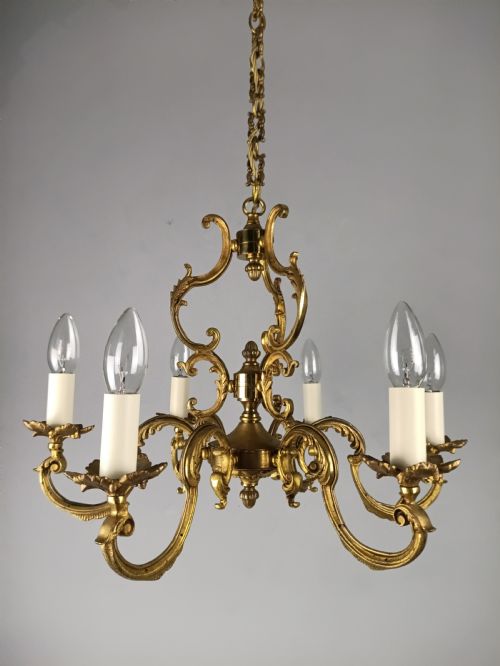


Six Light Ormolu Chandelier
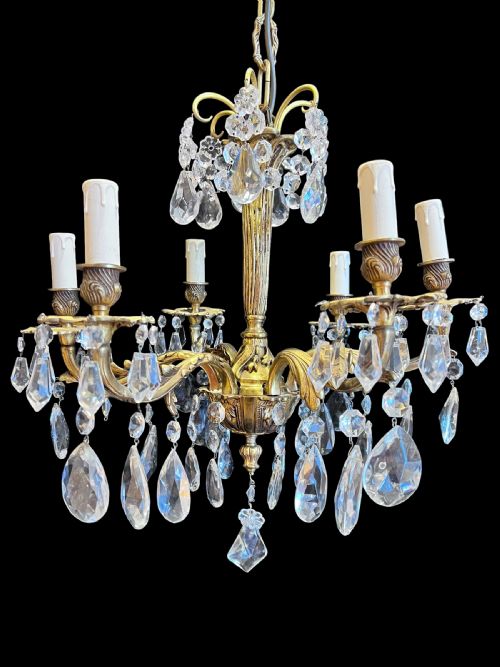
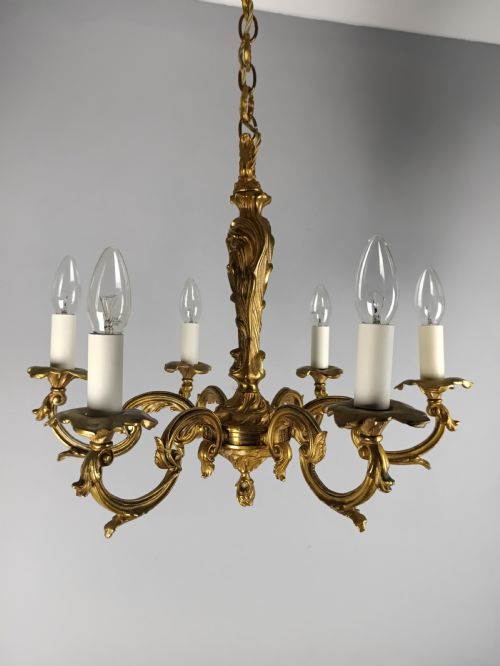
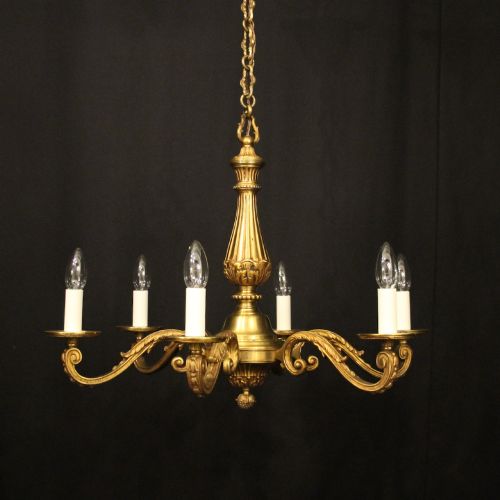
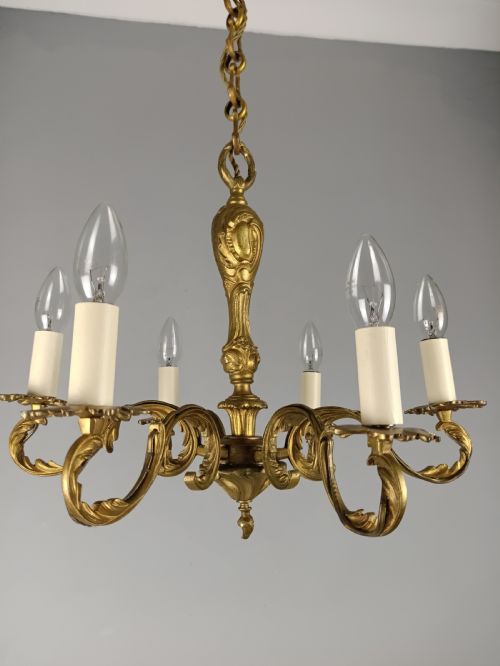
A six light ormolu chandelier brings unmistakable French weight and gilded warmth to a room, offering grand illumination through time-tested metalwork.
Six Light Ormolu Chandelier
When you search for a six light ormolu chandelier, you are looking at substantial hanging light fittings designed with six distinct arms for illumination. The pieces available here originate predominantly from the nineteenth century through the early decades of the twentieth century. French design influences dominate the selection, bringing classical, empire, and rococo decorative vocabulary directly into domestic spaces.
You are most likely to meet examples cast in gilt bronze, gilded bronze, or gilt brass, frequently complemented by crystal and glass elements. These pieces reflect diverse stylistic revivals, ranging from heavy baroque forms to lighter neoclassical symmetry. Each chandelier carries the characteristic presence of French chateau aesthetics adapted for grand interior spaces.
Materials and construction methods
The primary construction relies on metal casting techniques using bronze or brass, which are subsequently gilded to achieve the characteristic golden surface. Ormolu, or gilt bronze, involves applying a fine layer of gold amalgam to a bronze base, creating a durable and luminous finish. Secondary components often incorporate cast brass elements alongside cut glass and crystal pendants to catch and refract the light.
Structural assembly involves securing the six individual arms around a central metal stem or body, designed to support the weight of the metal and any hanging crystal elements. The surface metalwork frequently displays chased or cast ornamentation characteristic of French stylistic periods from the nineteenth and early twentieth centuries.
French chateau and empire styles dominate the aesthetic range across the currently available chandeliers.
Indicators of quality and refinement
The sophistication of the casting and chasing work largely determines the distinction between standard production and finer examples. Sharper relief in the decorative motifs and heavier, more substantial metal components indicate superior craftsmanship during the manufacturing process. The depth and integrity of the gilding further separate exceptional pieces from simpler brass alternatives.
Coherence of style within the overall design also marks the better pieces, where the proportions of the six arms balance harmoniously with the central body and any applied crystal or glass. The integration of period-appropriate details, such as classical or baroque ornamentation, reflects the ambition of the original maker.
The Six Light Ormolu Chandelier Glossary
- Ormolu
- A method of applying finely ground gold-mercury amalgam to a bronze object, followed by firing to drive off the mercury. This technique produces a rich golden surface that defines many antique French light fittings.
- Gilt bronze
- Metalwork composed of a bronze base covered with a thin layer of gold leaf or gold wash. It provides durable brilliance and forms the primary structure of heavier chandeliers.
- Baroque revival
- A nineteenth-century design movement that reinterprets seventeenth-century baroque grandeur. These pieces feature robust forms, dramatic curves, and heavy ornamentation.
- French neoclassical
- A style drawing inspiration from classical antiquity, characterised by symmetry, restraint, and orderly decorative motifs. It informs the cleaner lines seen in several listed chandeliers.
Six Light Ormolu Chandelier: Frequently Asked Questions
What ceiling height suits a six arm chandelier?
These fixtures require adequate vertical clearance to hang properly without dominating the room's proportions.
Standard ceiling heights of three metres or more typically provide the right balance for a six light fitting of this scale.
Are these chandeliers wired for modern electricity?
Many antique fixtures have been adapted over time to accommodate contemporary electrical standards.
It is advisable to have a qualified electrician inspect the internal wiring before installation.
How do I date a French gilt chandelier?
Examine the casting quality, assembly methods, and stylistic cues such as empire or rococo motifs.
Comparative analysis with documented nineteenth and early twentieth-century examples helps narrow down the period of manufacture.