


French Chaise Lounge
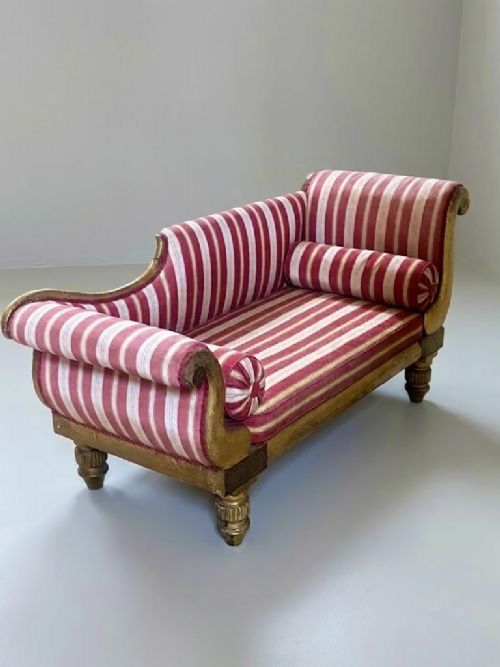
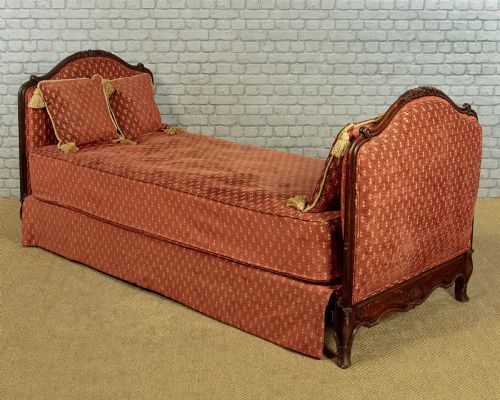
These pieces of french chaise lounge seating offer long, reclining comfort, spanning nineteenth-century styles through to the early twentieth century.
French Chaise Lounge
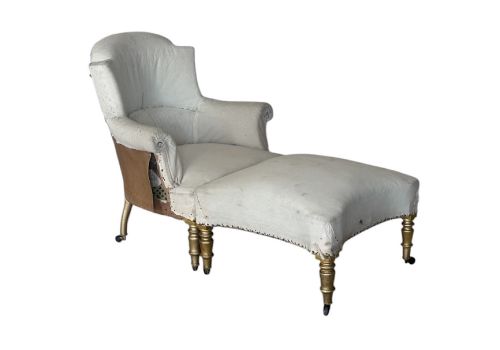
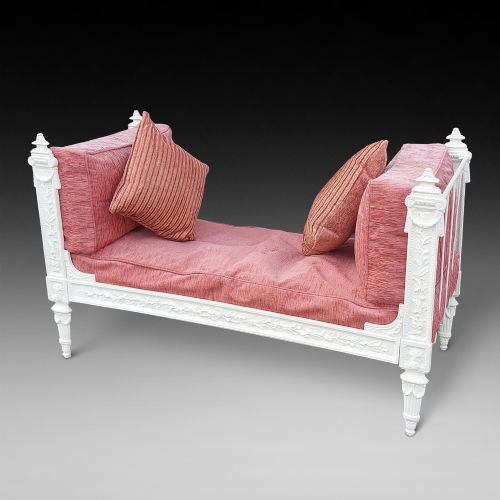
When buyers search for a french chaise lounge, they encounter varied forms designed for reclining, including daybeds, duchesse brisées, and recliners. These seating arrangements emerge from periods such as the Regency era, the Victorian epoch, and the 1920s and 1930s.
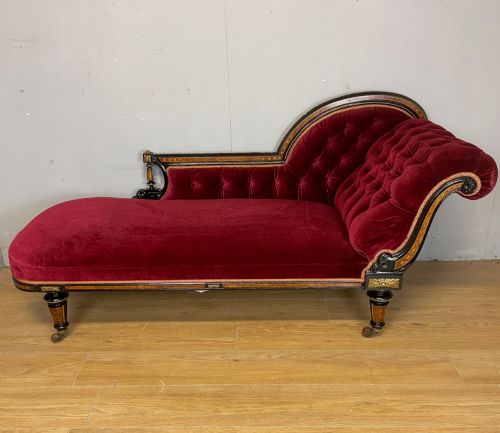
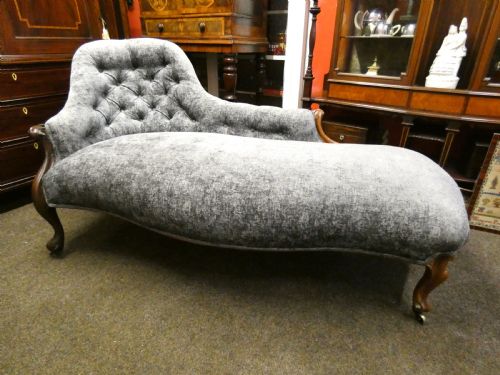
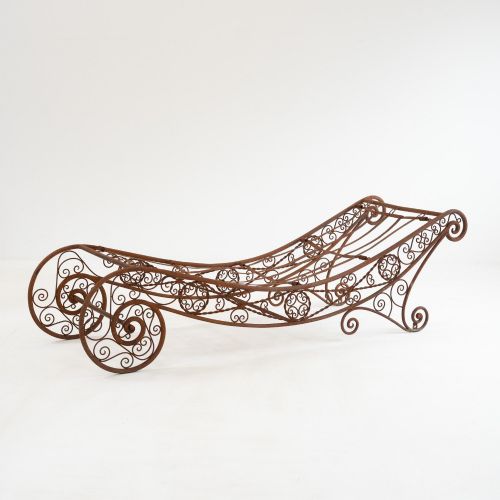
The version most commonly met on this page is the nineteenth-century walnut or giltwood chaise longue upholstered in velvet or fabric. Alongside these, examples in cast iron, wrought iron, and rattan appear from garden and provincial contexts.
Makers and designers produced these items for reception salons, bedrooms, and garden settings, creating distinct silhouettes from single-piece daybeds to multi-part duchesse brisée suites. The stylistic influences span French Provincial, Louis XVI Revival, and French Second Empire aesthetics.
Materials and construction methods
Carpenters and cabinetmakers utilised timber frames of walnut, mahogany, and giltwood, alongside structural elements in brass, cast iron, and wrought iron. Ebonised finishes and inlaid walnut panels provided surface detail on nineteenth-century pieces.
Upholstery techniques involved buttoned fabric, antique striped silk, and velvet, complemented by ormolu decoration, original paint, and rattan weaving. These varied materials defined both interior reception seating and robust garden daybeds.
Several pieces feature buttoned velvet or rattan, proving that nineteenth-century lounging could be simultaneously plump and breezy.
Factors determining quality
The integrity of the timber frame and the precision of carved giltwood or inlaid walnut set the structural standard for each piece. Ornate elements like ormolu mounts and original paint finishes separate standard examples from exceptional ones.
The quality of the upholstery, whether buttoned velvet, silk, or rattan, dictates the textural richness and historical fidelity of the seating. Multi-part suites that retain their matching components demonstrate higher coherence than single items.
The French Chaise Lounge Glossary
- Duchesse brisée
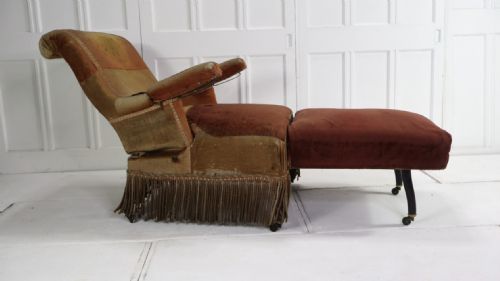
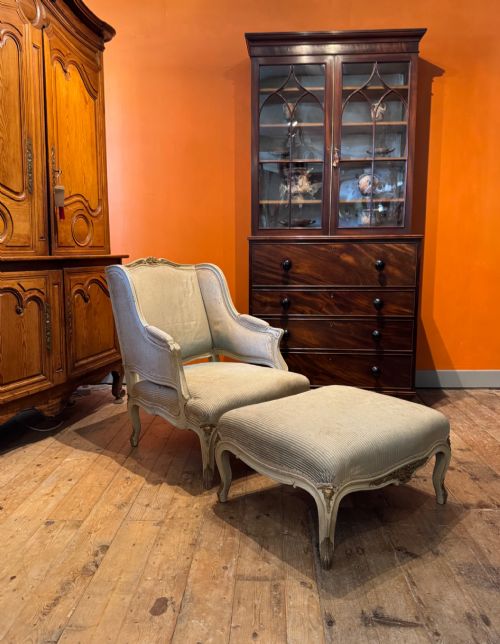
- A multi-piece daybed arrangement, often comprising an armchair and matching footstool or two chair components joined together. This style allows the sitter to recline with full leg support.
- Giltwood
- Timber treated with gold leaf or gilt decoration to create a brilliant surface sheen. It appears frequently on formal nineteenth-century salon seating.
- Ormolu
- Gilded bronze ornamentation applied to furniture frames for decorative accent. It highlights the mounts and structural joints of fine period pieces.
- Rattan
- A palm-stem material woven to create breathable seating surfaces. It is characteristic of lighter loungers and provincial daybeds.
- Piecrust
- A decorative edge moulding carved in a undulating, ruffled circular pattern. This detail distinguishes the woodwork on specific nineteenth-century frames.
French Chaise Lounge: Frequently Asked Questions
How do I use a chaise longue at home?
These pieces suit reception rooms, large bedrooms, and bright window spaces where their long profile can anchor the room. They offer a comfortable spot for daytime resting and reading without dominating the floor plan like a full sofa.
Position the piece so that the raised headrest faces towards the light or the centre of the room. Pair it with a complementary armchair or keep the surrounding space clear to let the carved timber or gilt frame stand out.
What is a duchesse brisee?
A duchesse brisée is a two or three-piece reclining chair system that combines an armchair with an extended footstool or a secondary chair. The parts fit together to form a continuous surface for lying down.
This form allows flexibility in how the seating is arranged within a salon or bedroom. You can separate the pieces for independent seating or unite them into a single daybed.
How do I distinguish Victorian from Regency styles?
Regency pieces often feature crisp classical lines, giltwood finishes, and restraint in their ornamentation. They reflect early nineteenth-century neoclassical tastes.
Victorian examples tend toward heavier walnut frames, buttoned velvet upholstery, and more exuberant, curved silhouettes. Examining the woodwork and upholstery style helps clarify the period.
Are iron daybeds meant for gardens?
Cast iron and wrought iron daybeds were constructed for both sheltered garden use and interior spaces. Their durable metal frames withstand verandah and conservatory environments.
When living with an iron daybed indoors, add plush cushions or velvet pads to soften the industrial frame. Outdoors, ensure the metal is protected from persistent damp.