


Gilt Mounted Chair
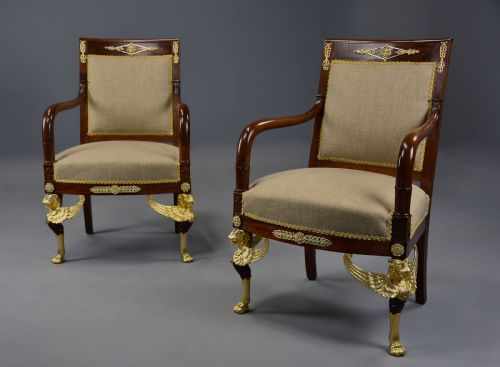
A gilt mounted chair brings structured continental elegance into a room through rich timber frames highlighted by cast metal enrichments.
Gilt Mounted Chair
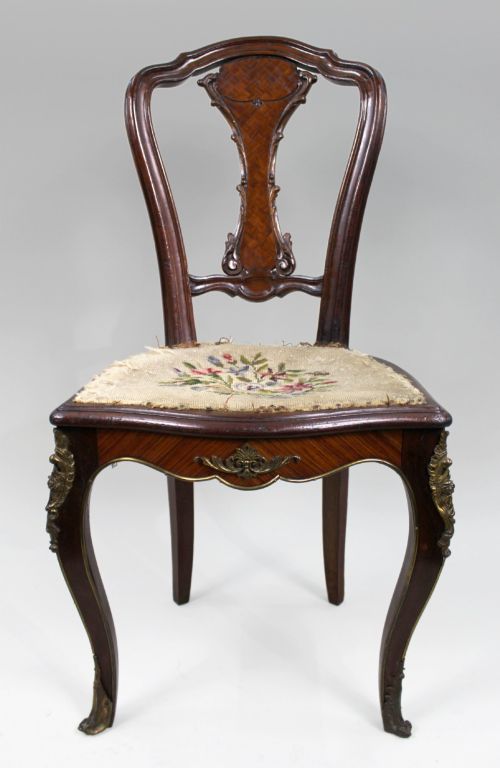
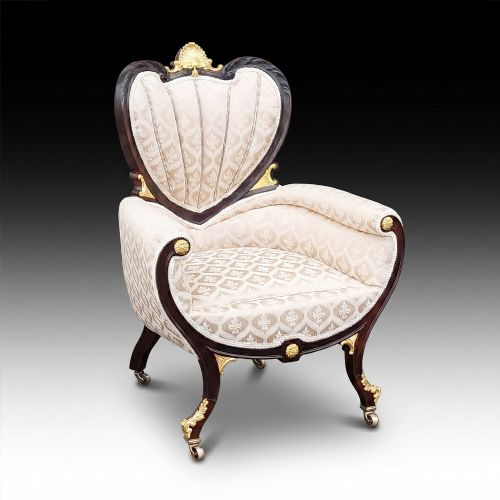
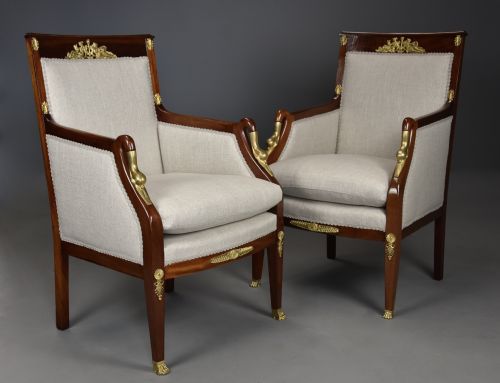
When you search for a gilt mounted chair, you encounter seating built primarily in mahogany, walnut, and kingwood, enriched with metal mounts. The examples appearing on this page span the mid nineteenth century to the early twentieth century.
The dominant aesthetic draws heavily on French Empire, Empire Revival, and Neoclassical vocabularies, alongside Swedish interpretations and Rococo revivals. Forms range from open armchairs and side chairs to complete lounge suites and paired seating.
Most items originate from French workshops or follow French design precedents closely, featuring distinct period details such as sabre legs and classical architectural proportions.
How they were made
Timbers like mahogany, kingwood, and walnut form the structural carcasses, occasionally shaped through parquetry or ebonising. These woods provide a dark, dense visual base for the applied metalwork.
Decoration relies on cast or chased metal elements, specifically ormolu, gilt bronze, and gilt brass, fixed directly onto the wooden frames. Upholstery employs fabrics such as velvet, linen, and leather to complete the seating.
Several pieces arrive accompanied by footstools, proving that nineteenth-century feet grew just as tired as ours do today.
What varies in quality
The sharpness and depth of the metal castings dictate much of the visual success, as finely chased ormolu displays crisp detail compared to simpler brass pressings. Timber selection also plays a part, where figured mahogany or precise kingwood parquetry elevates the cabinetwork.
Integration between the metal mounts and the wooden frame separates standard production from superior examples. Better pieces show mounts that follow the contours of the chair precisely rather than appearing as flat additions.
The Gilt Mounted Chair Glossary
- Ormolu
- Gilded bronze used for decorative mounts on furniture. It involves applying a gold amalgam to a bronze base and heating it to drive off the mercury.
- Parquetry
- Geometric wood inlay patterns applied to furniture surfaces. It creates decorative contrasting designs using various timber veneers.
- Fauteuil
- An open-armed upholstered armchair with exposed wooden sides. This classic French seating form became prominent during the seventeenth and eighteenth centuries.
- Sabre leg
- A concave curved furniture leg that tapers toward the foot. It echoes the shape of a cavalry sabre and appears frequently in neoclassical designs.
Gilt Mounted Chair: Frequently Asked Questions
How do I clean the gilt mounts?
Gilt mounts require gentle dusting with a soft brush to avoid wearing away the thin layer of gold. Avoid chemical polishes, which can strip the original gilding from the bronze or brass underneath.
Test any cleaning method on a hidden area first. Maintaining the mounts carefully preserves the contrast between the dark timber frame and the bright metal enrichment.
Where should I place an armchair?
These chairs suit drawing rooms, studies, or libraries where their sculptural frames and metal details can be viewed from multiple angles. Pair them with complementary timber tables or position them as accent seating.
Ensure the chair is kept away from direct sunlight and excessive heat sources to protect both the wooden frames and the upholstered textiles.
Are these chairs comfortable for daily use?
Many of these pieces feature supportive upholstered backs and seats finished in velvet, linen, or leather. Their design prioritises upright posture in keeping with nineteenth-century formal sitting habits.
Consider adding a subtle cushion if you plan to use the seating for extended periods of reading or relaxation.
How do I identify an Empire revival piece?
Empire revival pieces typically date from the late nineteenth or early twentieth century and replicate the classical proportions of the early nineteenth century. They incorporate symmetrical designs, dark mahogany timbers, and distinct classical mounts.
Comparing the construction methods and wood ageing to known nineteenth-century standards helps clarify the exact period of manufacture.