


French Cane Bedroom Chair
A French cane bedroom chair brings lightness and texture to a room, offering a carved wooden frame paired with woven seating.
French Cane Bedroom Chair
A French cane bedroom chair combines decorative woodwork with woven seating panels, drawing on historical designs such as Louis XV, Louis XVI, and Napoleon III styles. These pieces range from small side chairs and armchairs to matching bedroom sets that include beds and companion seating.
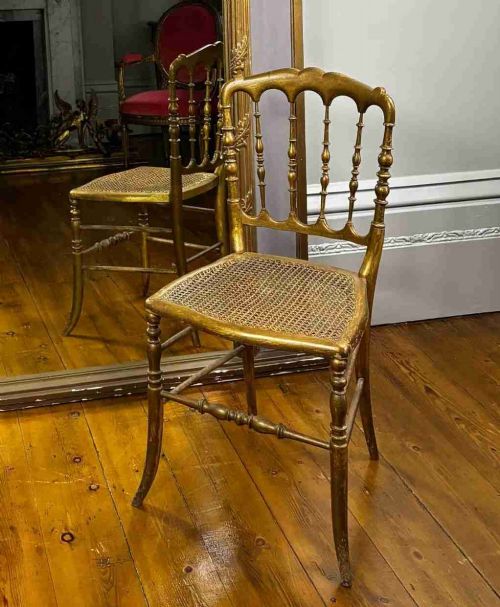
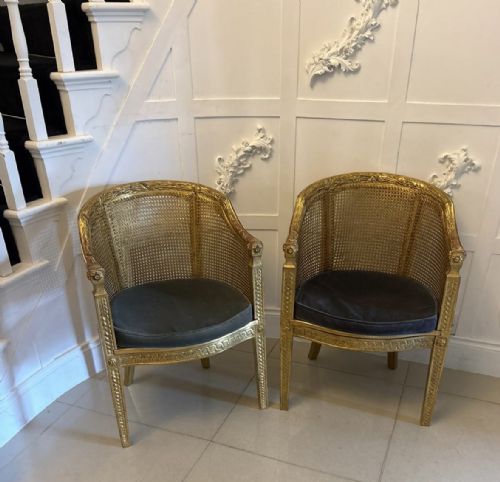
The selections recorded here span the nineteenth century into the early twentieth century, taking the form of painted, giltwood, gilt walnut, and faux bamboo frames. Buyers will frequently encounter Victorian interpretations alongside items produced in distinct French revival styles.
Originating primarily from the nineteenth century and early twentieth century, these items serve as both functional bedroom seating and decorative focal points. The physical evidence demonstrates a strong presence of carved wooden structures combined with traditional cane work.
How they were made
The frames rely on hardwoods and walnut, shaped through hand carving and finished with paint, gesso, or gold leaf applied over a giltwood base. Some examples utilise a faux bamboo turning technique on the wooden framework to mimic exotic natural materials.
Seating and backrests incorporate natural cane woven tightly into open wooden channels to create a resilient, flexible support. Selected pieces feature additional upholstery elements, including velvet pads placed over the wooden or caned structures.
Listings feature items dated across the nineteenth and early twentieth centuries, constructed from wood, cane, paint, giltwood, gold leaf, gesso, and velvet.
What varies in quality
The refinement of the hand carving on the wooden frame separates standard production from superior work, distinguishing simple turned elements from deeply carved floral or scroll motifs. Crisp lines in the gesso and the careful application of gold leaf indicate higher workshop standards.
The tightness and uniformity of the woven cane indicate the skill of the artisan who constructed the panel. Intact, evenly tensioned weaving demonstrates better preservation and original craftsmanship than replacement work.
The French Cane Bedroom Chair Glossary
- Bergere
- An enclosed upholstered armchair with wooden framing and typically a caned back and sides. This form offers a compact profile suited to nineteenth-century sleeping quarters.
- Giltwood
- Timber coated with a thin layer of gold leaf or metallic powder over a prepared gesso ground. This finish provides a bright reflective surface on decorative salon and bedroom seating.
- Faux bamboo
- Wood turned and painted to resemble natural bamboo stems. This decorative treatment became popular during the nineteenth century for lighter chair frames.
- Napoleon III
- A French design period spanning the mid-nineteenth century that revived earlier rococo and neoclassical motifs. Pieces from this era often feature rich gilding and decorative carving.
- Louis XVI Style
- A neoclassical aesthetic characterised by straight tapered legs, geometric symmetry, and classical ornamentation. Furniture from this tradition emphasises restraint and proportion.
French Cane Bedroom Chair: Frequently Asked Questions
Where were these chairs used?
These chairs were designed for private dressing rooms, boudoirs, and principal bedrooms within nineteenth-century homes. Their modest scale allowed them to sit comfortably beside dressing tables or near bedroom fireplaces.
Over time, owners also placed them in light-filled reception rooms and reception hallways where their decorative frames could be viewed from multiple angles.
How do I clean caned seating?
Natural cane requires gentle dusting with a soft brush and occasional wiping with a damp cloth to maintain its moisture balance. Avoid soaking the woven material to prevent the wood and cane fibres from becoming brittle.
Keeping the room at a stable humidity level protects both the plant-based cane and the underlying wooden frame from splitting.
Can these chairs hold daily weight?
Original caned bedroom chairs are generally built for lighter sitting rather than heavy, continuous lounge use. The woven seat panels offer flexible support that responds to the sitter's weight.
Checking the tension and condition of the cane underframe ensures the seat remains secure for regular placement in a modern bedroom.
How do I identify a revival style?
Revival pieces borrow decorative vocabulary from earlier French royal reigns, such as the curved cabriole legs of Louis XV or the straight fluted supports of Louis XVI. Makers in the nineteenth century reinterpreted these forms using contemporary woodworking machinery and traditional hand carving.
Examining the construction methods, wood types, and surface finishes helps distinguish a nineteenth-century revival piece from an eighteenth-century original.