
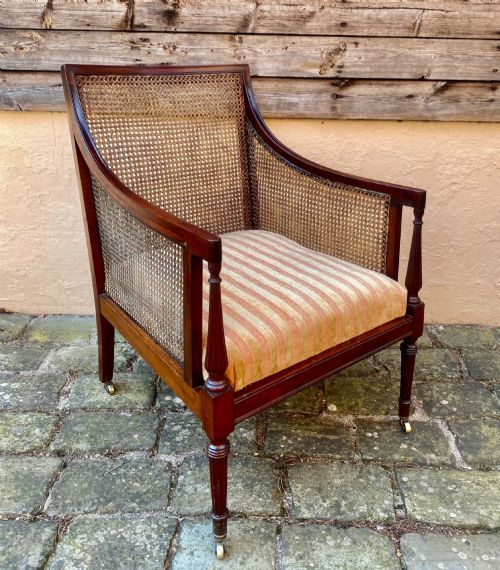
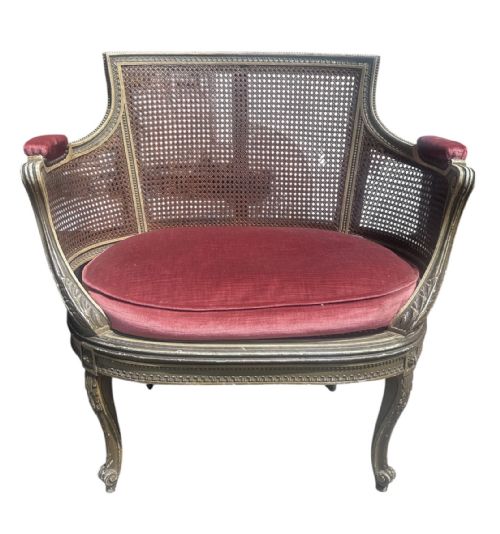
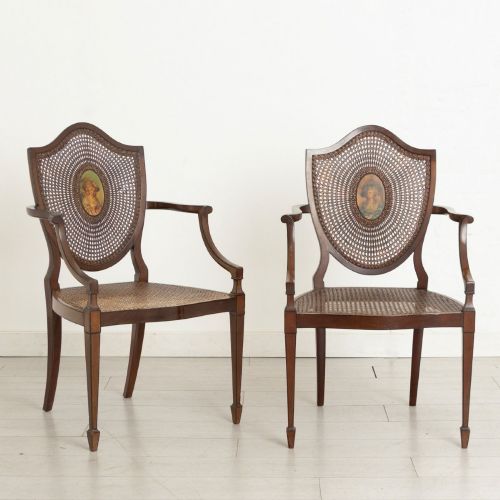


French Cane Armchairs
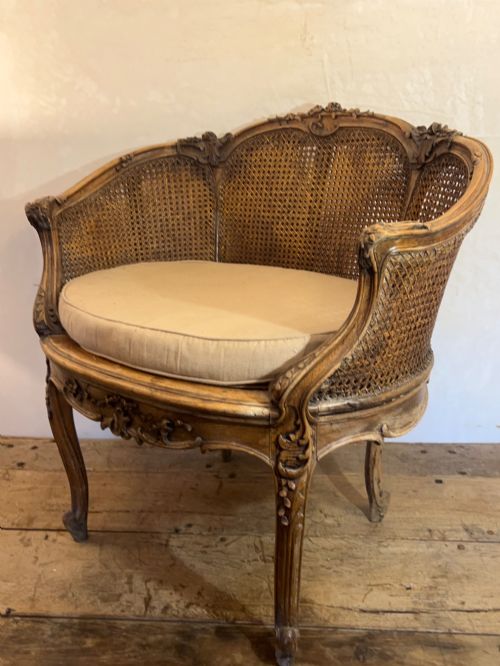
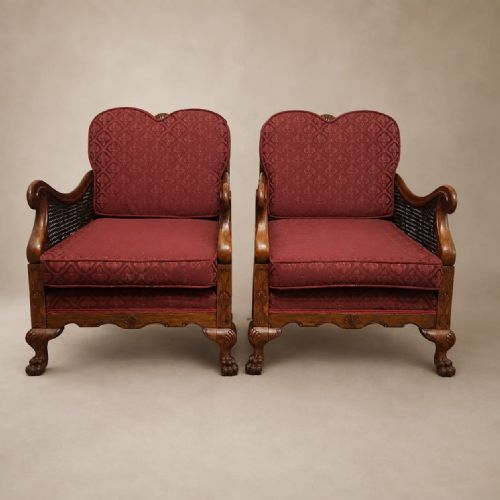
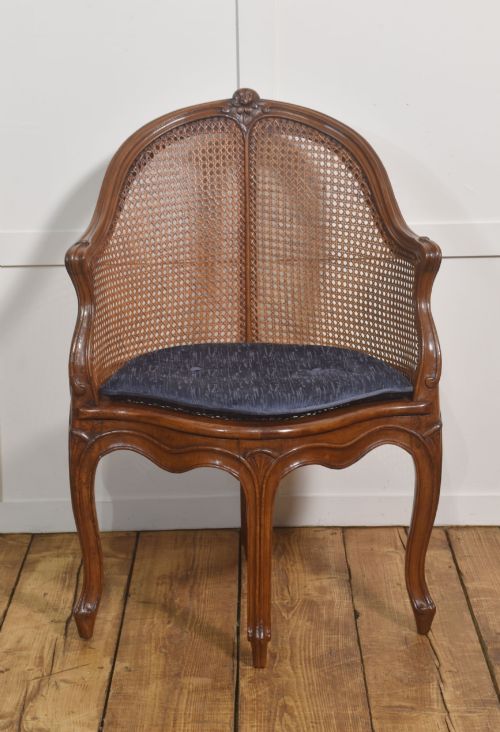
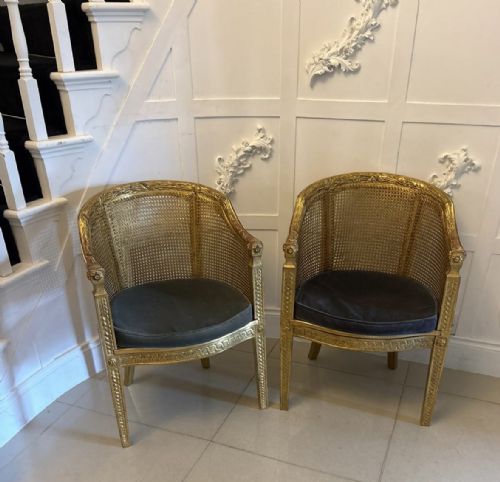
These French cane armchairs bring lightness and texture to a room, offering classic seating built with woven panels.
French Cane Armchairs
French cane armchairs span the nineteenth century and the early twentieth century, taking forms such as tub chairs, salon chairs, and library armchairs. Buyers seeking french cane armchairs will frequently encounter walnut frames dressed in Louis XV style or Louis XVI style, alongside painted and gilded finishes.
Makers shaped these seats for drawing rooms, bedrooms, and libraries, resulting in diverse proportions from childs chairs to wide bergere easy chairs. The inventory shows pieces ranging from 1860 giltwood examples down to 1920s French revival designs and Edwardian pairs.
Materials and Construction
Frames rely on hardwoods like walnut, beech, mahogany, and oak, carved into serpentine rails, cabriole legs, and medallion backs. Cabinetmakers joined these structural timbers using traditional joints before applying paint, faux bamboo detailing, or giltwood leaf.
Backs and seats incorporate woven rattan cane and split cane panels, sometimes paired with loose cushions upholstered in velvet, fabric, or later paint. This combination of rigid timber and flexible woven material provides both structural support and visual airiness.
The listings combine walnut, beech, mahogany, and oak frames with traditional rattan cane and upholstered fabric elements.
Assessing Quality
Quality rests upon the crispness of the timber carving and the integrity of the frame construction, where deep relief work and solid joints distinguish finer pieces. Hand-woven cane panels that remain taut and intact show superior craftsmanship compared to loose or patched weaving.
The choice of primary wood and the execution of surface treatments, such as original paint versus later layers, set superior examples apart from standard workshop production. Proportion and balance in the arms and backrest further divide ordinary seating from exceptional salon chairs.
The French Cane Armchairs Glossary
- Bergere
- An enclosed upholstered armchair with wooden sides filled with cane or upholstery. This form became popular in France during the eighteenth century and inspired later revivals.
- Caning
- A method of weaving rattan strips to create openwork panels for chair backs and seats. It provides flexibility and airflow.
- Giltwood
- Timber treated with a thin layer of gold leaf or gilt preparation. This finish appears on decorative salon chairs and formal armchairs.
French Cane Armchairs: Frequently Asked Questions
How do I care for cane panels?
Keep cane panels clean by dusting them gently with a soft brush and occasionally dampening the underside with a sponge to maintain moisture.
Avoid placing these chairs near direct heat sources or in overly dry rooms, as this causes the natural rattan fibres to become brittle and snap.
Can these armchairs support daily use?
Most antique bergere chairs and salon seats handle everyday sitting quite well if the wooden frame and woven cane remain sound and stable.
Heavier users should check the tension and condition of the cane base before prolonged sitting to prevent unexpected sagging or breakage.
What is the difference between tub and bergere chairs?
Tub chairs feature a rounded, enclosed back that curves continuously around into the armrests. They offer a compact and supportive seating experience.
Bergere chairs typically present a wider footprint with exposed wooden frames and cane sides, designed for relaxation in libraries and drawing rooms.