


Brown Wood Bergere Chair
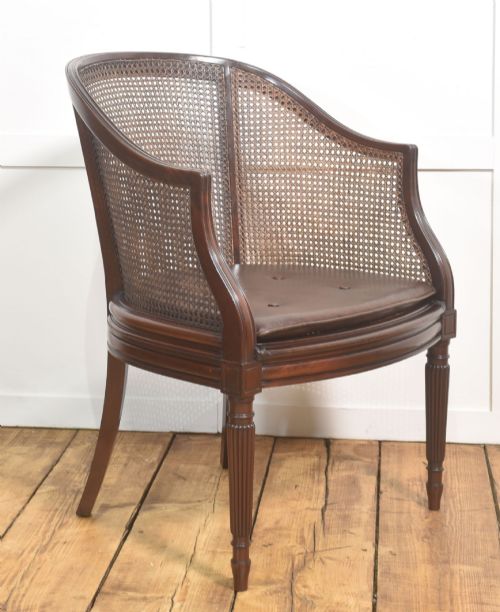
A brown wood bergere chair offers woven canework and timber warmth, bringing classic library seating and French style straight into a room.
Brown Wood Bergere Chair
A brown wood bergere chair is a traditional upholstered or cane-sided armchair designed for libraries, studies, and drawing rooms. These seating pieces combine timber frames with woven cane panels or upholstered backs and seats.
The versions most commonly met on this page span several distinct periods including the Regency era, the Victorian period, and the Edwardian era. Makers also produced French Louis XVI style and Rococo Revival examples alongside oak swivel chairs and childs bergere chairs.
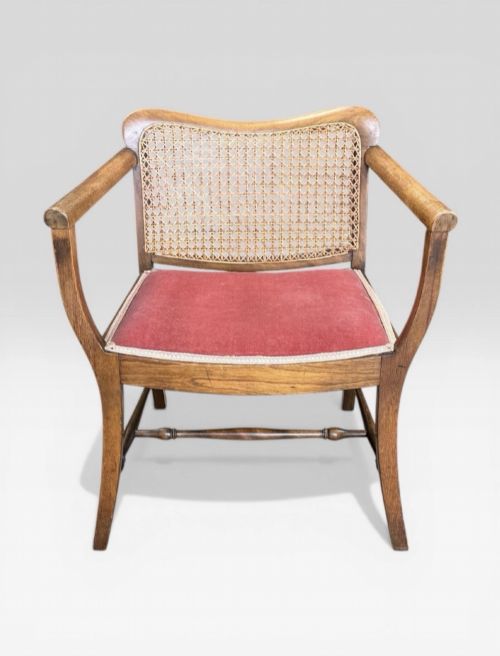
Forming part of the broader category of armchairs and desk chairs, these items utilise woods such as mahogany, oak, and general hardwood. They frequently appear paired with cane seats, leather pads, or velvet and fabric upholstery.
How they were made
Makers constructed the structural frames of these armchairs using dense timbers such as mahogany and oak, often incorporating brass details for reinforcement or decoration. Cabinetmakers shaped the wood into generous proportions, sometimes adding inlaid decoration to the mahogany surfaces.
The characteristic cane back and sides were hand-woven using natural materials to create supportive, permeable panels. Where the design called for padding, craftsmen applied buttoned leather, velvet, or fabric over internal stuffing.
Listings feature pieces spanning the 19th Century, 1900, Regency, 1910, 1920, and 1930 periods.
What varies in quality
The refinement of the timber framework sets apart different examples, visible in how well-drawn the proportions are and the sophistication of any applied inlay. Regency pieces demonstrate particular attention to silhouette and generous scaling.
The integrity of the woven cane panels and the selection of secondary materials like brass fittings or buttoned leather dictate the overall standard of execution. Chairs featuring specialised mechanisms, such as oak swivel movement, show mechanical variation across periods.
James Shoolbred
The Brown Wood Bergere Chair Glossary
- Bergere
- An enclosed upholstered armchair originating in France, typically featuring wooden frames and cane side panels. These seats often include loose squab cushions.
- Cane
- Strips of woven rattan used to form flexible, breathable panels for chair backs and sides. This material provides light weight and structural resilience.
- Regency
- An English design period spanning the early nineteenth century characterised by classical restraint and archaeological revival motifs. Furniture from this era often utilises dark mahogany.
- Mahogany
- A durable tropical hardwood valued for its rich brown colour and stability in cabinetmaking. It takes a fine polish and accepts subtle inlay work.
- Tub armchair
- An upholstered seat featuring a continuous curved back and arms that form a protective enclosure. This form appears across Edwardian and Victorian designs.
Brown Wood Bergere Chair: Frequently Asked Questions
What is a bergere chair?
A bergere chair is a French-style armchair with a wooden frame and woven cane panels along the back and sides. It typically includes a padded seat cushion for comfort.
These chairs were designed for formal reception rooms and libraries, offering an enclosed, supportive seating experience.
How do I date a brown wood chair?
Dating relies on examining the timber species, construction methods, and stylistic cues present in the frame. Pieces from the Regency era show different proportions compared to Edwardian or later examples.
Design details like brass mounts, inlaid wood, and the tightness of the cane weave also point to specific manufacturing periods.
Where were these chairs used?
These armchairs traditionally furnished domestic libraries, studies, and drawing rooms where reading and writing took place. Their sturdy hardwood frames and comfortable proportions suited prolonged sitting.
Today they function effectively as accent seating in living spaces, studies, and bedrooms.
Are these chairs comfortable?
Yes, the combination of woven cane elasticity and cushioned seats provides natural support for the sitter. Many examples feature generous proportions and angled backs designed for relaxation.
Adding loose leather or fabric squab cushions further enhances the seating comfort of the wooden frame.