
French Cabinet Furniture
French cabinet furniture brings together centuries of Continental craftsmanship, offering both practical storage and striking decorative presence to a room.
French Cabinet Furniture
When you search for french cabinet furniture, you encounter a diverse array of storage and display pieces spanning multiple centuries. The selection ranges from robust 18th-century oak buffets to refined 19th-century commodes and streamlined 1930s Art Deco sideboards.
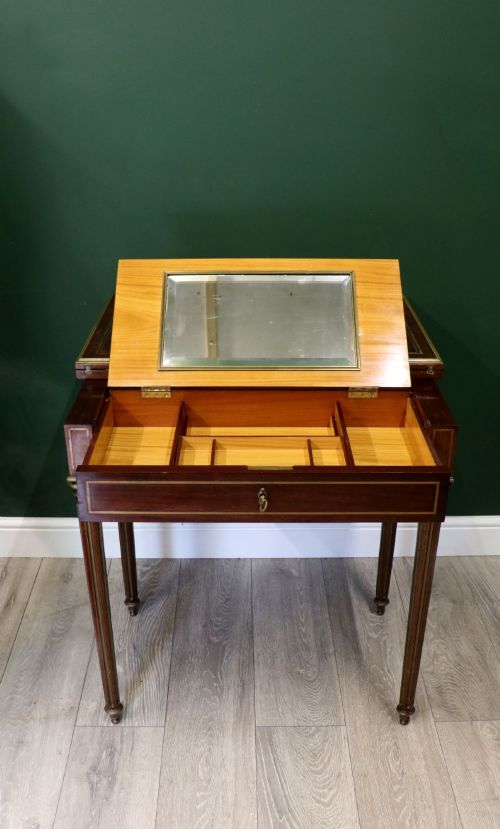
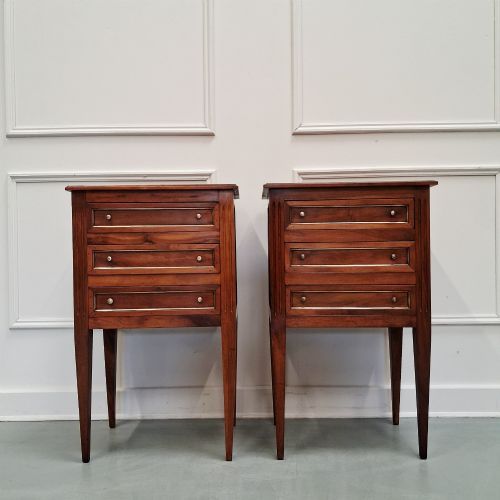
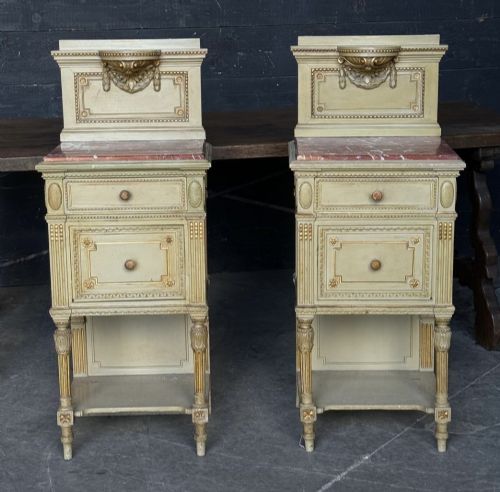
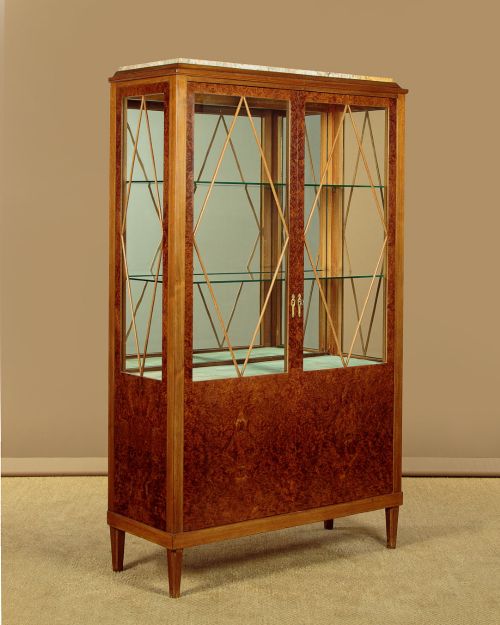
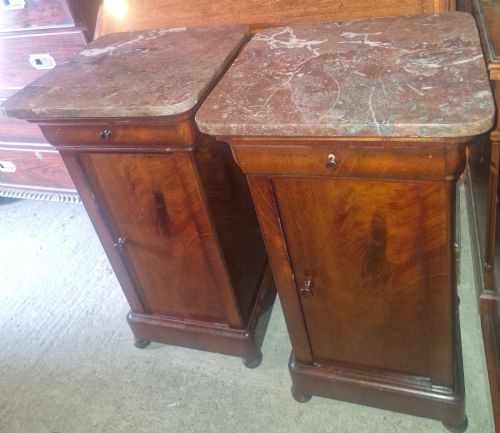
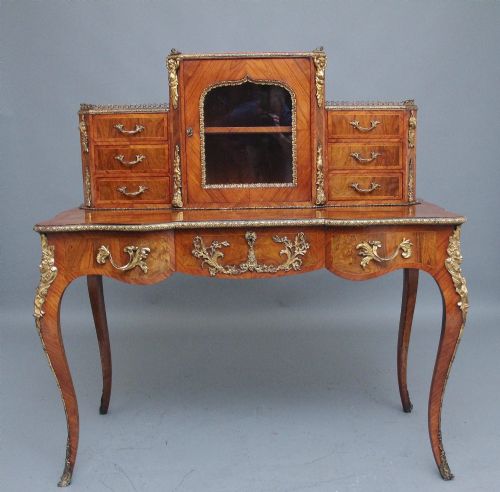
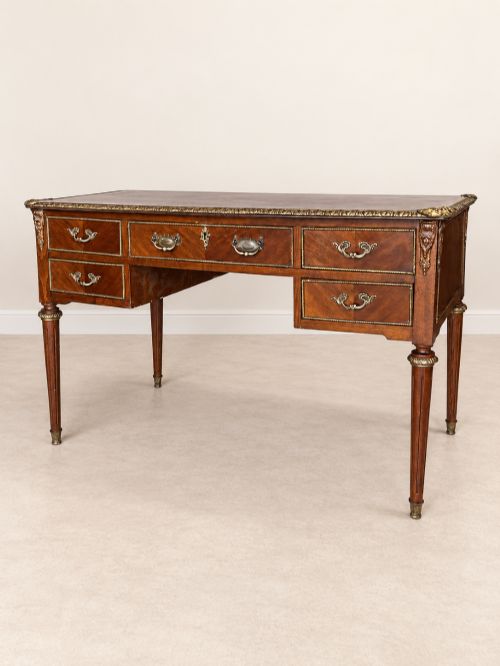
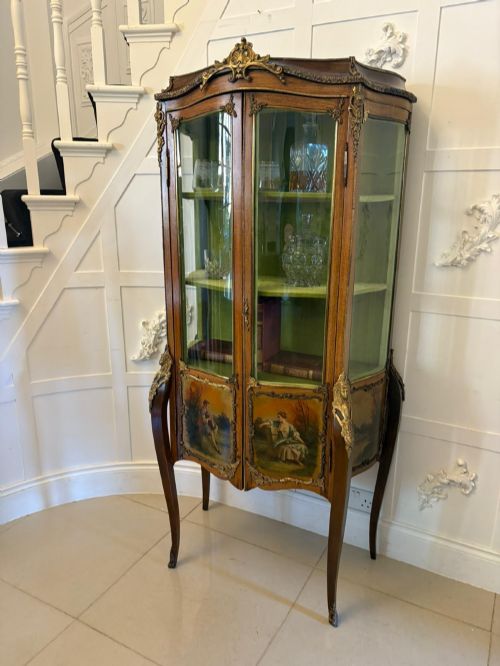
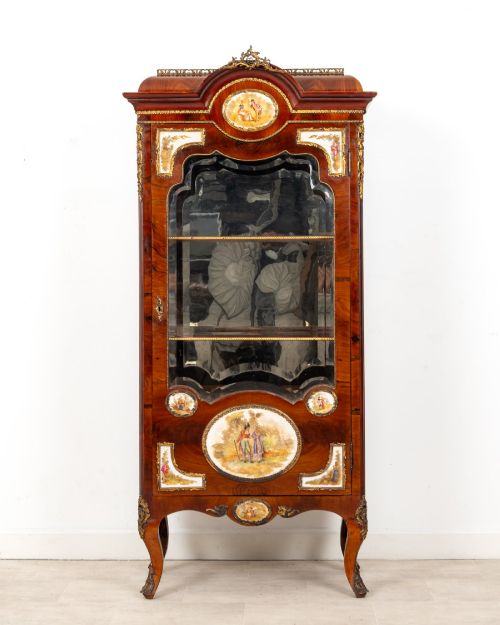
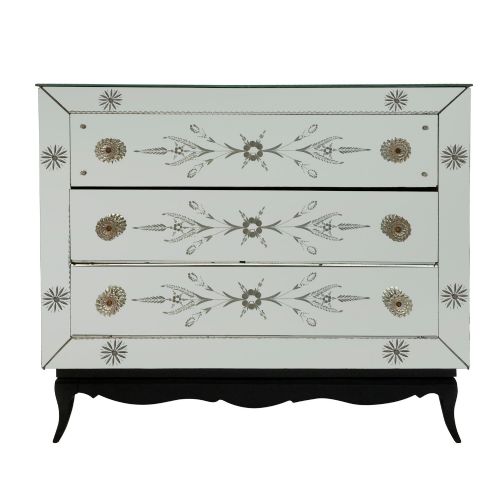
You are most likely to meet 19th-century examples on this page, particularly bedside cabinets, display vitrines, and chests of drawers. These items frequently incorporate revival styles such as Louis XV and Louis XVI alongside practical forms like washstands and desks.
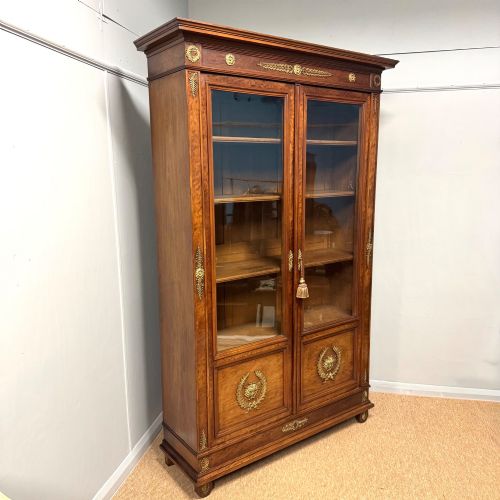
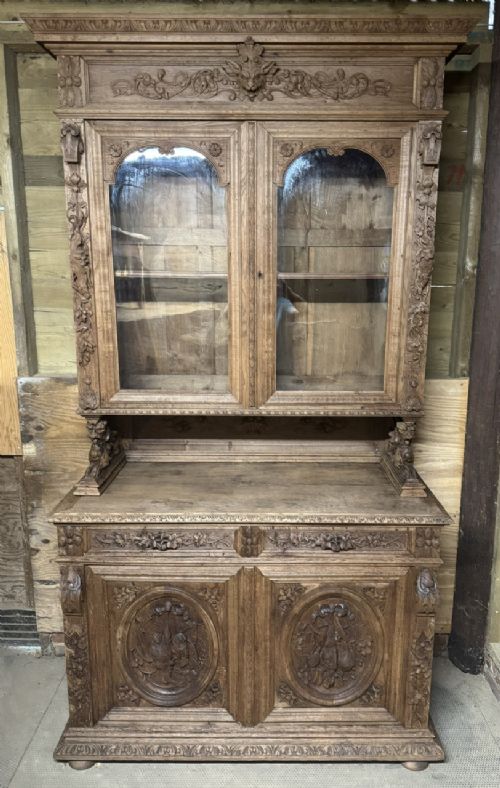
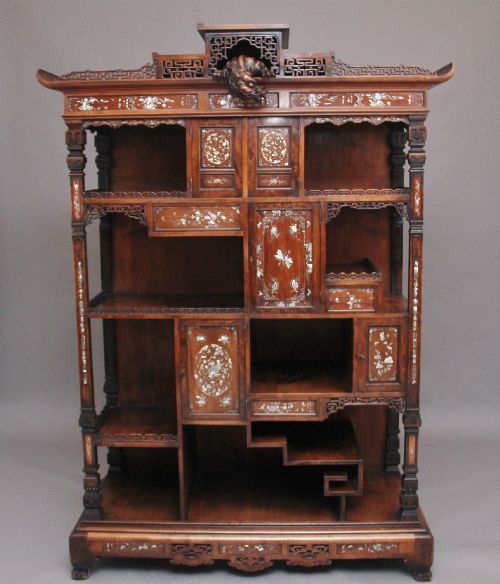
The category also encompasses specialised pieces including music cabinets, writing desks, and bookcases utilising exotic timbers. Originating from distinct workshops and periods, these cabinets reflect shifting domestic habits across French interiors.
How they were made
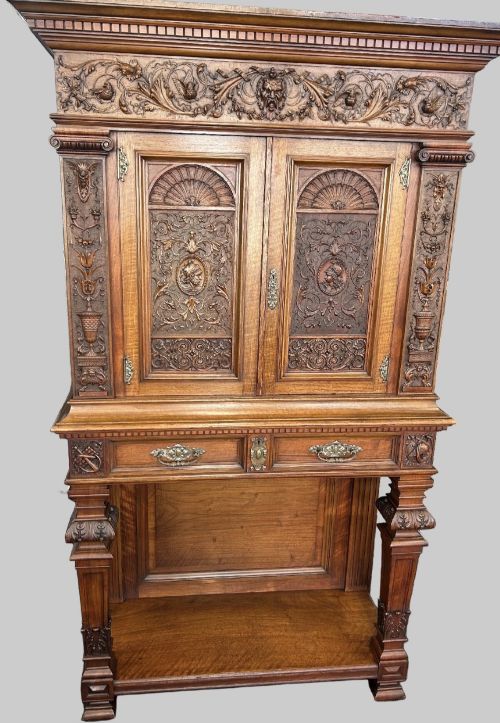
Cabinet makers utilised a foundation of solid hardwoods such as oak, mahogany, and walnut, often applying decorative veneers like kingwood, rosewood, and amboyna. Carved details and marquetry patterns required precise hand joinery and specialised woodworking techniques.
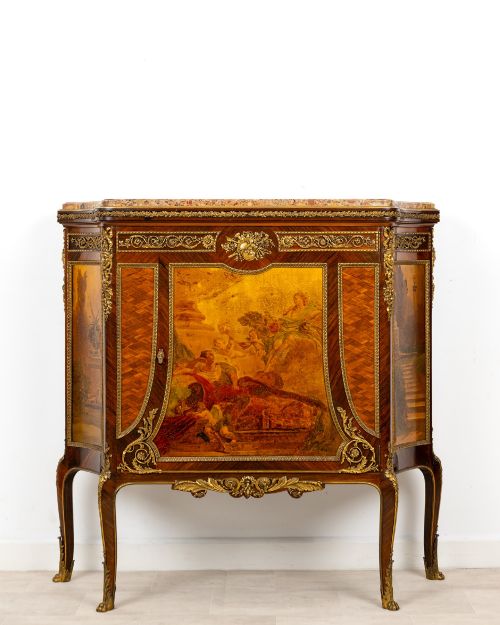
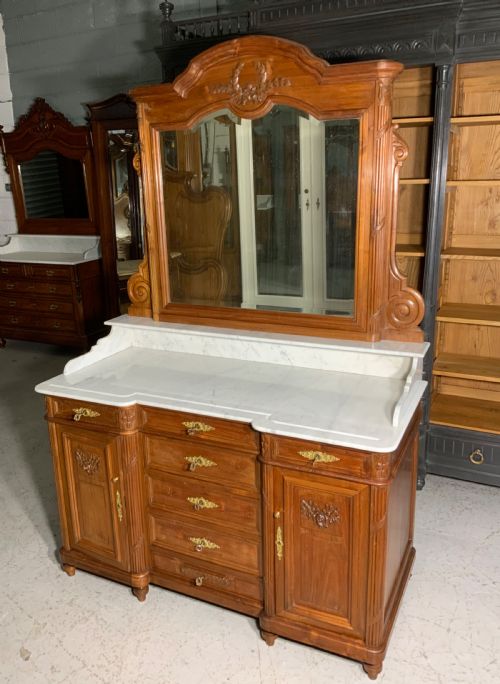
Metal mounts in ormolu and brass provided structural reinforcement and decorative contrast, while marble tops added durable surfaces to commodes and corner cabinets. Glass panels and mirrored doors completed display pieces designed to catch interior light.
Listings feature items from the 18th, 19th, and 20th centuries, utilising materials like mahogany, marble, and ormolu.
What varies in quality
Quality in these pieces rests upon the precision of the joinery and the selection of timber veneers. Superior examples display seamless marquetry work, carefully matched grain patterns, and substantial secondary woods within internal framing.
The refinement of cast bronze or ormolu mounts and the integration of marble tops distinguish finer workshops from standard production. Artisanal execution in hand-carved elements elevates the overall integrity of the furniture.
Gillows·Gabriel Viardot·Henry Dasson·Maurice Jallot·Mercier Frères
The French Cabinet Furniture Glossary
- Ormolu
- A gilded bronze application used for decorative mounts on furniture. It adds metallic contrast to wood surfaces.
- Marquetry
- The art of applying small pieces of veneer to form decorative patterns. Craftsmen use various tinted woods to create pictorial designs.
- Commode
- A low chest of drawers or cabinet originating in France. These pieces often feature marble tops and elaborate mounts.
- Vernis Martin
- A type of simulated Japanese lacquer developed in France. It involves multiple layers of translucent varnish applied over painted decoration.
- Vitrine
- A glass-fronted display cabinet intended for porcelain and curiosities. These pieces protect delicate objects while allowing full visibility.
French Cabinet Furniture: Frequently Asked Questions
What periods do these pieces cover?
The inventory spans several eras, beginning with 18th-century regional pieces and extending through 19th-century revival styles. Twentieth-century Art Deco creations also appear within the selection.
Items date from the 17th century up through the 1930s, showcasing evolving European aesthetics and woodworking standards.
How do I identify Louis XV style?
Louis XV furniture relies on asymmetrical curved lines and naturalistic ornamentation such as floral carvings. Cabriole legs and serpentine fronts are typical characteristics of this aesthetic.
Revival versions produced during the 19th century adopted these same flowing contours and elaborate marquetry patterns.
Where were these cabinets used?
These furnishings served various domestic functions across French homes, from formal reception rooms to private bedrooms and studies. Specialised items included bedside tables, vanity washstands, and music cabinets.
Larger pieces like armoires and bookcases furnished principal living spaces, providing both display capacity and concealed storage.
What materials are most common?
Solid oak, mahogany, and walnut form the structural core for the majority of pieces. Finer surfaces utilise exotic veneers including kingwood, rosewood, and amboyna.
Decorative accents frequently incorporate marble tops, brass hardware, and gilt bronze or ormolu mounts.