

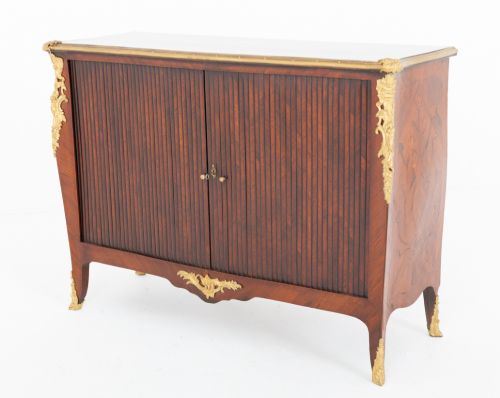
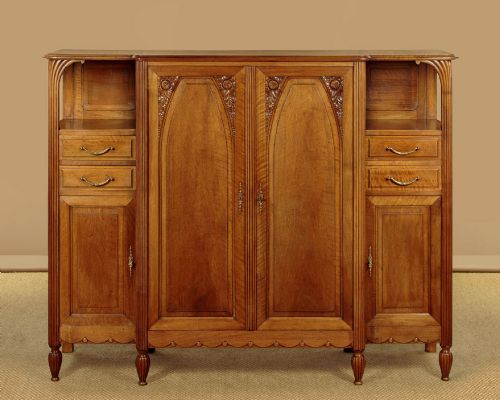
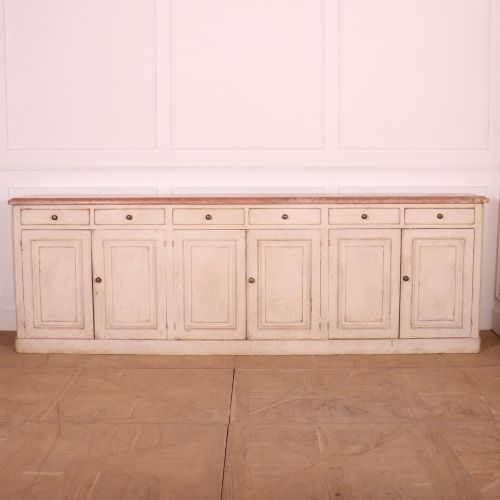
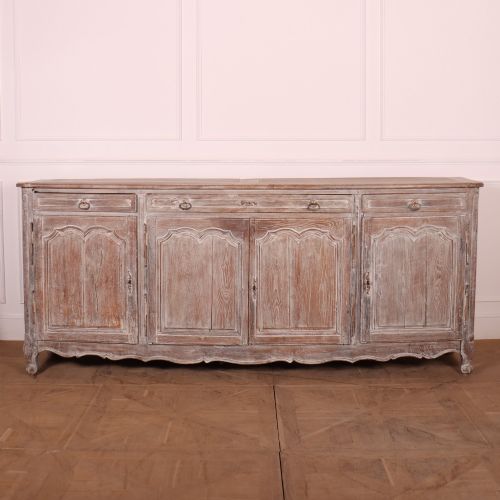
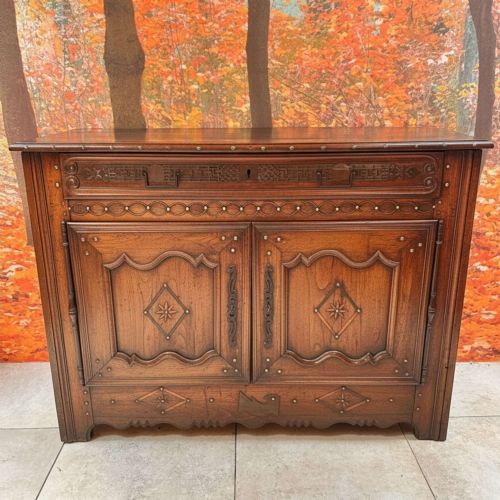
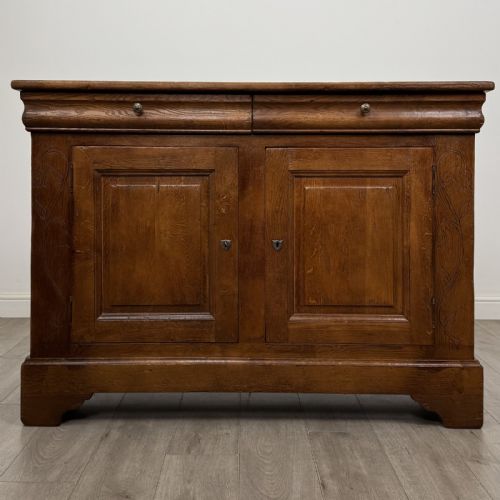
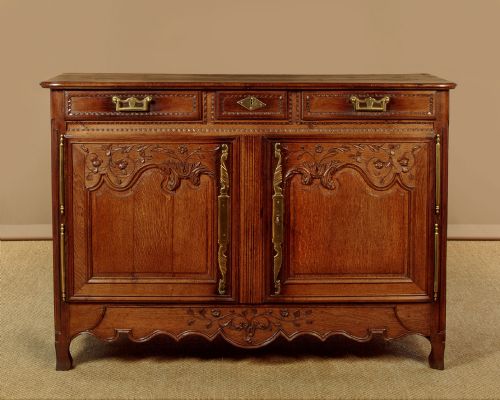
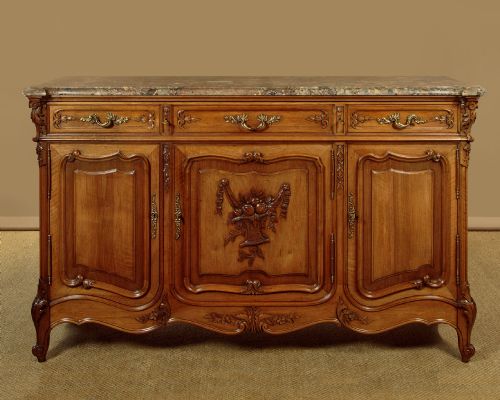

French Buffet Credenza
A french buffet credenza brings heavy timber and marble to a room, offering low storage with a serious Continental presence.
French Buffet Credenza
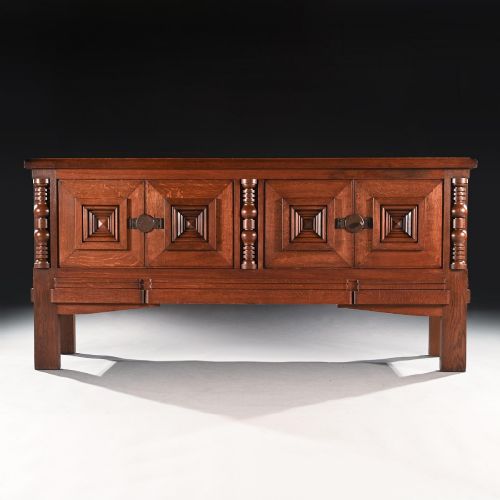
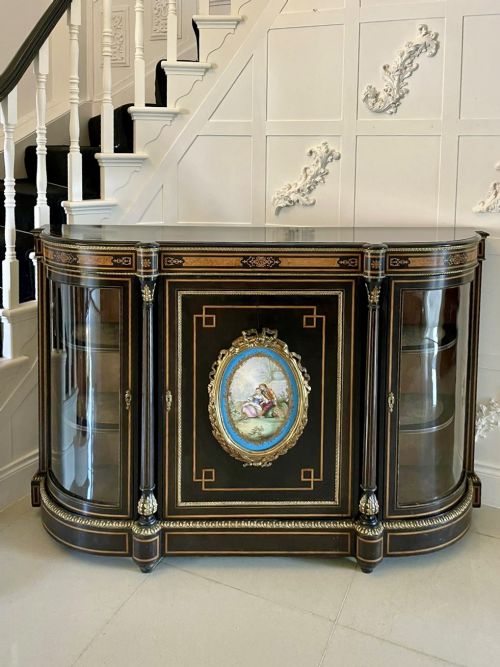
A french buffet credenza is fundamentally a large storage cabinet designed for dining rooms and grand hallways, taking several distinct forms across the centuries. You will encounter low enfilades, marble-topped sideboards, and multi-door cupboards that provide substantial interior space.
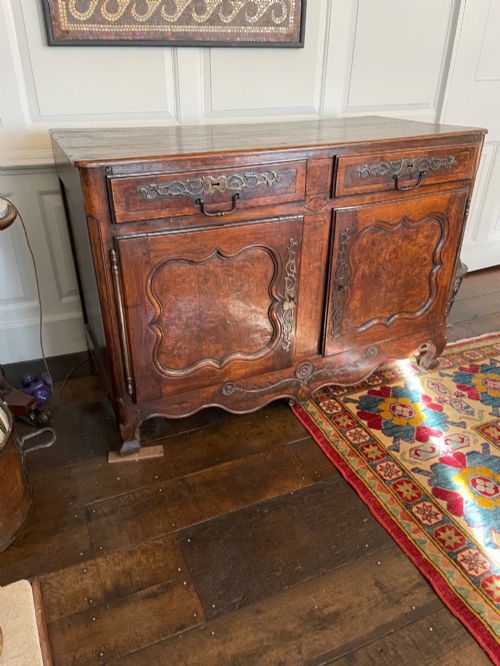
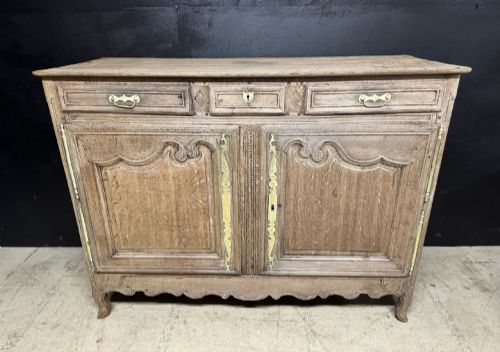
The pieces on this page span from eighteenth-century provincial oak designs to twentieth-century art deco cabinets. Walnut and cherrywood appear frequently alongside bleached and carved oak, showing the evolution of regional tastes in France.
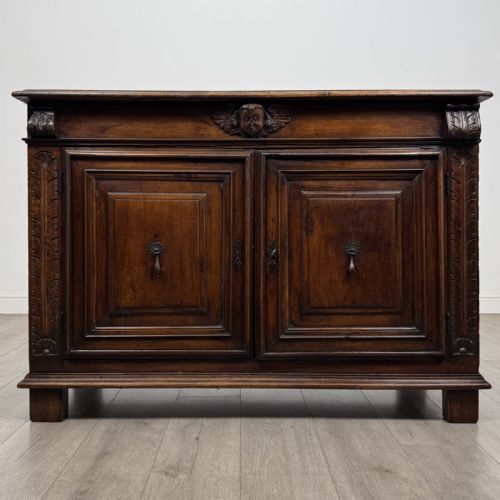
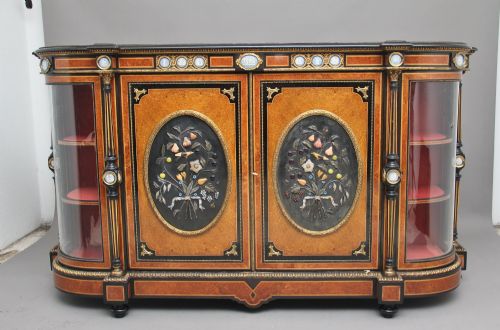
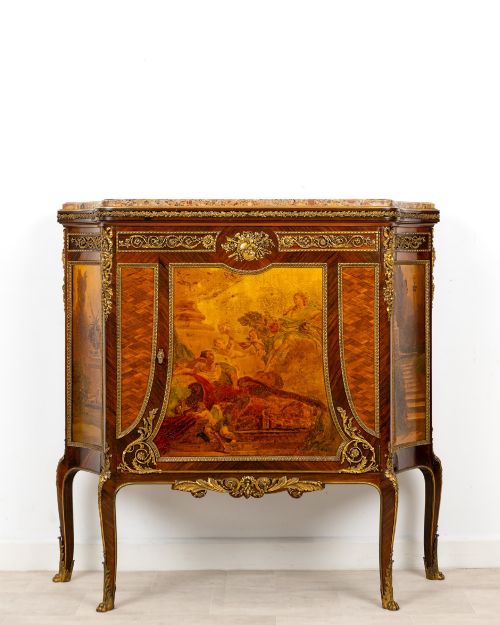
Makers drew on historical vocabularies, producing pieces in Louis Philippe, Renaissance Revival, and Louis XV styles. These variations mean you can find anything from a rustic sacristy cabinet to an ormolu-mounted exhibition piece.
Materials and Construction Methods
Cabinetmakers relied on solid hardwoods like oak, walnut, and cherrywood for the main carcass and doors, often applying finer veneers such as amboyna, kingwood, and burr walnut to prominent surfaces. Carved details, cherubs, and floral marquetry required patient hand work by skilled artisans.
Many of these pieces incorporate heavy marble tops in white or pink tones, fitted precisely to the timber base. Metalwork played a structural and decorative role, with brass, iron, and gilt-bronze ormolu mounts securing corners and framing doors.
French Buffet Credenza Retail Price Guide 2026
Typical asking prices for french buffet credenza among the pieces listed under this phrase on Sellingantiques today, from the lower quarter to the upper quarter. They describe what is for sale here now, not the wider market.
Regional French styles include provincial oak sacristy cabinets alongside heavily carved hunting cupboards.
Judging Quality in Timber and Mounts
Quality rests in the selection of the timber and the depth of the carving. Superior examples display carefully matched grain patterns across multiple doors and crisp, deep relief work rather than shallow machine stamping.
The integration of secondary materials defines the top tier of pieces. Heavy marble slabs with clean bevels and finely chased ormolu mounts indicate a higher workshop standard than plain timber edges and cast brass handles.
François Linke·Charles Dudouyt
The French Buffet Credenza Glossary
- Enfilade
- A long sideboard or buffet featuring a sequence of three or more doors in a straight line. This form originated in large French dining rooms for serving food.
- Ormolu
- Gilded bronze mounts applied to furniture for decorative effect. It adds bright metallic contrast to dark woods like walnut and ebonised timber.
- Marquetry
- Decorative patterns formed by fitting small pieces of veneer into a wooden background. Floral and geometric designs are common on nineteenth-century surfaces.
- Credenza
- A low cabinet or sideboard, often standing on short legs or a plinth base. The term covers various low storage units with doors and drawers.
- Serpentine
- A curved line that undulates inward and outward across the front of a cabinet. This shaping requires expert joinery to maintain structural strength.
French Buffet Credenza: Frequently Asked Questions
What is a french buffet credenza used for?
These pieces served historically for storing dining linen, silverware, and serving dishes in formal dining rooms. Today they function as primary storage cabinets in large living spaces or hallways.
The wide top surface also provides a practical platform for displaying lamps, ceramics, or art while keeping clutter hidden behind heavy doors.
Are marble tops original to these cabinets?
Many nineteenth and twentieth-century buffets and credenzas left the workshop with fitted marble slabs to protect the wood from serving spills. These stone tops were cut to follow the specific serpentine or straight lines of the carcass.
Replacement marble is sometimes fitted during restoration, so checking the underside for age and edge matching helps confirm originality.
How do I care for antique wood and marble?
Solid woods like oak, walnut, and cherrywood require occasional gentle cleaning with natural wax to preserve the finish. Avoid modern silicone polishes that build up over time on the grain.
Marble surfaces should be kept dry and cleaned with mild soap, avoiding acidic substances that can etch the polished stone.