




French Bronze Trinket Box
A French bronze trinket box is a small decorative receptacle for keepsakes, combining cast metalwork with glass or porcelain to hold dressing table treasures.
French Bronze Trinket Box
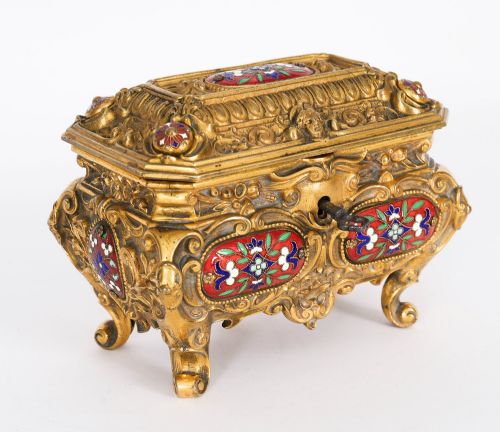
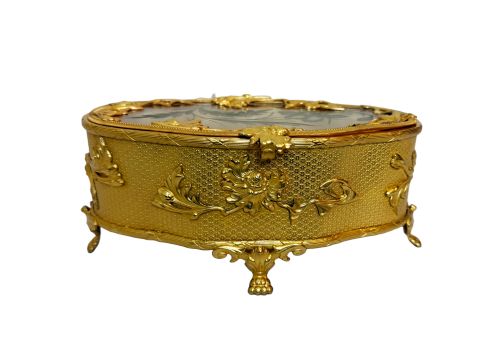
When you examine a french bronze trinket box, you are looking at small personal containers made to hold jewellery, pins, and small valuables on a nineteenth-century dressing table. These pieces span forms from simple jewellery caskets to novelty carriages and lidded porcelain dishes mounted in metal frames.
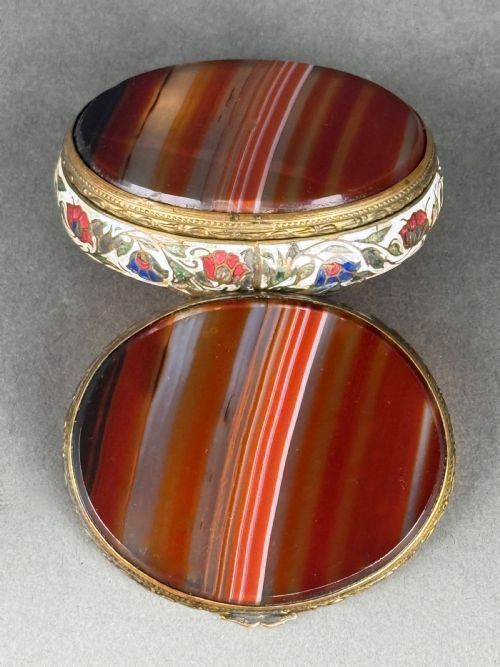
The version you are most likely to meet on this page is nineteenth-century, drawing on periods such as the Second Empire, Napoleon III, and Art Nouveau styles. They originate from French workshops, incorporating decorative details like champleve enamel, gilded mounts, and painted ceramic panels.
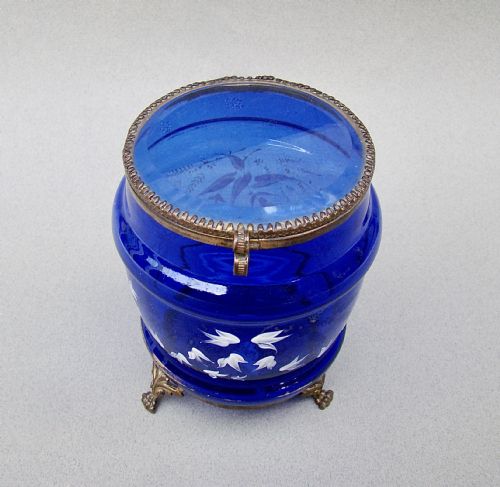
Makers often combined cast bronze or ormolu with contrasting bodies of crystal, Sevres porcelain, Limoges plaques, and Bristol blue glass. These objects served as both functional containers and decorative accents for elite interiors.
How they were made
These items rely on metal casting for their structural frames, utilising ormolu, gilt bronze, and gilt metal shaped into intricate Rococo Revival scrolls, architectural caskets, and figural mounts. The metal components are heavily gilded or silvered to provide a polished, reflective finish.
Glass and ceramic elements were integrated directly into the metal armature, combining cast frames with cut crystal, opaline glass, baccarat glass, and cobalt blue panels. Artisans also incorporated painted porcelain plaques from Limoges and Sevres, secured within hinged metal mounts.
Interior compartments were frequently lined with silk to protect delicate items, while specialised pieces included inset marble bases and hand-painted miniatures under glass.
French Bronze Trinket Box Retail Price Guide 2026
Typical asking prices for french bronze trinket box among the pieces listed under this phrase on Sellingantiques today, from the lower quarter to the upper quarter. They describe what is for sale here now, not the wider market.
Materials recorded on this site include ormolu, gilt bronze, Sevres and Limoges porcelain, champleve enamel, baccarat glass, onyx, and silk.
What varies in quality
The distinction between ordinary and exceptional examples rests upon the crispness of the bronze casting and the depth of the gilding. Superior pieces display sharply rendered relief work, well-defined chasing, and heavy, substantial metal frames rather than lightweight stamped brass.
Material combination also elevates the piece, particularly where high-status components like signed Sevres porcelain panels, baccarat glass, or intricate champleve enamel are integrated. The precision with which glass and porcelain panels fit into their metal mounts indicates the standard of workshop execution.
Sevres·Limoges·Baccarat
The French Bronze Trinket Box Glossary
- Ormolu
- Gilded bronze, typically produced by applying a mercury-gold amalgam to a cast bronze base and heating it to vaporise the mercury. This technique creates a rich, durable golden surface seen on nineteenth-century caskets.
- Champleve enamel
- A technique where troughs or cells are dug into the surface of the bronze and filled with vitreous enamel powder before firing. The resulting surface shows coloured patterns flush with the metal dividers.
- Palais Royal
- A style associated with luxury novelty items sold near the Palais Royal in Paris during the nineteenth century. These often include miniature carriages, eggs, and novelty travel pieces mounted in gilt metal.
- Sevres
- Porcelain produced by the French national manufactory, frequently found inset into the lids and sides of nineteenth-century jewellery caskets. These porcelain plaques often feature hand-painted scenes and rich blue grounds.
- Baccarat
- French crystal and glass manufacturer known for producing heavy, clear, and cut glass bodies mounted in bronze. Their work forms the transparent containers seen in nineteenth-century caskets.
French Bronze Trinket Box: Frequently Asked Questions
What were french bronze trinket boxes used for?
These containers were kept on dressing tables and boudoir desks to store rings, pins, and small valuable trinkets. They provided a secure and decorative place for personal items.
Wealthy owners also used smaller versions, sometimes called pill boxes or patch boxes, to carry tiny personal items during travel or social calls.
How do I date a nineteenth-century casket?
Dating relies on identifying the prevailing aesthetic style, such as Napoleon III, Second Empire, or Art Nouveau. Material combinations, such as the use of champleve enamel or specific porcelain marks, also help narrow the decade.
Structural assembly methods, including the type of hinges and fasteners used on the bronze frame, provide further clues to the period of manufacture.
Are porcelain panels original to the boxes?
In many authentic pieces, porcelain plaques by makers like Sevres or Limoges were made specifically to fit the cast bronze frame. Examining the interior mounting helps confirm that the porcelain and metalwork were designed together.
Replacements or later adaptations sometimes show mismatched margins or alternative securing methods behind the panel.
How do I care for gilt bronze and glass?
Gilt bronze surfaces should be cleaned only with a dry, soft cloth to avoid wearing away the thin layer of gold leaf or mercury gilding. Moisture can damage both the exterior metal and any internal silk linings.
Glass and crystal panels can be wiped gently with a damp cloth while taking care to keep liquid away from the metal mounts and hinges.