



French Bronze Table Candlesticks
French bronze table candlesticks bring classical proportion and warm metalwork to an interior, moving easily between formal dining rooms and quiet libraries.

French Bronze Table Candlesticks
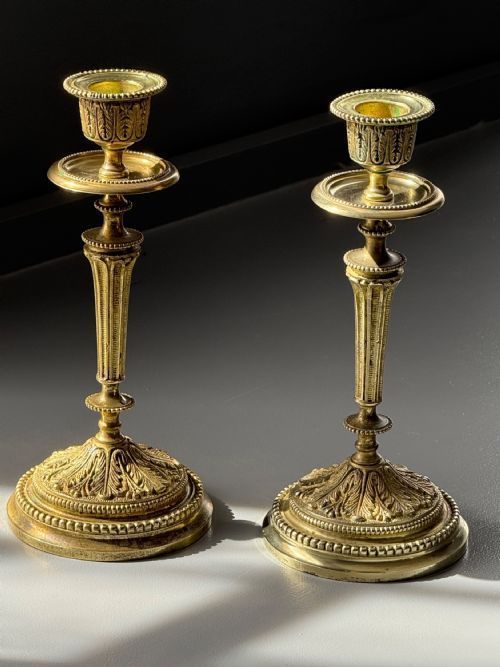
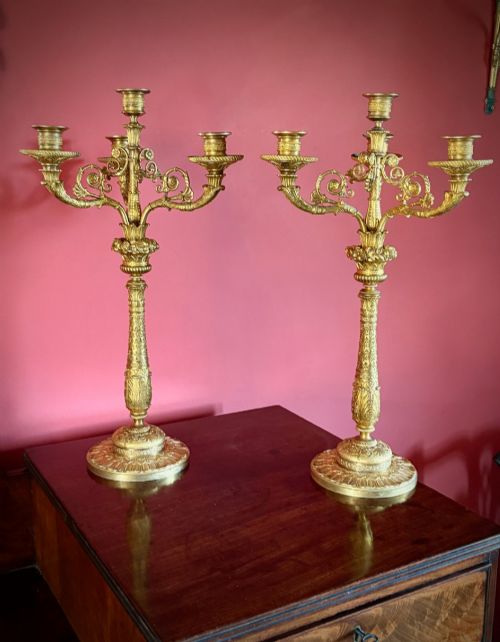
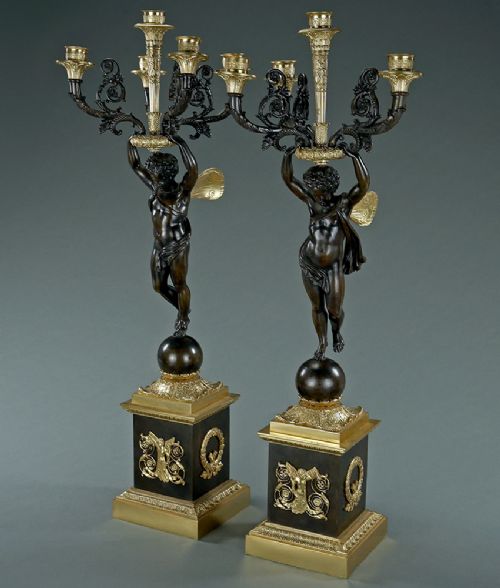
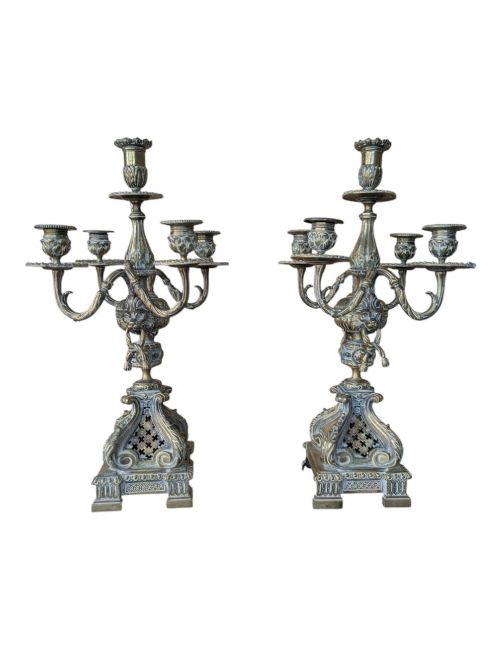
French bronze table candlesticks are cast metal lighting supports that range from simple single sconces to elaborate multi-branch candelabra. When searching for french bronze table candlesticks, buyers encounter items fashioned in styles such as Louis XVI, French Empire, and Rococo Revival. These pieces frequently date across the nineteenth century, including specific years like 1880 and 1900.
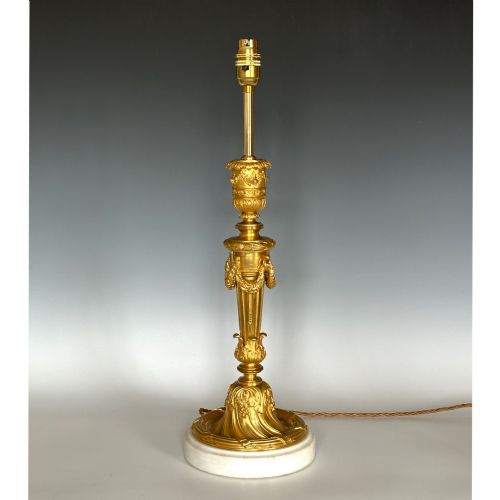
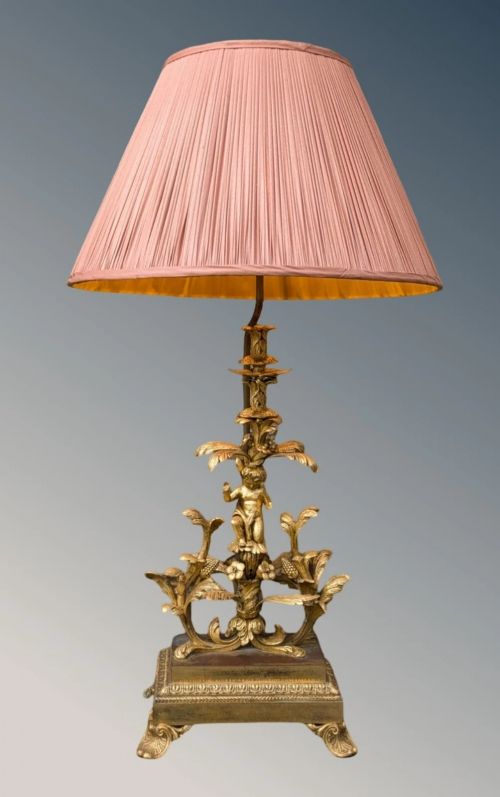
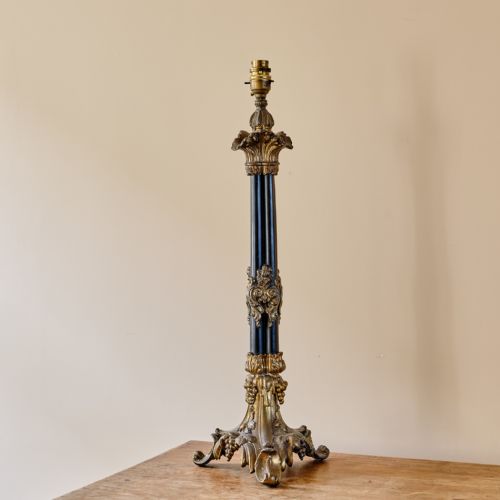
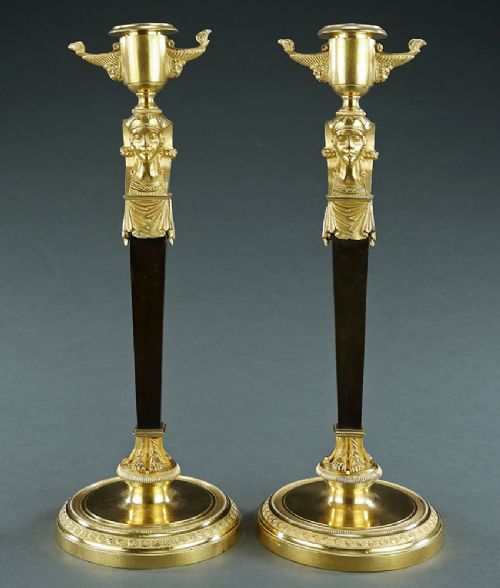
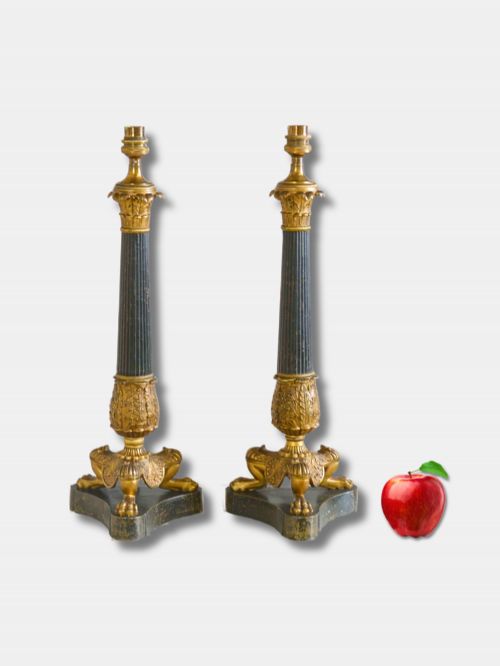
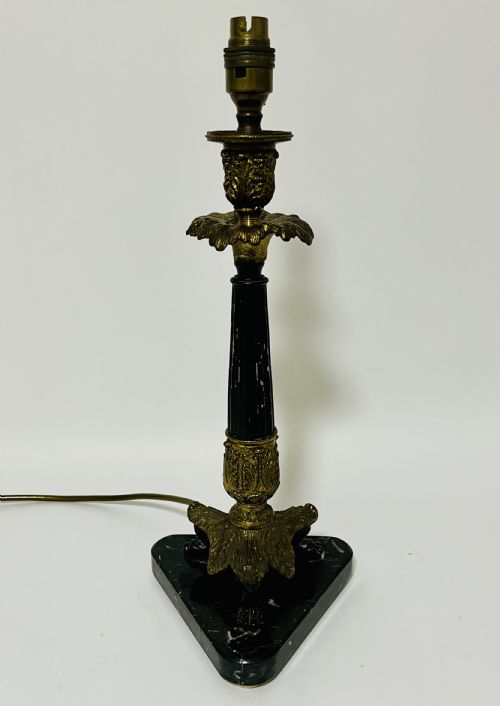
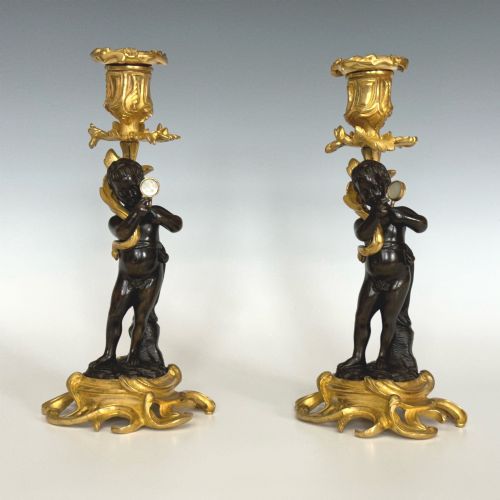
The selection on this page demonstrates how domestic lighting evolved from pure candle holders into electrified table lamps. Many examples incorporate marble bases or add patinated bronze alongside gilded ormolu. Forms vary from classical column designs and figural putti to Greco-Roman and Retour d'Egypte motifs.
How They Were Made
Foundries produced these objects using traditional lost-wax or sand-casting methods to shape the bronze components. Craftsmen then applied mercury gilding or used ormolu techniques to impart a rich gold finish to the metal surfaces.
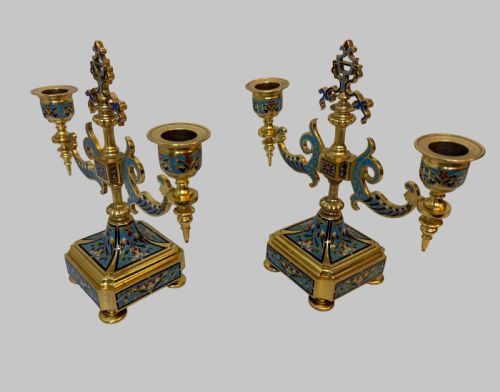
Makers integrated contrasting materials such as white or dark marble for stability and visual weight. Selected pieces combined patinated dark bronze with polished highlights, occasionally incorporating enamel, champlevé, or glass details.
Materials span gilt bronze, ormolu, patinated bronze, brass, marble, and added silk fabric shades.
What Varies in Quality
The durability and depth of the gilding further separate standard production from exceptional work. Thick ormolu layers retain their warmth and lustre through centuries, whereas inferior finishes wear thin and reveal the base metal underneath.
The French Bronze Table Candlesticks Glossary
- Ormolu
- A technique of applying finely ground high-carat gold to a bronze object using a mercury amalgam. This method creates a durable, warm golden surface that distinguishes high-end French metalwork.
- Patinated bronze
- Bronze that has been chemically treated to achieve a dark, stable surface colour rather than a bright metallic finish. It often provides contrast against polished gilt highlights.
- Candelabra
- A branched lighting fixture designed to hold multiple candles simultaneously. These pieces often feature removable arms to convert between single and multi-light configurations.
- Champlevé
- An enamelwork technique where troughs or cells are carved into the bronze body and filled with vitreous paste before firing. This adds colourful decorative bands to the candlestick shaft or base.
- Caryatid
- A sculpted female figure serving as an architectural support replacing a column. In these lighting pieces, they form the central shaft holding the candle socket.
French Bronze Table Candlesticks: Frequently Asked Questions
Can I convert these candlesticks for modern electricity?
Many examples on the market have already been converted into table lamps during the twentieth century. Professional conversion can be achieved without drilling structural bronze by running internal wiring through existing apertures.
Retaining the original sockets and components preserves the physical integrity of the piece for future collectors. Consult a specialist restorer to ensure any wiring respects the age of the metalwork.
What is the difference between bronze and brass?
Bronze is an alloy primarily composed of copper combined with tin, resulting in a heavier, stronger material suited to fine casting. Brass uses copper and zinc, yielding a brighter yellow tone that responds differently to patina.
Nineteenth-century French workshops favored bronze for its ability to accept intricate hand-chasing and deep mercury gilding.
How can I identify an Empire style piece?
Empire style designs draw inspiration from ancient Roman, Greek, and Egyptian campaigns, featuring strict symmetry and military motifs. Look for laurel wreaths, sphinxes, winged figures, and paw feet supporting columns.
These pieces emphasise strong geometric forms and contrasting patinated and gilded surfaces.