

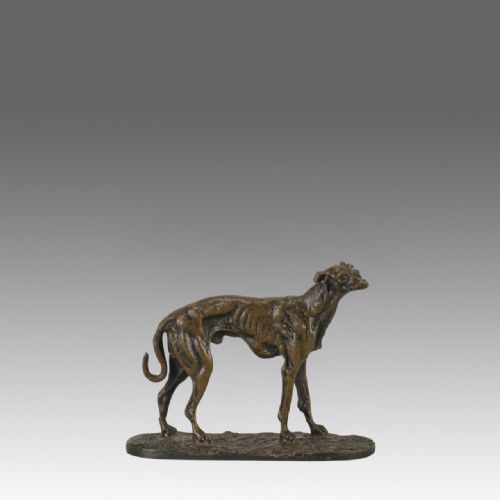
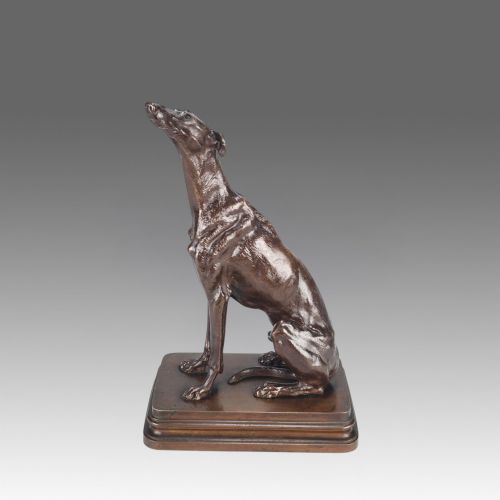


French Bronze Greyhound
These french bronze greyhound figures capture the sleek lines and intense energy of the breed through decades of European foundry work.
French Bronze Greyhound
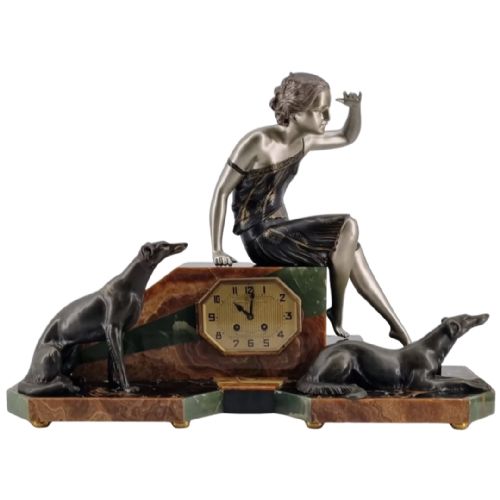
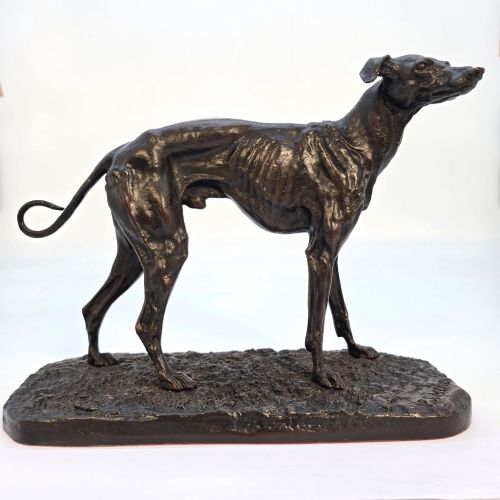
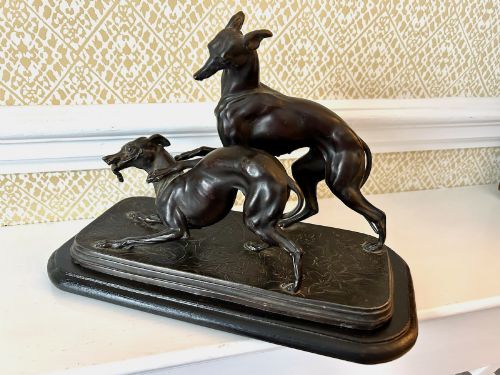
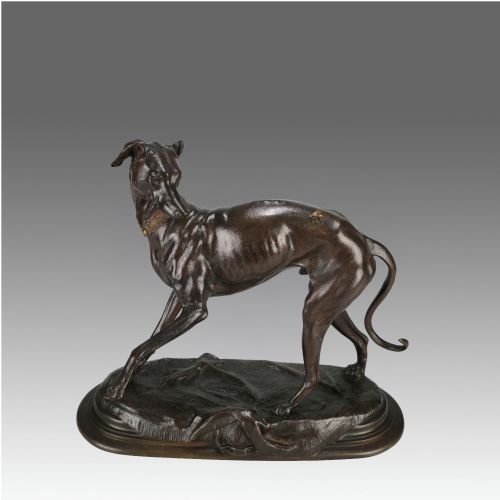
A french bronze greyhound combines the observation of nineteenth-century animalier sculpture with the stylised geometry of the art deco period. These pieces appear as standalone sculptures, paperweights, clock sets, and mounts for caskets or lamps.
The nineteenth-century examples often focus on the naturalistic musculature and posture of the animal, while later twentieth-century interpretations lean into smooth curves and integrated marble or onyx plinths.
Buyers will encounter both seated and recumbent hounds, alongside compositions featuring figures running alongside the dogs. The material presence ranges from compact desk ornaments to substantial table sculptures.
Materials and foundry techniques
Foundries utilised traditional casting methods to capture fine surface detail in metal, applying patinas ranging from dark brown to warm golden tones. Many pieces sit mounted on heavy bases of marble, onyx, or ormolu.
Alternative alloy compositions such as spelter appear alongside true bronze, offering different weights and surface textures. Master modellers carefully chased the cooled metal to sharpen the musculature and facial expressions before finishing the surface.
French Bronze Greyhound Retail Price Guide 2026
Typical asking prices for french bronze greyhound among the pieces listed under this phrase on Sellingantiques today, from the lower quarter to the upper quarter. They describe what is for sale here now, not the wider market.
Listings feature works spanning the nineteenth century through the 1930s, utilising bronze, marble, onyx, and ormolu.
Distinctions in craftsmanship
The integration between the metal figure and its stone or marble plinth indicates the care taken in assembly. Heavier, dense patinated bronze paired with genuine carved marble represents the higher tier of these animalier works.
Alfred Dubucand·Alfred Barye·P J Mêne·Geo Maxim·Joseph Francois Victor Chemin·Christophe Fratin·Francisque Joseph Duret·Ary Bitter
The French Bronze Greyhound Glossary
- Animalier
- A nineteenth-century artistic movement dedicated to the realistic portrayal of animals, particularly predators and hounds. Sculptors in this tradition studied anatomy closely through live observation.
- Patina
- The surface coloration and sheen developed naturally over time or applied chemically to bronze. This treatment alters the visual temperature of the metal.
- Ormolu
- Gilt bronze ornamentation applied to furniture, clocks, or decorative objects. The technique involves fusing gold to a base metal.
- Spelter
- A zinc alloy commonly used as a cost-effective alternative to bronze in decorative figures. It requires careful handling due to its softer composition.
- Plinth
- The solid base or block upon which a sculpture stands. In these pieces, it frequently consists of contrasting marble or onyx.
French Bronze Greyhound: Frequently Asked Questions
How do I identify an animalier bronze?
Look for a cast metal figure that prioritises realistic animal anatomy and texture, frequently bearing a signature or foundry mark on the base.
Many of these sculptures also rest on heavy stone plinths or incorporate functional elements like inkwells and clock faces.
Were these figures used as desk items?
Several pieces double as practical desk accessories, functioning as paperweights or incorporated into decorative boxes and inkstands.
Sculptors balanced artistic realism with utility, allowing small hounds to anchor heavy marble writing sets.
What is the difference between bronze and spelter?
Bronze is a durable copper alloy that takes a rich patina and holds crisp detail during the casting process. Spelter is a softer zinc-based alternative that feels lighter and requires gentler cleaning.
Examinations of the base and underside often reveal the brighter metal beneath worn areas of softer alloys.
How should I display a marble base sculpture?
Place the piece on a stable, level surface away from direct heat sources and heavy foot traffic that could cause vibrations. The heavy stone plinths are designed to support the sculpture independently without additional mounting.
Dust the bronze gently with a dry, soft cloth and avoid chemical polishes that can strip the original patina.