
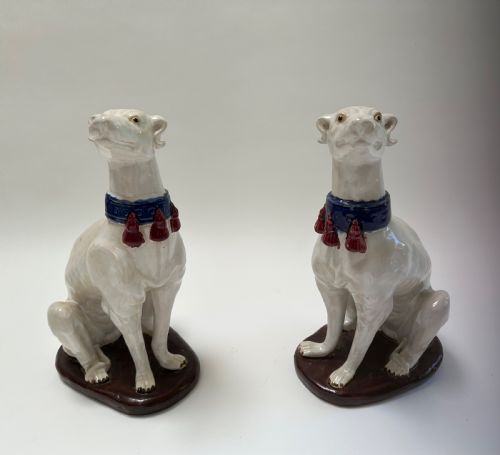


Antique Whippet Sculpture
These antique whippet sculpture pieces capture the lithe grace of the breed in bronze, pottery, and porcelain, offering both decorative charm and solid craftsmanship for the discerning collector.
Antique Whippet Sculpture
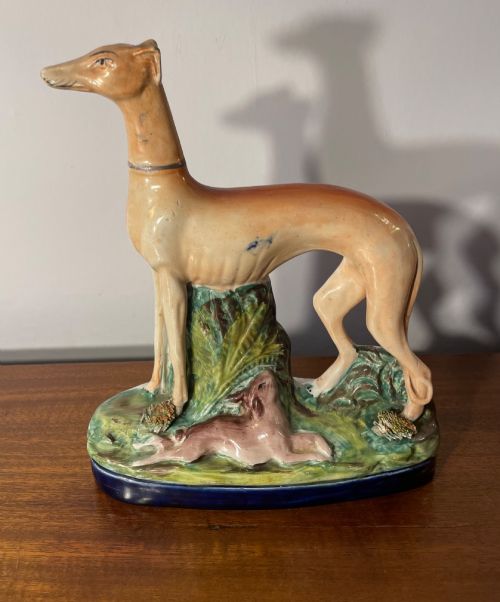
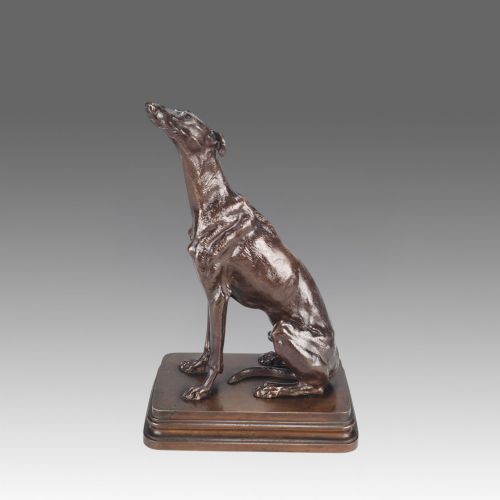
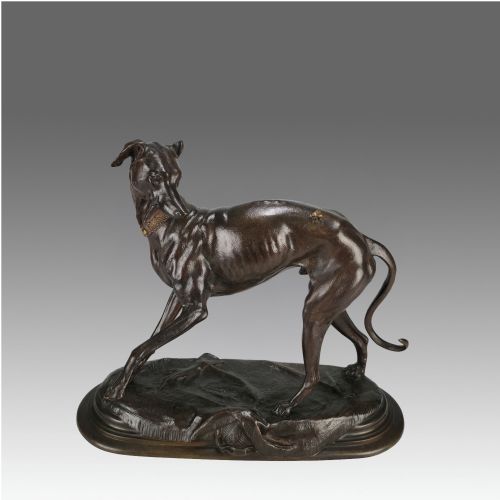
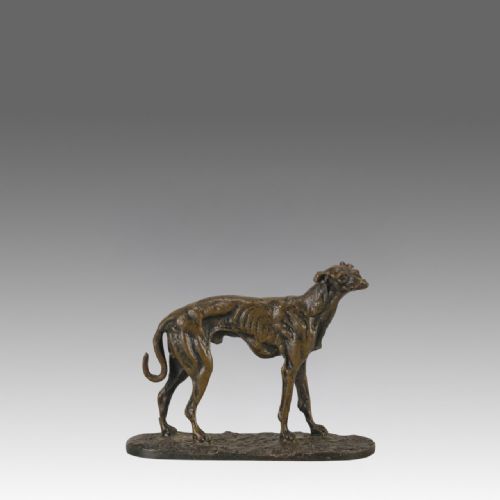
An antique whippet sculpture represents the slender, athletic form of the dog in various materials and poses, spanning from recumbent figures to alert, seated subjects. When searching for an antique whippet sculpture, buyers most frequently encounter 19th-century French animalier bronzes alongside Victorian pottery figurines.
The selection ranges from early Staffordshire earthenware hounds to mid-century porcelain models and striking Art Deco silvered bronze pieces. These works served primarily as decorative ornaments, desk accessories, and paperweights in period interiors.
Makers and sculptors utilised distinct regional traditions, balancing naturalistic animal anatomy with the decorative tastes of the Victorian and Art Deco eras. Each piece reflects the materials of its period, whether cast bronze with a rich patina or glazed earthenware.
Materials and casting techniques
Foundry-cast bronze forms the backbone of these pieces, often finished with a dark patina or enriched with ormolu and marble mounts. Sculptors captured musculature and texture through detailed metalwork before applying surface patination.
Pottery and porcelain examples rely on earthenware bodies finished with lead glazes or enamel paint, particularly in Staffordshire productions. Artisans shaped these clay figures by hand or in moulds before firing and hand-painting the final surface details.
Listings feature nineteenth-century bronze, earthenware, porcelain, and marble works spanning the Victorian and Art Deco periods.
Assessing quality and finish
Quality rests upon the precision of the casting and the fidelity of the animal's anatomy, where finer bronzes display crisp muscle definition and subtle patination. Mass-produced pottery shows simpler glaze applications, whereas master-modelled figures capture the distinct tension and elegance of the sighthound.
The integration of secondary materials, such as finely chased ormolu mounts and marble bases, distinguishes standard ornaments from ambitious works by noted animalier sculptors.
Alfred Dubucand·Alfred Barye·P J Mêne·Thomas Parr·Karl Hagenaur·Joseph Francois Victor Chemin·Christophe Fratin
The Antique Whippet Sculpture Glossary
- Animalier
- A nineteenth-century artistic movement focused on the realistic depiction of animals, particularly in bronze sculpture. Practitioners studied live subjects at menageries to achieve anatomical precision.
- Ormolu
- Gilt bronze, where a finely ground gold-mercury amalgam is applied to a bronze base and heated to drive off the mercury. This technique creates a rich golden finish on decorative mounts and caskets.
- Patina
- The surface sheen or colour developed on bronze over time through oxidation and handling, or applied artificially by the foundry. A deep patina enhances the perceived depth of sculptural detail.
- Staffordshire
- Earthenware produced in the Potteries district of England during the nineteenth century. These figures often depict domestic animals with hand-painted enamel decoration and lead glazing.
Antique Whippet Sculpture: Frequently Asked Questions
Are these bronze sculptures solid or hollow?
Most nineteenth-century animalier bronzes are cast using the lost-wax method, resulting in a hollow interior that reduced weight and metal usage.
Foundries maintained structural integrity by varying wall thickness while preserving the external sculptural detail.
Where were these pottery greyhounds made?
Many nineteenth-century ceramic figures originated in the Staffordshire potteries of England, where artisans produced domestic animals for mantelpieces.
Later works emerged from continental European porcelain factories such as Rosenthal.
What is the difference between a whippet and a greyhound in sculpture?
While artists often used the terms interchangeably in historical titles, sculptures generally depict the broader sighthound family including Italian greyhounds.
Proportions vary slightly between the breeds, with whippets appearing somewhat more compact than full-sized greyhounds.