


French Bronze Candlestick Lamps
French bronze candlestick lamps bring weight, warmth and period detail to a room, channelling classical proportion and fine foundry work.
French Bronze Candlestick Lamps
French bronze candlestick lamps are lighting fixtures created by adapting traditional candlesticks, columns or candelabras for electricity, retaining their original decorative metal bodies.
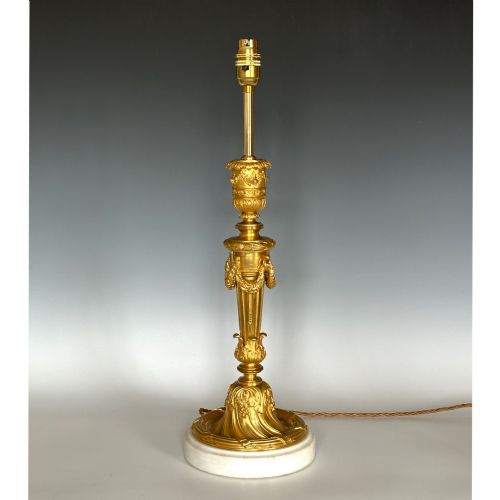
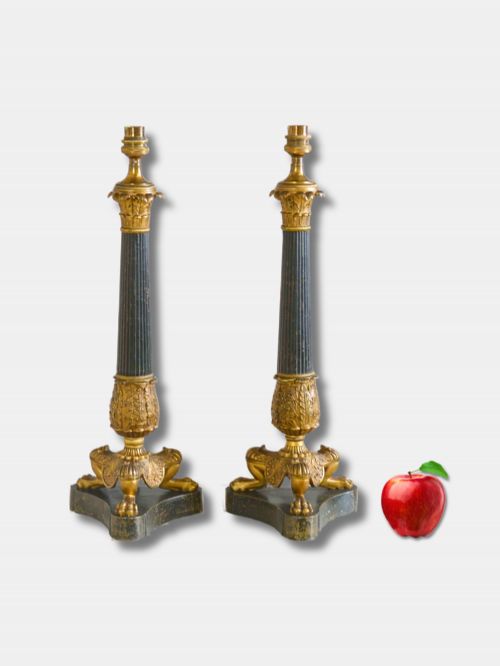
The version you are most likely to meet on this page is a nineteenth-century pair cast in ormolu, gilt bronze, patinated bronze or brass, often drawing on Regency or Louis style vocabulary.
Forms range from single table lamps and slender column bases to heavier multi-branch candelabras and adjustable bouillotte desk lamps with metal shades.
Materials and casting methods
Foundries employed bronze, brass and copper alloys, applying mercury gilding or modern electroplating to create rich ormolu and gilt bronze finishes.
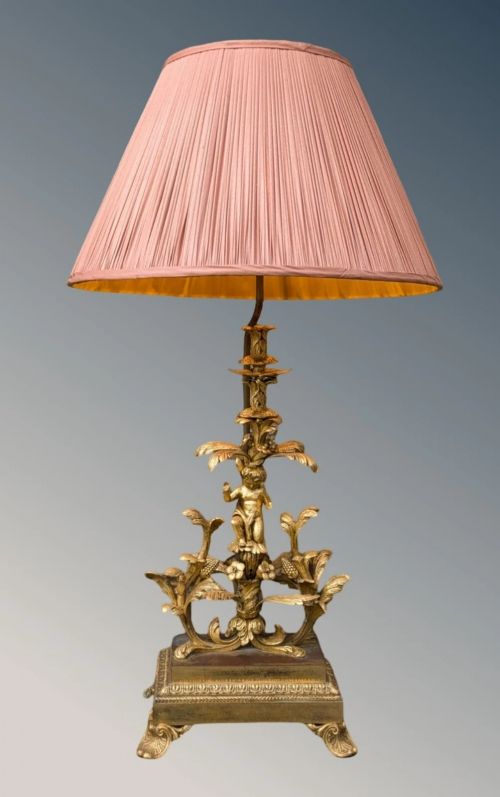
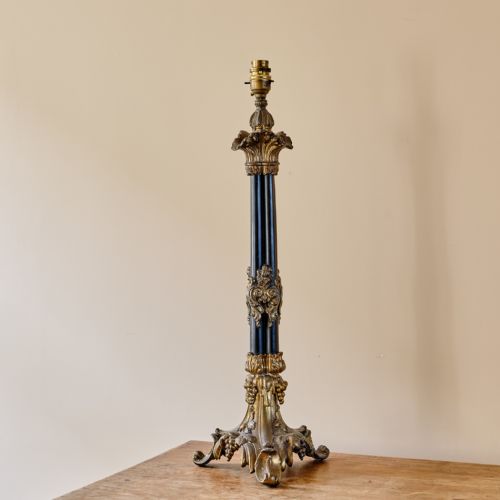
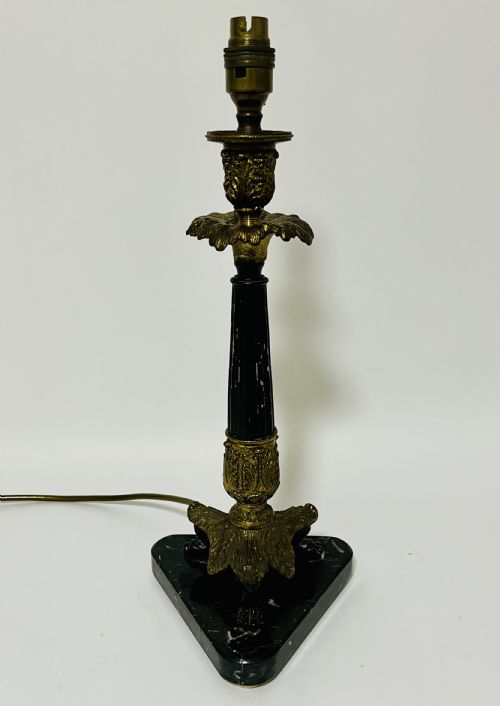
Many examples combine dark patinated bronze with bright gilded mounts, marble plinths, blue glass or fabric and silk elements.
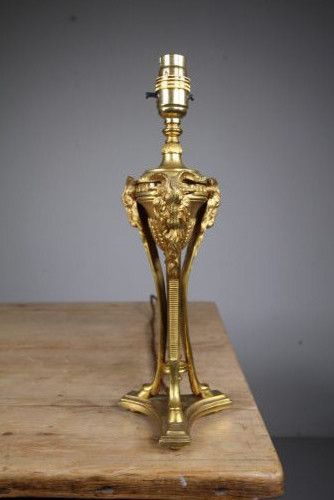
Metal components were cast in parts using traditional techniques, then chased and assembled by hand to achieve crisp detail on acanthus leaves, lions' paws and classical figures.
Several heavy column lamps stand firmly on tiny cast lions' paw feet, ready to pounce across your sideboard.
Assessing quality and craftsmanship
Quality rests primarily on the sharpness of the casting and the depth of the hand-chasing after the metal leaves the mould, which separates crisp definition from soft outlines.
The richness and durability of the gilding or patination dictate the visual impact, alongside the weight and integrity of the underlying bronze and marble structures.
The French Bronze Candlestick Lamps Glossary
- Ormolu
- Gilt bronze produced by applying a mercury and gold amalgam to a bronze base and heating it. This technique creates a durable, golden surface characteristic of fine French decorative arts.
- Patinated bronze
- Bronze treated with chemical solutions to darken its natural surface, producing deep brown or black tones. It provides contrast against bright gilt mounts.
- Bouillotte lamp
- An adjustable desk lamp featuring a central standard and a characteristic painted metal or tole shade. It was originally designed for card games.
- Candelabra
- A branched lighting fixture holding multiple candles, frequently converted later into an electric lamp. It brings height and symmetry to a mantelpiece or side table.
- Empire style
- A neoclassical design movement rooted in nineteenth-century France. It draws heavily on ancient Roman, Greek and Egyptian motifs.
French Bronze Candlestick Lamps: Frequently Asked Questions
Are these lamps originally electrified?
Most of these pieces began life as oil lamps, candlesticks or candelabras during the nineteenth century or earlier. They were subsequently converted to run on electricity.
Conversion methods vary, but quality conversions protect the original metal body while accommodating modern wiring safely.
How do I style a pair of candlestick lamps?
Symmetrical pairs suit sideboards, mantels or bedside tables where balance matters. Their vertical proportions draw the eye upward without occupying excessive surface area.
Pair them with simple fabric shades to let the bronze and ormolu bases remain the primary visual focus.
What periods do these lamps come from?
The selection spans the nineteenth century, including Regency, Empire, Victorian and Edwardian eras. Later pieces often reproduce Louis XV and Louis XVI styles.
Dates reflect either the manufacturing period of the original candlestick or the era of its initial adaptation.
What is the difference between bronze and ormolu?
Bronze is the foundational copper alloy used for casting the body of the lamp. Ormolu refers specifically to the applied gold finish on that bronze.
Many pieces use both materials together, contrasting dark patinated bronze with bright, gilded ormolu mounts.