





French Bronze Bird
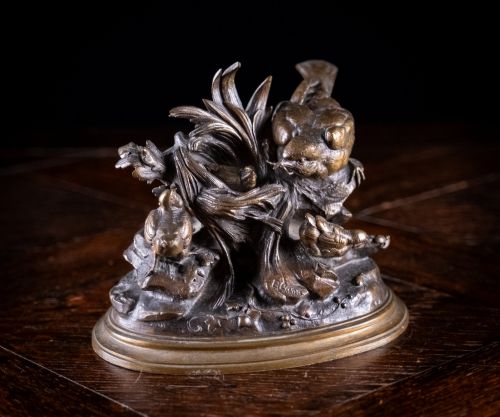
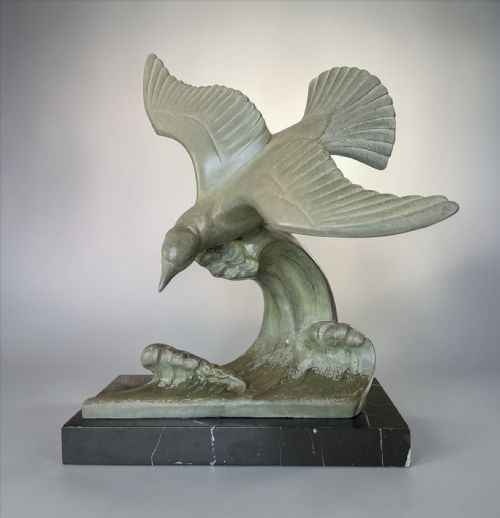
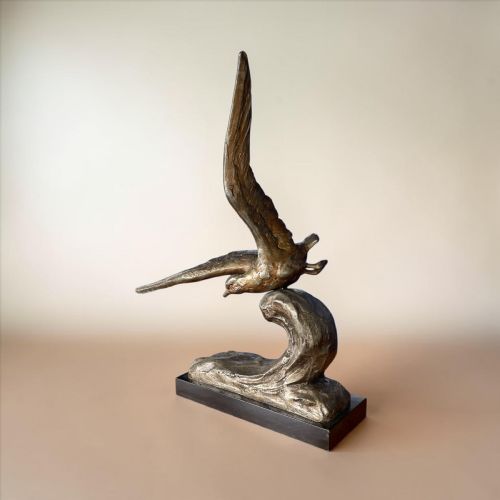
A French bronze bird brings dynamic naturalism into a room, capturing feathers and flight in durable metal.
French Bronze Bird
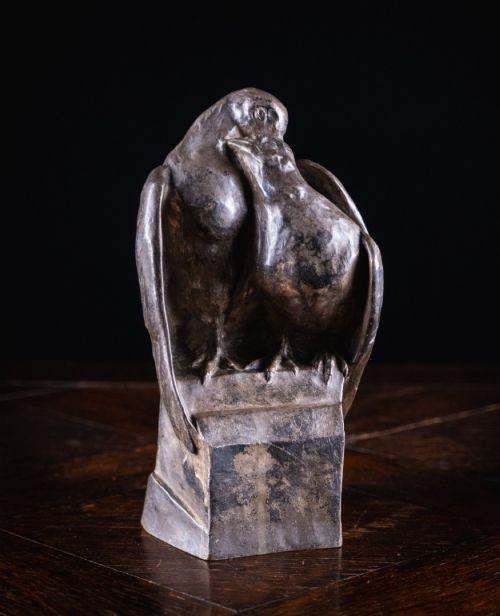
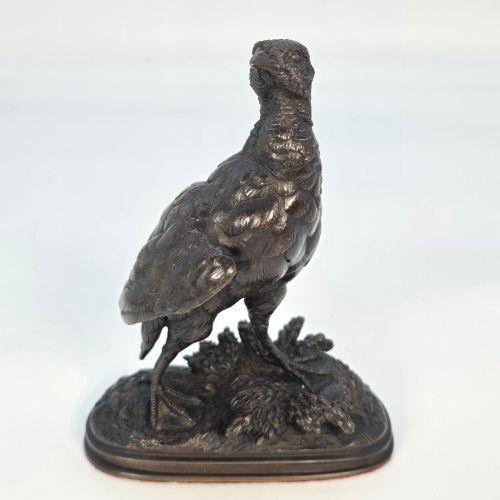
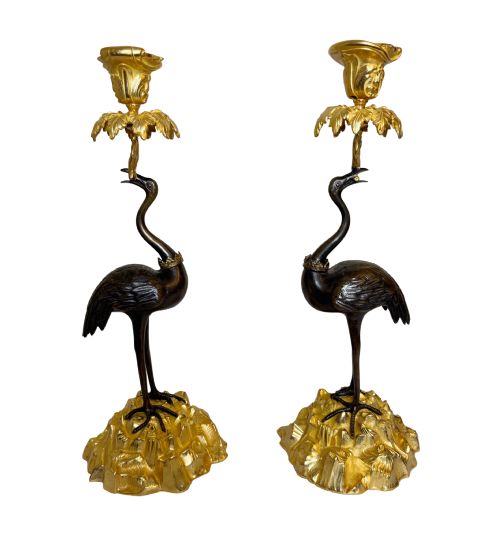
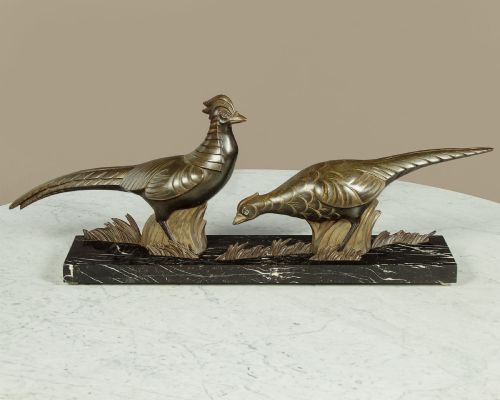
A French bronze bird encompasses a wide variety of sculptural forms, from nineteenth-century animalier studies to sleek Art Deco interpretations. Buyers encounter depictions of flamingos, pheasants, pigeons, eagles, and storks integrated into sculptures, mantel clocks, inkwells, and table lamps.
The objects frequently combine bronze with marble, onyx, or ormolu mounts, reflecting both nineteenth-century academic realism and twentieth-century modernist stylisation. Many pieces function as decorative mantel garnitures, bookends, or mood lamps rather than standalone sculptures.
Originating largely from French foundries and studios, these pieces demonstrate a sustained fascination with avian subjects across multiple decades and artistic movements.
Materials and Casting Techniques
Foundries utilised traditional lost-wax casting and sand casting methods to capture fine anatomical details in bronze, patinated bronze, and nickel bronze. Spelter and gilt brass also appear as alternative base metals in lamps and clocks.
Surface treatments range from dark chemical patination to rich ormolu gilding, while secondary mounts incorporate white marble, onyx, and hand-carved glass elements.
French Bronze Bird Retail Price Guide 2026
Typical asking prices for french bronze bird among the pieces listed under this phrase on Sellingantiques today, from the lower quarter to the upper quarter. They describe what is for sale here now, not the wider market.
Listings span the nineteenth century through the Art Deco period of the 1930s, featuring materials such as bronze, marble, onyx, and patinated spelter.
Assessing Quality and Execution
Quality rests upon the crispness of the chase work, where skilled artisans hand-chiselled feather textures and anatomical contours after casting. Weaker examples show soft surface details and blunt edges where the metal was left largely unrefined.
The integration of materials also determines merit, distinguishing heavy cast bronze figures with clean patination from lighter spelter alternatives mounted on marble bases.
Louis Emile Cana·Frederique Cederlund-Ozanne·Zoldan Kovats·Antoine Louis Barye·Maurice Bouval·Antoine Bofill·Auguste Moreau·P J Mêne·Paul Joris·P.MAREC·Christophe Fratin·Ferdinand Pautrot
The French Bronze Bird Glossary
- Animalier
- A nineteenth-century sculptural movement focused on the realistic portrayal of animals. Practitioners studied live subjects in menageries to achieve anatomical accuracy.
- Ormolu
- Gilt bronze produced by applying a finely ground high-carat gold mercury amalgam to a bronze base. The technique creates a durable, golden surface finish.
- Spelter
- A zinc alloy utilised as a less expensive substitute for bronze, particularly in decorative objects and lamps. It is softer than bronze and typically requires a painted or patinated finish.
- Patina
- The surface sheen or colour resulting from age, wear, or chemical treatment applied to metal. A desirable patina shows depth and preservation of original foundry work.
- Garniture
- A set of matching decorative objects, often comprising a mantel clock flanked by matching candelabra or urns. These sets formed balanced centrepieces for nineteenth-century mantelpieces.
French Bronze Bird: Frequently Asked Questions
How do I clean a bronze sculpture?
Dust the surface regularly with a soft, dry lint-free cloth to prevent particle buildup. Avoid chemical cleaners, water, or abrasive polishes that can strip the original patina.
Apply a very thin coat of microcrystalline wax if the metal requires protection, buffing it gently with a clean cloth.
Are these pieces signed?
Many sculptures bear cast signatures of the artist or foundry marks on the base or wings. These inscriptions help attribute the work to specific nineteenth or twentieth-century French workshops.
Unsigned pieces remain common, often relying on stylistic execution and foundry quality for attribution.
What is the difference between bronze and spelter?
Bronze is a robust copper alloy that accepts fine chisel work and rich patination. Spelter is a softer zinc-based metal that feels lighter and was commonly used for decorative Art Deco lamps and clocks.
Closer inspection of the base often reveals the underlying metal composition through weight and colour.
Where should I place a mantel clock?
Position the clock on a stable, level surface away from direct sunlight, moisture, and extreme temperature fluctuations. Mantel garnitures require sufficient space to display flanking items safely.
Ensure mechanical movements receive professional servicing to maintain accurate timekeeping.