



French Brass Vitrine
A french brass vitrine brings light and polish into a room, designed to hold small treasures behind glass.
French Brass Vitrine
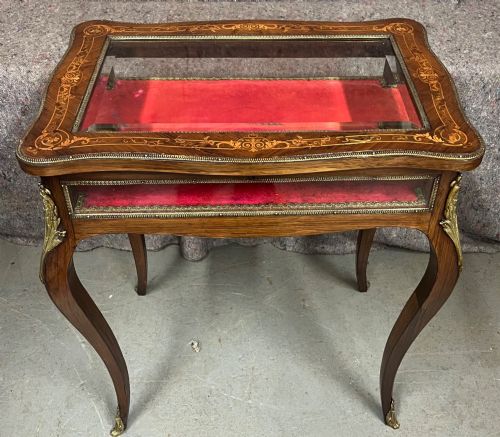
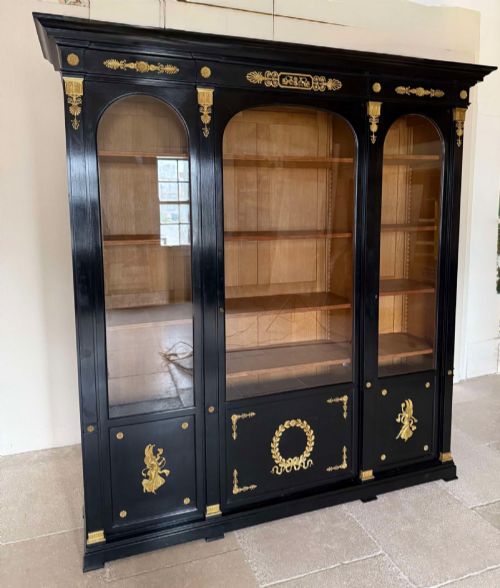
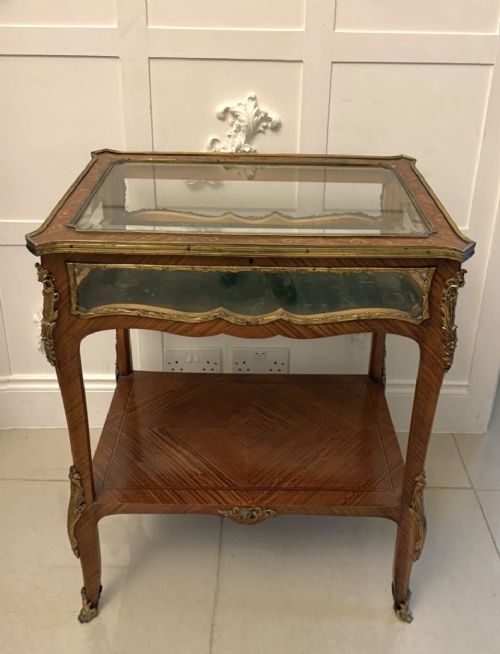
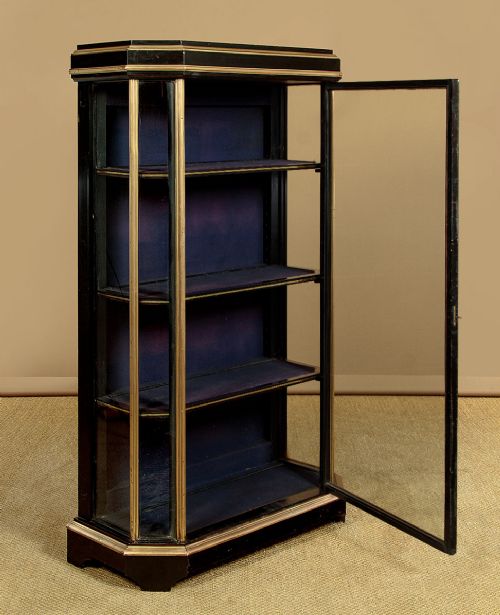
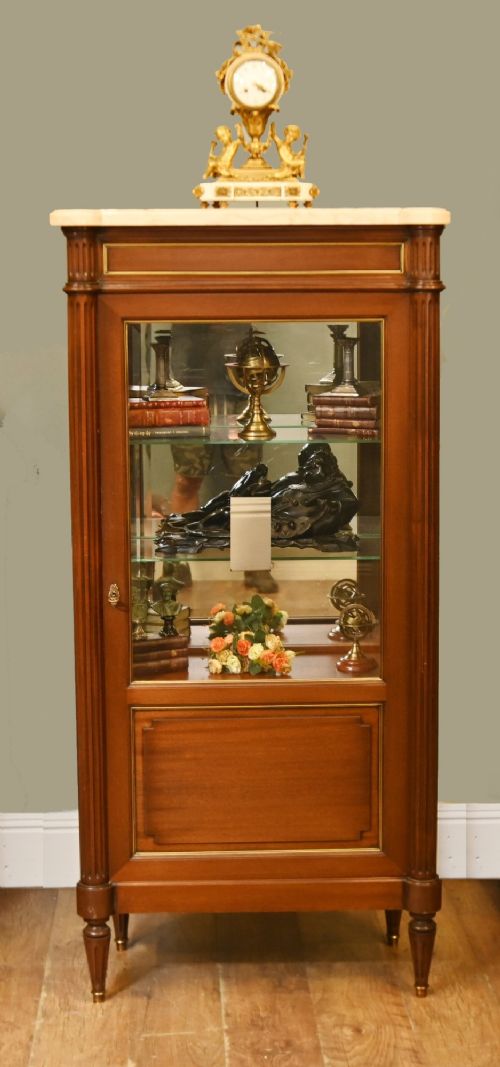
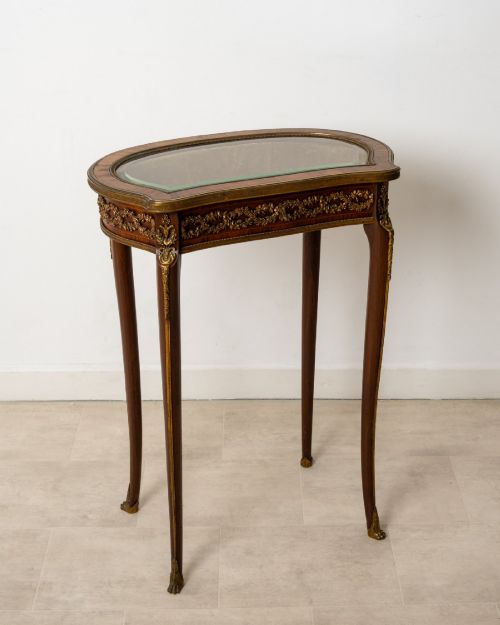
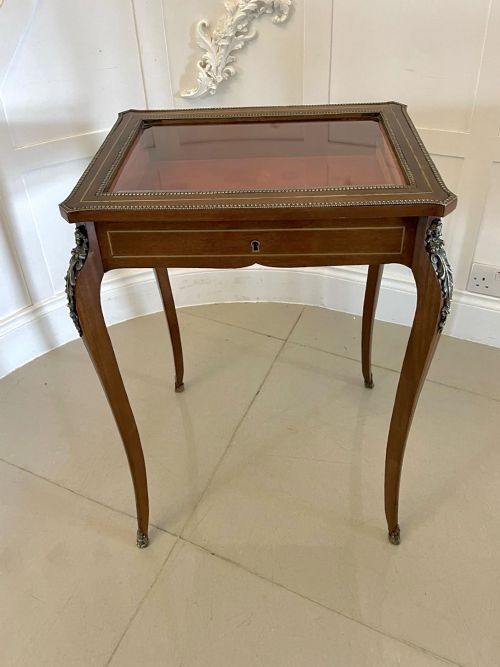
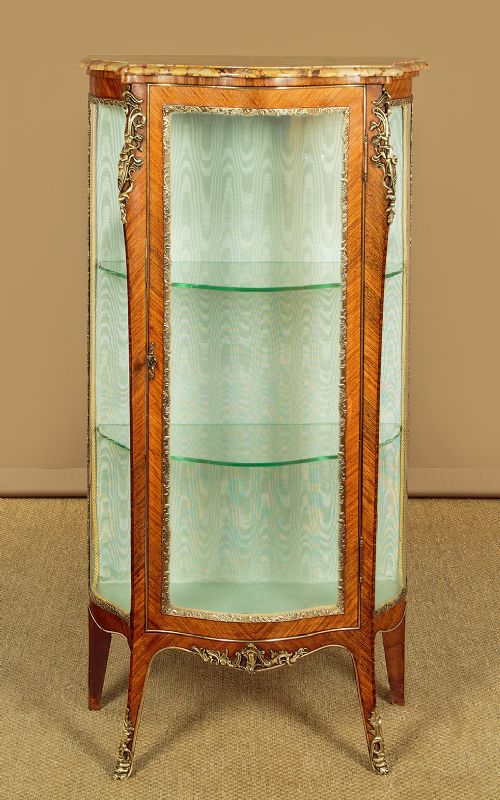
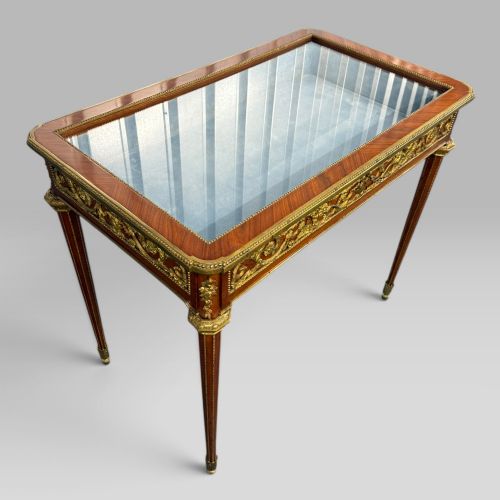
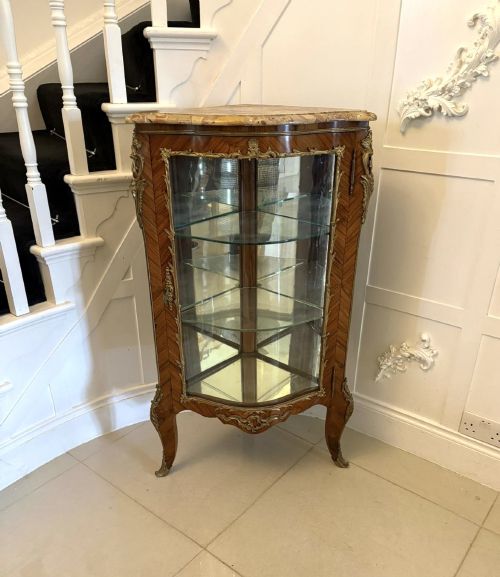
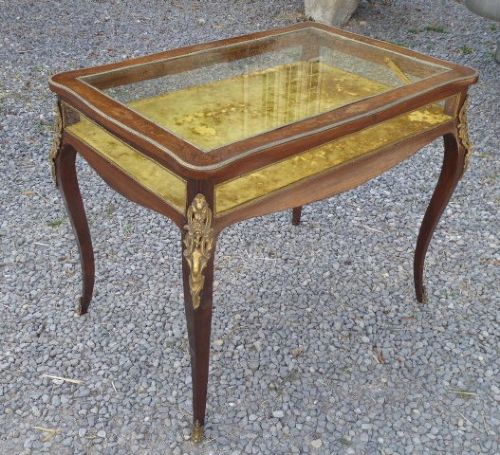
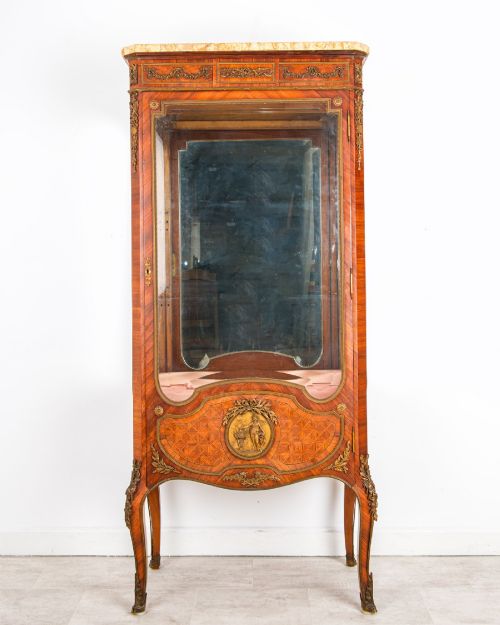
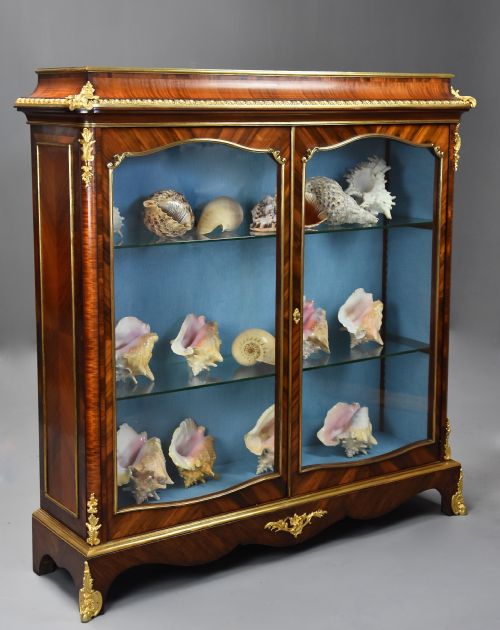
A french brass vitrine takes the form of a display cabinet, display table, or pier cabinet designed to showcase collections behind glass panels. These pieces span the nineteenth century into the twentieth, appearing in styles from Louis XV revival to Edwardian and Napoleon III.
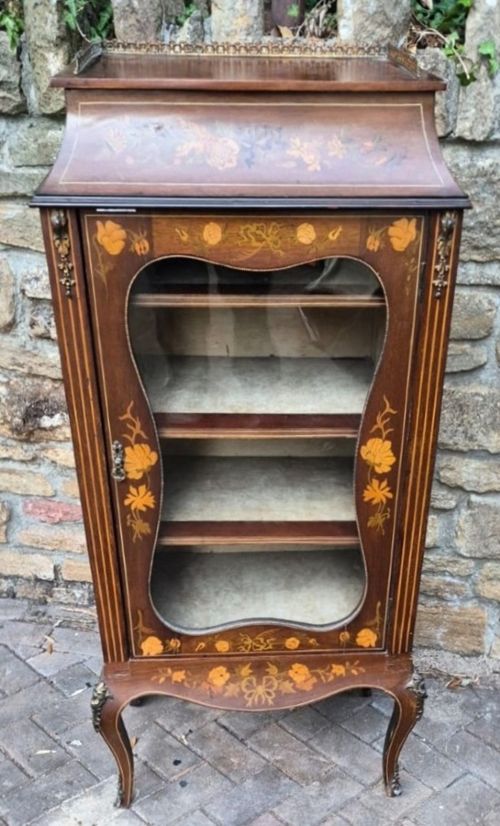
The most common examples on this page are upright display cabinets and low bijouterie tables framed in mahogany, kingwood, or ebonised wood. They range from narrow bookcases to serpentine corner cabinets topped with marble.
Makers and designers working in these French styles produced freestanding and wall-facing vitrines that rely on glazed doors for visibility. Brass mounts and gilt bronze frames define the structural edges of these cabinets.
How they were made
Cabinet makers constructed carcass frames from solid mahogany, walnut, or rosewood, applying fine veneers of kingwood and marquetry across the surface. Brass inlay and gilt bronze ormolu mounts were fastened to corners, feet, and cornices to accent the woodwork.
Glazing bars divided large glass panels into geometric sections on cabinet doors and hinged table tops. Silk or velvet linings were often fitted inside the display compartments to cushion porcelain, medals, and small objects.
French Brass Vitrine Retail Price Guide 2026
Typical asking prices for french brass vitrine among the pieces listed under this phrase on Sellingantiques today, from the lower quarter to the upper quarter. They describe what is for sale here now, not the wider market.
Many a Victorian collector discovered their velvet table lining had faded into a gentle shade of mauve after decades by the window.
What varies in quality
Quality rests in the crispness of the cast ormolu mounts and the precision of the marquetry patterns set into the wood. Finer examples show deeply chased brass details and well-fitted marble tops that sit flush against the timber frame.
The weight and clarity of the glass panels along with the smoothness of the door hinges mark the distinction between standard production and exceptional workshop output.
François Linke·Paul Sormani·Siegel
The French Brass Vitrine Glossary
- Vitrine
- A glass-fronted cabinet designed for displaying porcelain, curiosities, and small decorative objects. The term derives from the French word for glass.
- Ormolu
- Gilded bronze mounts applied to the exterior angles and feet of furniture. This technique adds metallic contrast to the timber ground.
- Bijouterie table
- A low display table with a glazed top and velvet-lined interior. It functions as a horizontal vitrine for holding jewellery and medals.
- Marquetry
- Decorative patterns formed by fitting contrasting veneers into a wood panel. Floral and geometric motifs dominate these designs.
- Boulle
- Inlay work using brass and tortoiseshell arranged in intricate arabesque patterns. This technique originates from seventeenth-century French royal workshops.
French Brass Vitrine: Frequently Asked Questions
What fits inside a vitrine?
These cabinets suit porcelain figures, glass collections, medals, and small silver objects. The glass panels keep dust away while allowing visibility from multiple angles.
Table versions keep items flat beneath a hinged glass top for close inspection. Upright cabinets use interior shelves to organise taller groups of objects.
How do I clean the glass?
Use a soft cloth and mild glass cleaner applied directly to the cloth rather than the cabinet. Avoid spraying liquid near the wood frames and metal mounts.
Take care around old glazing putty and delicate brass fittings during routine dusting. Gentle wiping protects both the timber veneer and the antique glass panes.
Where should I place a cabinet?
Position these pieces away from direct sunlight to protect interior fabrics and wood finishes from fading. A stable indoor environment prevents timber shrinkage and protects veneer.
Allow enough clearance around hinged doors and tabletop lids for easy access. Rooms with consistent temperature control suit antique wood and glass best.
How do I tell styles apart?
Louis XV revival pieces feature curved serpentine lines, floral marquetry, and asymmetrical ormolu mounts. Directoire and later styles lean towards straighter architectural silhouettes and simpler brass framing.
Boulle work is distinguished by distinct brass and tortoiseshell patterns across ebonised surfaces. Examining the mount quality and timber choice helps confirm the period.