


French Brass Urns
French brass urns bring classical proportion and rich metallic warmth to a room, appearing across this page as mantel clocks, table lamps, and decorative vessels.
French Brass Urns
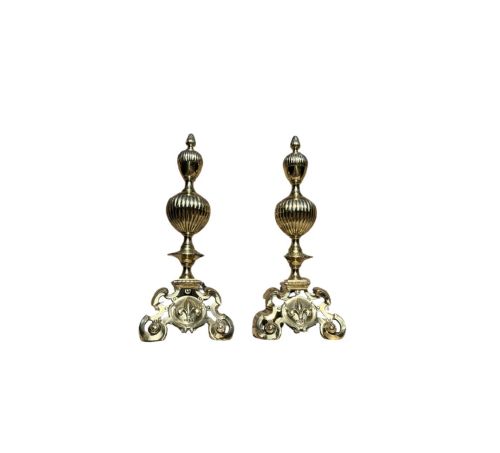
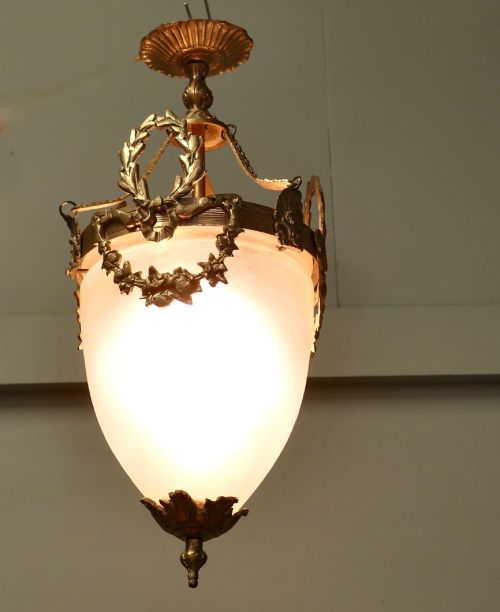
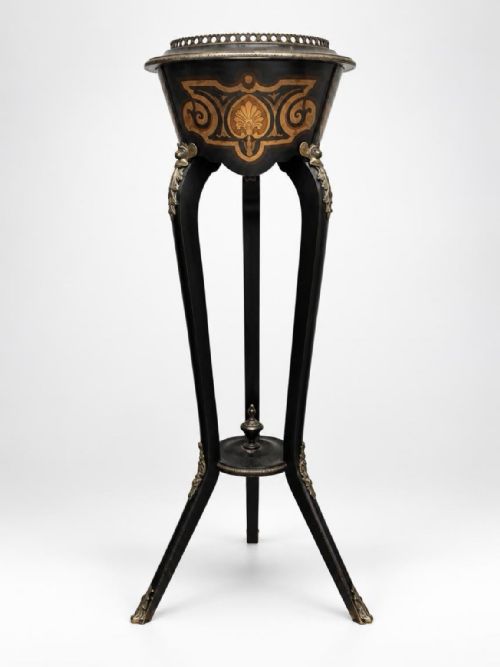
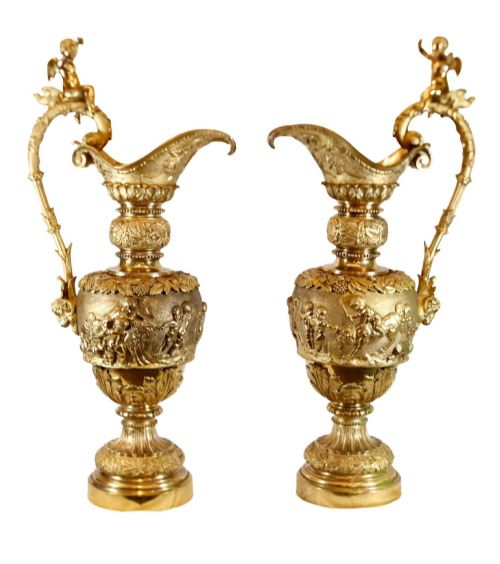
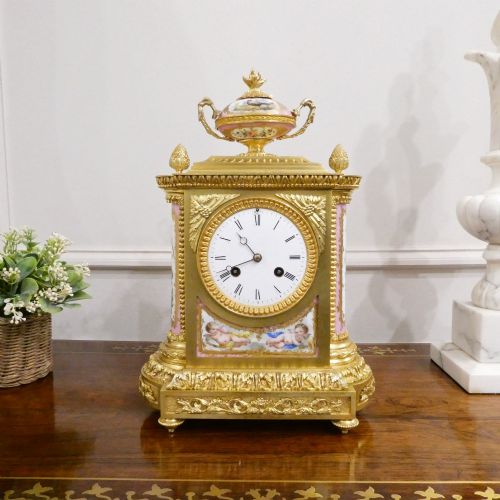
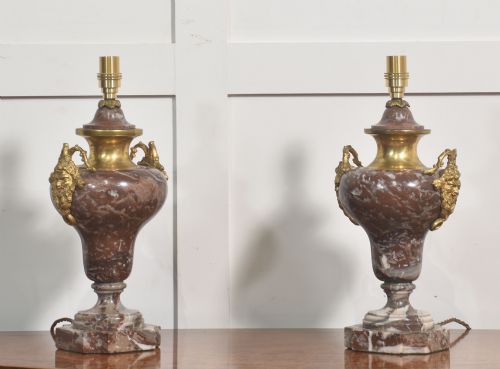
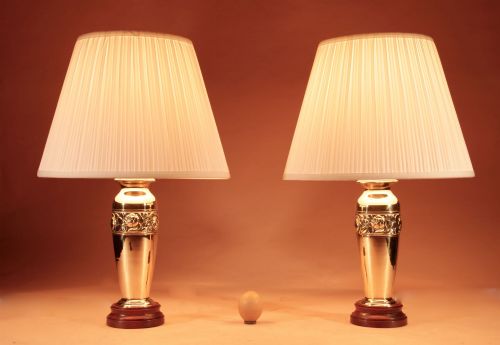
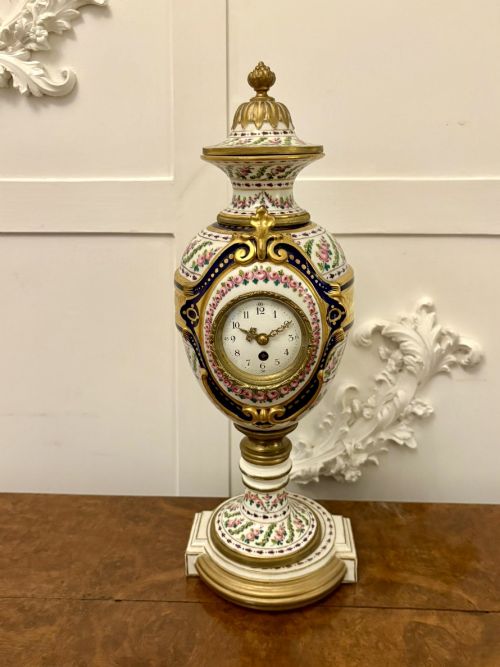
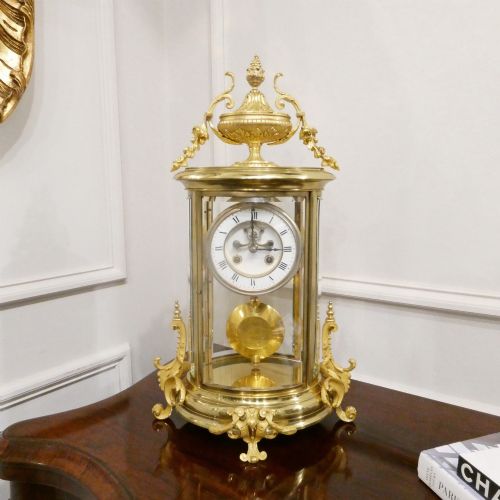
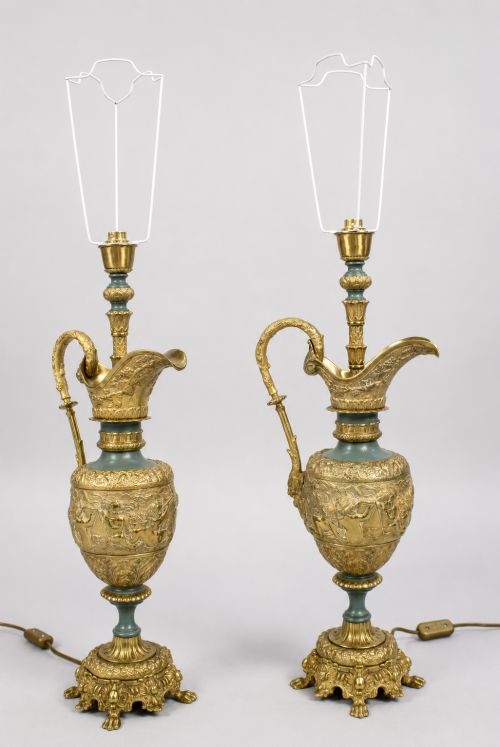
French brass urns encompass a diverse selection of decorative objects and functional pieces designed within revivalist frameworks. Buyers seeking french brass urns encounter items ranging from nineteenth century mantel clocks and lamp conversions to jardinieres and table lamps.
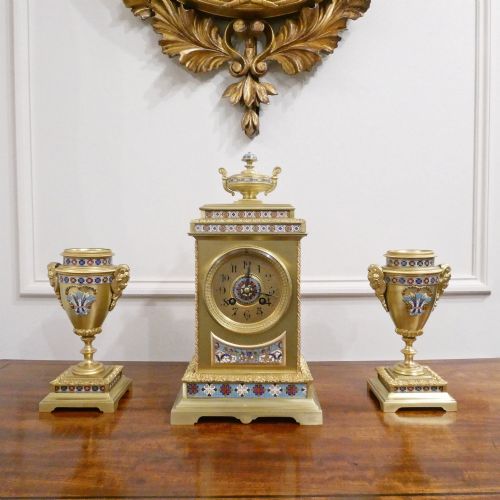
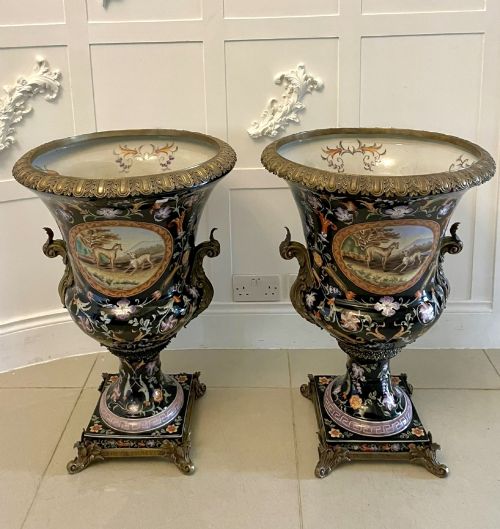
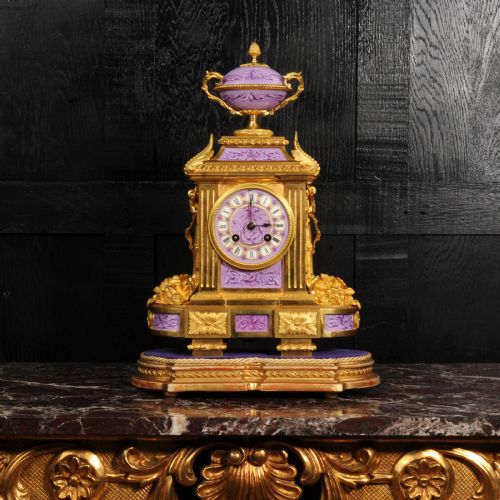
The objects frequently adopt forms inspired by earlier royal aesthetics, particularly Neoclassical and Louis XVI styles. Many pieces combine structural metal frames with contrasting elements such as painted porcelain panels, enamel work, and marble bases.
Origins span the nineteenth century into the early twentieth century, showing a strong presence of Victorian manufacturing dates alongside specific decades like the 1880s and 1890s. These items often function as paired decorative statements or central garniture components.
How they were made
Maker workshops utilised cast brass, gilt bronze, and ormolu to construct the primary metallic bodies of these objects. Chased surface decoration frequently defines the metalwork, adding floral and classical motifs through careful hand tooling.
Makers integrated natural stones such as rouge marble, white onyx, and Sienna marble to provide solid foundations and textural contrast. Porcelain and enamel inserts, often hand painted, were mounted directly into the brass and bronze frameworks.
French Brass Urns Retail Price Guide 2026
Typical asking prices for french brass urns among the pieces listed under this phrase on Sellingantiques today, from the lower quarter to the upper quarter. They describe what is for sale here now, not the wider market.
Several clocks and lamps secretly rely on ram head masks and cheerful cherubs to hold up the room's dignity.
What varies in quality
The refinement of the casting and chasing work dictates the visual distinction between average pieces and superior examples. Crisp detailing in floral motifs, ram head masks, and cherub figures separates standard production from exceptional work.
The integration of mixed media contributes significantly to overall quality. The weight and selection of the marble base, the preservation of the original gilding, and the artistic merit of painted porcelain panels create notable hierarchies among surviving items.
Jean-Baptiste Delettrez·Japy Frères·Achille Brocot·Samuel Marti·Casier
The French Brass Urns Glossary
- Ormolu
- A technique of applying finely ground high-carat gold to a bronze or brass object using a mercury amalgamation process. This finish provides a rich, warm metallic glow characteristic of fine French decorative arts.
- Garniture
- A set of matching decorative objects, typically consisting of a mantel clock flanked by two matching vases, urns, or candelabras. These sets were designed to sit harmoniously on a mantelpiece or sideboard.
- Champlevé
- An enamelling technique where troughs or cells are hollowed out of the metal surface and filled with vitreous enamel before firing. The resulting surface displays colourful geometric or floral patterns flush with the metal dividers.
- Jardinière
- A decorative stand or large vessel designed to hold plants or floral arrangements. In these collections, they often feature brass mounts and porcelain bodies.
- Neoclassical
- An artistic movement drawing inspiration from the classical art and culture of ancient Greece and Rome. It emphasises symmetry, restrained ornamentation, and classical architectural motifs.
French Brass Urns: Frequently Asked Questions
What are French brass urns?
French brass urns are decorative vessels and functional items produced in France during the nineteenth and early twentieth centuries. They frequently incorporate classical revival styles, utilising mixed materials like marble and porcelain.
These pieces served as ornamental mantel displays, lighting components, or jardinieres within domestic interiors. Their design reflects ongoing revivals of Louis XVI and Neoclassical aesthetics.
How were these urns used?
Historically, these items functioned primarily as interior ornamentation to display wealth and refined taste in formal rooms. Many acted as centrepieces on mantelpieces, often as part of larger clock garniture sets.
In modern settings, many of these vessels and related forms have been adapted into table lamps or used as standalone decorative accents on side tables and consoles.
How do I identify Louis XVI style?
Louis XVI style is marked by a return to classical straight lines, symmetry, and architectural restraint following the curves of Rococo. Look for geometric forms, fluted columns, and classical motifs like urns and swags.
Hardware often includes cast brass or gilt bronze mounts featuring ram heads, laurel leaves, and bead-and-reel patterns set against marble or porcelain bodies.
How do I clean antique brass?
Antique brass requires gentle care to preserve its historic surface and any original gilding or lacquer. Dusting with a soft, dry cloth is usually sufficient for routine maintenance.
Avoid abrasive polishes, chemical dips, or excessive scrubbing, as these methods can strip away the aged patina and the thin layers of ormolu characteristic of these pieces.