



French Brass Repeater
A french brass repeater is a mechanical carriage clock that sounds the time on demand, combining brass and glass in a portable domestic timepiece.
French Brass Repeater
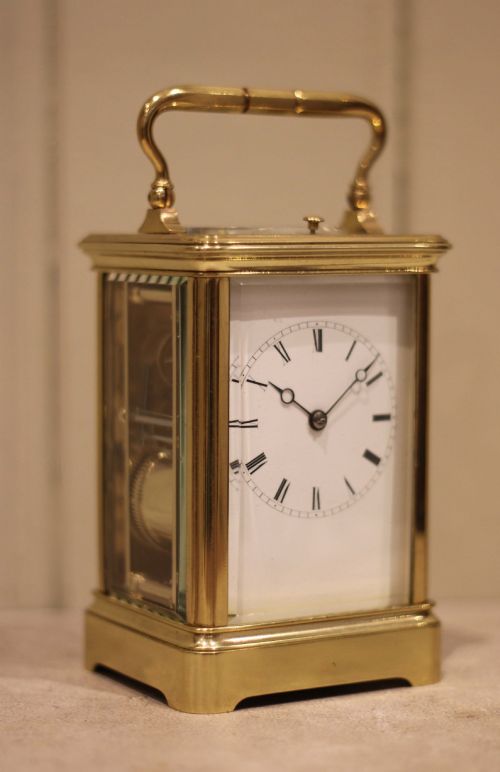
A french brass repeater is a portable timepiece designed for travel, engineered to strike the hours and quarters when a button on the case is pressed. These clocks appear primarily in forms dating from the nineteenth century, including the Victorian period and the late nineteenth century.
The most common version met on this page is the brass carriage clock, often enclosed in a brass or gilt brass frame fitted with bevelled glass panels. These examples originate from nineteenth-century France and Victorian workshops.
Makers and retailers such as Drocourt, Henry Jacot, and L Epee produced these objects, housing movements that indicate hours, minutes, and occasionally alarms or grande sonnerie complications.
How they were made
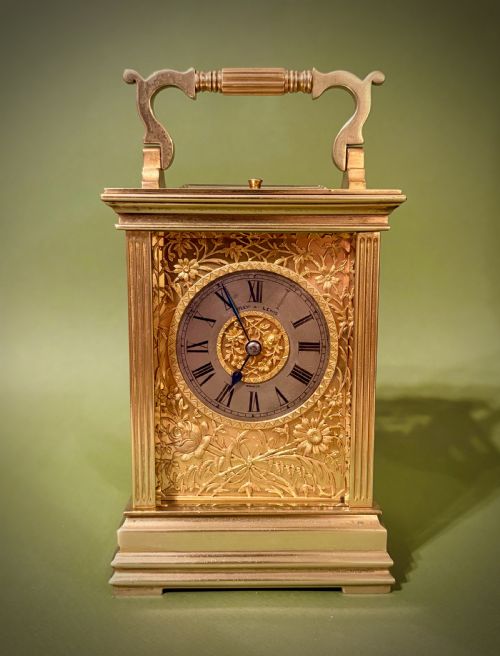
Makers constructed the structural frames from brass and gilt brass, often finishing the metal with extensive gilding or engraving across the exterior surfaces. Bevelled glass panels fitted into the top and sides allow visibility into the moving train and escapement.
Dials are typically formed of white enamel, sometimes painted with floral motifs or fitted within a gilded mask. Movements incorporate steel components, striking mechanisms, and bells or gongs to sound the hours.
French Brass Repeater Retail Price Guide 2026
Typical asking prices for french brass repeater among the pieces listed under this phrase on Sellingantiques today, from the lower quarter to the upper quarter. They describe what is for sale here now, not the wider market.
One specific nineteenth-century carriage clock in the archive carries unexpected race horse interest.
What varies in quality
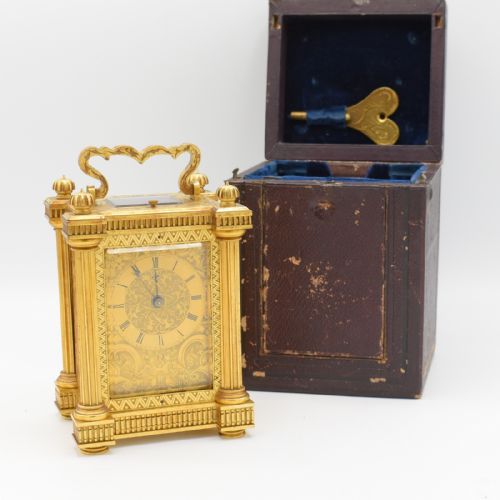
The sophistication of the movement separates standard striking pieces from complex examples featuring grande sonnerie, alarm functions, or five-minute repeating. Case architecture also differentiates the range, moving from plain brass frames to heavy gorge cases with detailed engraving.
The presence of original elements, such as fitted leather travel boxes, keys, and signed backplates by makers like Drocourt or Henry Jacot, elevates the standing of an individual piece.
Howell And James London·Brunelot·J F Bautte Et Cie·Bourdin Paris·Drocourt·Henry Jacot·L Epee
The French Brass Repeater Glossary
- Repeater
- A mechanism that sounds the last hour and quarters upon depressing a button on the case. This function allowed owners to check the time in darkness.
- Gorge case
- A stepped, architectural brass carriage clock case style popular in the nineteenth century. It provides a heavy, rectangular housing for the movement.
- Grande sonnerie
- A striking system that chimes both the hours and the quarters automatically as each quarter passes, in addition to repeating on demand. It represents a high level of clockmaking skill.
- Escapement
- The internal mechanism that controls the release of power from the mainspring to the gear train. It maintains the regularity of the movement.
- Gilt brass
- Brass coated with a thin layer of gold or gold-coloured wash. This finish protected the underlying metal from tarnishing while providing a bright appearance.
French Brass Repeater: Frequently Asked Questions
What is a french brass repeater?
A french brass repeater is a portable nineteenth-century clock housed in a brass and glass case with a mechanical movement that chimes the time on command.
These pieces were originally built for travellers who needed to know the hour during coaching journeys or overnight stays.
How do you operate the repeater mechanism?
You press the button located on the top of the case to activate the striking train, which sounds the hours and quarters.
The mechanism draws power from its own spring barrel or the main movement to ring the internal bell or gong.
Where were these clocks made?
The majority of these timepieces originated in France during the nineteenth century, particularly in workshops operating in Paris and surrounding horological centres.
Some examples were subsequently retailed by British firms and jewellers who added their own signatures to the dials or movements.
How do I care for a carriage clock?
Keep the clock on a stable, level surface away from direct sunlight, moisture, and extreme temperature changes.
Wind the spring carefully using the correct key, and arrange for professional servicing periodically to maintain the movement.