

French Brass Pendant Lighting
French brass pendant lighting delivers the warmth of gilt metal and crystal directly overhead, transforming a room with centuries of continental style.
French Brass Pendant Lighting
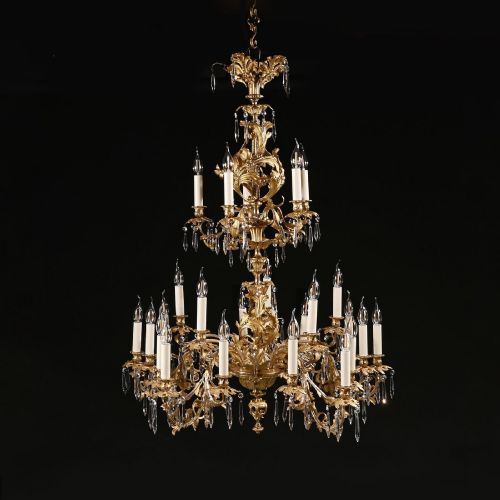
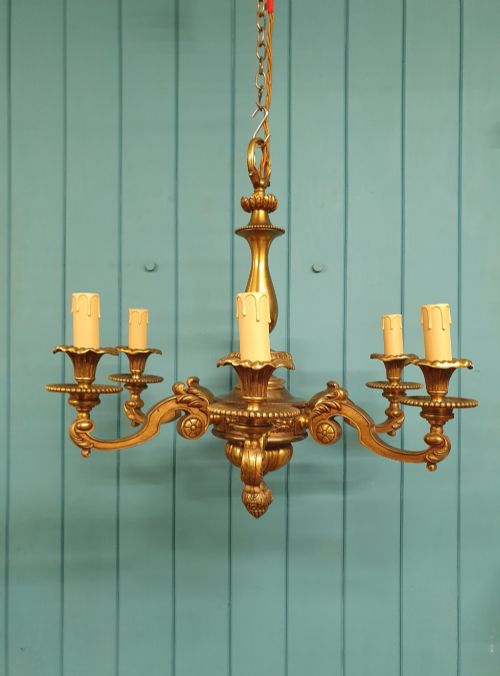
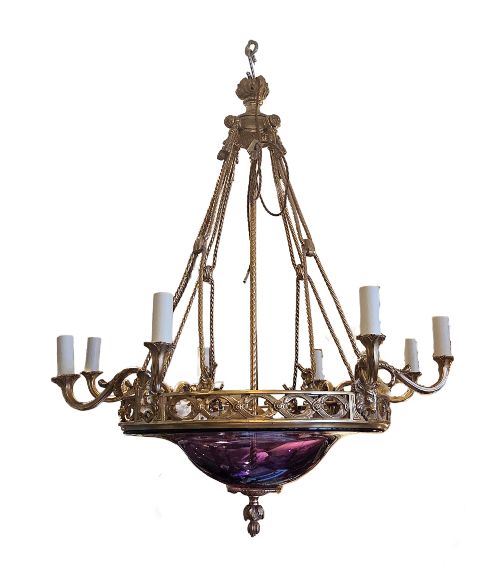
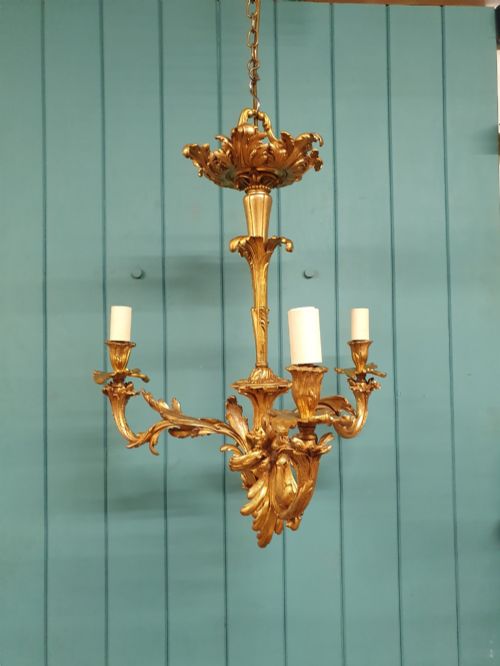
French brass pendant lighting encompasses multi-arm chandeliers, hall lanterns and ceiling lights spanning the nineteenth century through the early decades of the twentieth century. These fixtures emerge in styles such as French Rococo, French Empire, French Neoclassical and French Provincial, carrying the formal design vocabulary of continental salons.
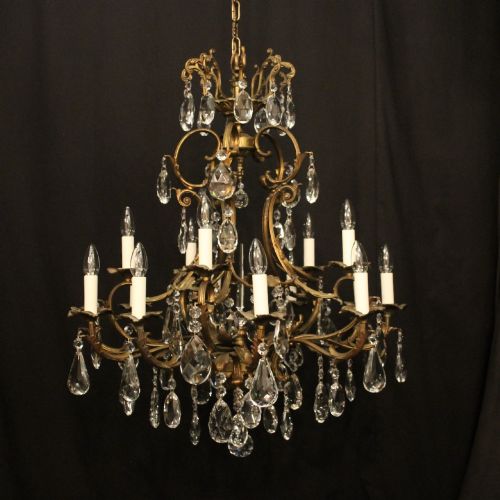
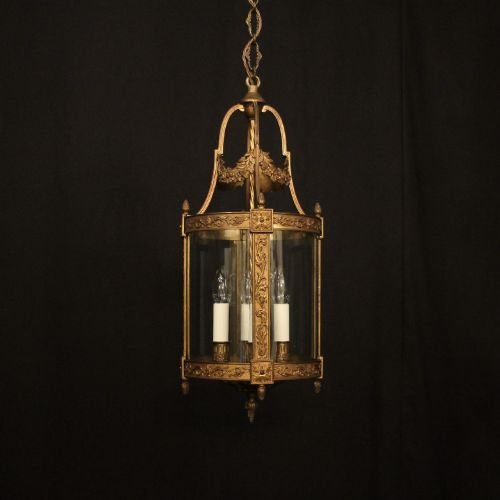
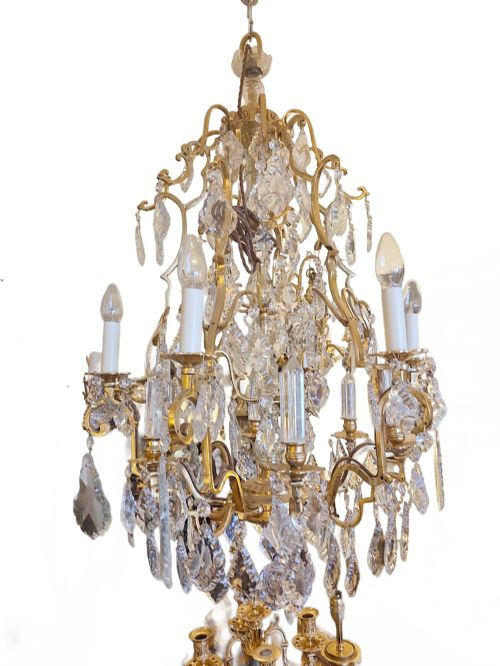
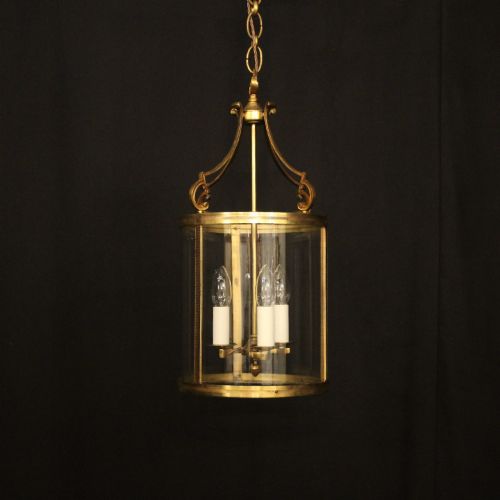
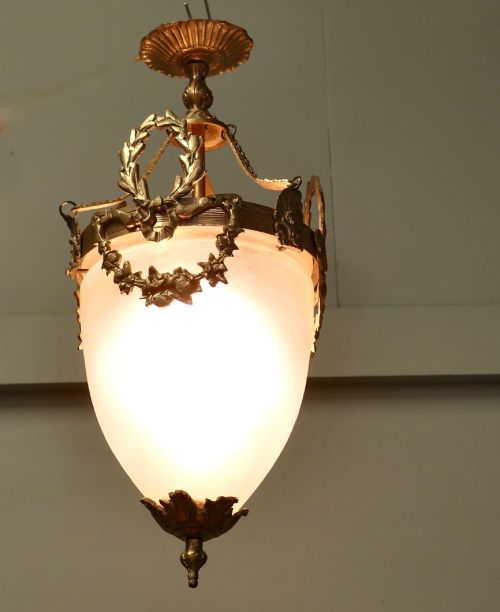
The most common version on this page is the early twentieth century chandelier, typically dated around nineteen thirty or nineteen twenty, combining a brass or gilt bronze frame with crystal drops. Buyers also encounter hall lanterns with moulded glass or convex panels designed for smaller vestibules and corridors.
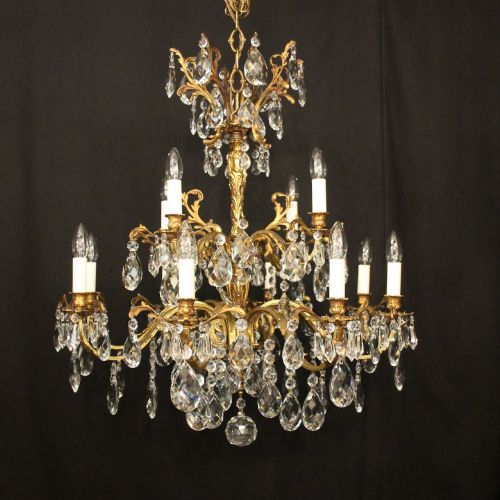
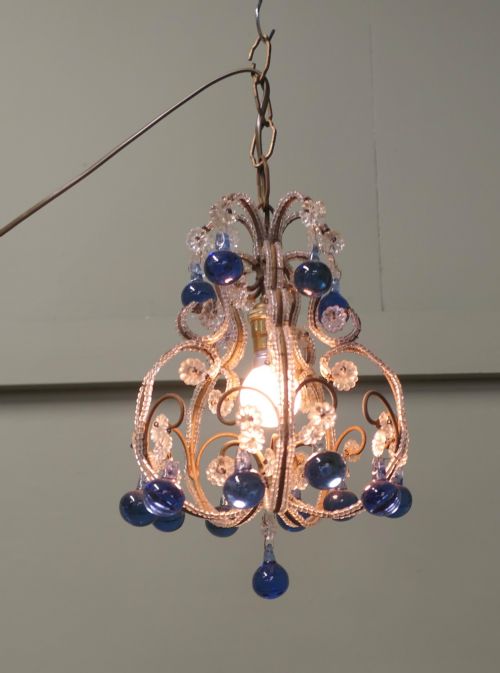
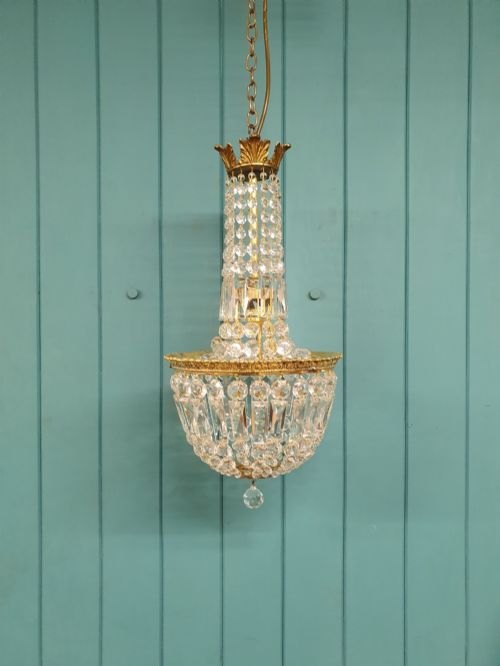
Objects range from compact mini crystal fixtures to tall pairs of lanterns and multi-tier chandeliers with numerous arms. The forms reflect specific French architectural traditions, utilising birdcage, tent and waterfall configurations to catch and refract light.
How they were made
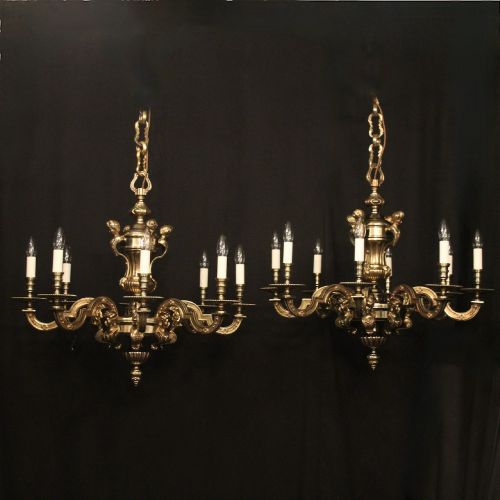
Makers constructed these fixtures using cast brass, gilt bronze and ormolu frames to support heavy arrangements of glass and crystal. Metal components received gilding or polish to enhance the reflective quality of the bronze and brass structures.
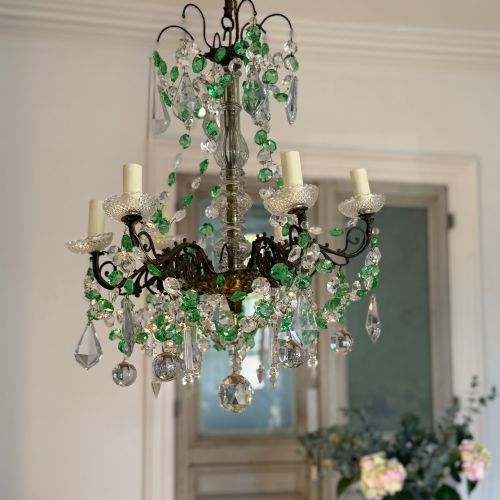
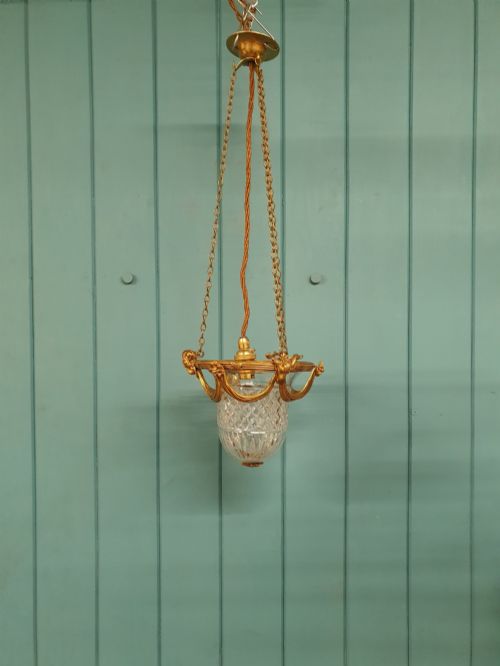
Glass elements arrived as cut glass crystals, moulded glass panels or delicate pink glass drops suspended from the metal armatures. Artisans assembled these components by hand, wiring multiple tiers and candle arms to create balanced illumination.
French Brass Pendant Lighting Retail Price Guide 2026
Typical asking prices for french brass pendant lighting among the pieces listed under this phrase on Sellingantiques today, from the lower quarter to the upper quarter. They describe what is for sale here now, not the wider market.
Materials recorded on this page include brass, glass, crystal, gilt bronze, gilt brass, cut glass, gilded bronze, and gilded brass.
What varies in quality
Quality rests in the crispness of the bronze or brass casting and the depth of the gilding applied to the frame. Finer examples display intricate chased detail on the metalwork rather than flat, uniform surfaces.
The degree of hand-cut work in the crystal drops and the complexity of the tiers separate standard production from exceptional pieces. Multi-tier frames with integrated birdcage or tent configurations demonstrate superior artisan construction.
The French Brass Pendant Lighting Glossary
- Ormolu
- A gilded bronze technique used extensively on French metalwork to simulate solid gold. This surface treatment provides a warm metallic sheen that resists tarnishing over decades.
- Tent and waterfall
- A chandelier configuration where upper crystal strands form a conical tent shape above a cascading fringe of drops. This arrangement maximises light refraction across the room.
- Hall lantern
- An enclosed ceiling fixture designed for entranceways and corridors, featuring glass panels held within a brass or bronze frame. These units protect the internal light source from drafts.
- Birdcage chandelier
- A metal frame design resembling an avian enclosure, adorned with vertical crystal strands and interior candle arms. This distinct silhouette originated in eighteenth-century French workshops.
- Cut glass
- Glass shaped and faceted on a wheel to create sharp light-reflecting edges. Higher grades exhibit precise geometric patterns that catch illumination from every angle.
French Brass Pendant Lighting: Frequently Asked Questions
How do I hang a heavy French chandelier?
Suspended fixtures require secure ceiling joists or a dedicated weight-bearing hook capable of supporting the substantial combined mass of cast brass and crystal. Professional installation ensures the electrical wiring and suspension chains meet safety standards for the room.
Ceiling height dictates the drop length of the pendant, particularly for multi-tier designs and tall lanterns. Positioning the fixture above head height in hallways or centred over dining tables protects the delicate glass drops from accidental contact.
What is the difference between gilt brass and gilt bronze?
Gilt brass utilises an alloy of copper and zinc with a gold-coloured surface application, offering a bright and accessible alternative to heavier metals. Bronze consists of copper and tin, providing a denser casting material that accepts finer chased details.
Both metals received similar fire-gilding or plating techniques during the nineteenth and early twentieth centuries. Bronze frames generally carry greater weight and sharper decorative relief than their brass counterparts.
Can these antique lights take modern bulbs?
Standard electrical sockets inside these fixtures often accommodate modern low-wattage LED candle bulbs that mimic the appearance of traditional flames. Rewiring may be necessary to ensure compliance with current electrical regulations.
Retaining the original candle sleeves and sockets preserves the historic character of the piece while allowing safe daily operation. A qualified electrician can adapt the internal wiring without altering the exterior brass frame.
How do I clean a crystal chandelier?
Routine maintenance involves dusting the crystal drops in place with a soft wand or cloth while the fixture is switched off and cool. Removing individual pieces for thorough washing requires mild soapy water and careful handling to prevent chipping.
Harsh chemical cleaners strip the gilt finish from brass and bronze frames, so cleaning solutions must remain confined to the glass elements. Ensuring complete dryness before reassembly prevents moisture from damaging vintage metal components.
How do I date a French brass pendant light?
Dating relies on stylistic markers, casting techniques and wiring evidence found across nineteenth-century and early twentieth-century examples. Pieces from the Edwardian era and the nineteen twenties often incorporate machine-finished components alongside hand-cut crystals.
Specific design revivals, such as French Empire or Rococo styles, indicate the aesthetic influence under which the maker operated. Comparing the construction of the frame against known period forms helps narrow the production window.