

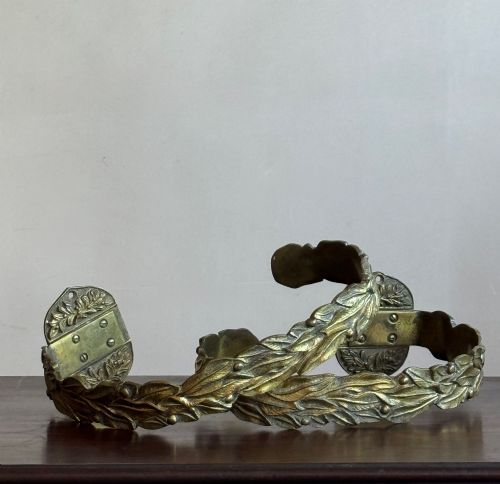


French Brass Drapery Hooks
French brass drapery hooks hold back heavy window fabrics with architectural weight, offering an instant touch of continental polish to a room.
French Brass Drapery Hooks
These french brass drapery hooks function primarily as curtain tie backs and tiebacks designed to secure window dressings against the wall. The examples found here span from the mid eighteenth century through to the late nineteenth century, capturing distinct historical periods.
Makers of these pieces worked within established design movements including French Rococo Revival, Georgian, French Rococo, French Empire Revival, Louis XVI, Gothic Revival, and French Baroque. Buyers most frequently encounter nineteenth century items, particularly pairs and sets finished with decorative casting.
The physical forms include traditional swing arms and prominent wall mounts that project outward to catch heavy textiles. Surviving sets often retain their original matching configurations, though single pairs remain common across domestic listings.
How they were made
Metalworking techniques rely heavily on cast brass, ormolu, and gilded bronze to achieve intricate surface relief and depth. Artisans applied fire gilding or surface treatments to impart a rich golden tone over the base copper alloys.
Selected examples incorporate enamel panels set directly into the metal framework to add colour and contrasting texture. The mount plates often feature pre-drilled screw holes to facilitate secure installation into timber window surrounds or masonry.
French Brass Drapery Hooks Retail Price Guide 2026
Typical asking prices for french brass drapery hooks among the pieces listed under this phrase on Sellingantiques today, from the lower quarter to the upper quarter. They describe what is for sale here now, not the wider market.
Gothic dragons lurk in the metalwork of at least one nineteenth-century pair, proving that medieval beasts enjoyed holding back heavy curtains.
What varies in quality
Original surface patination and the remaining percentage of fire gilding dictate the historical integrity of each piece. Heavier gauge brass and bronze construction ensures the hook supports heavy drapery without bending under daily tension.
Henri Picard
The French Brass Drapery Hooks Glossary
- Ormolu
- Finely chopped high-zinc brass applied to objects by mercury amalgamation, producing a bright golden finish. This technique was widely practiced by French bronze founders during the eighteenth and nineteenth centuries.
- Gilded Bronze
- Bronze metal coated with a thin layer of gold leaf or gold powder. It provides a durable and lustrous surface that resists tarnishing over decades of exposure.
- Rococo Revival
- A nineteenth-century design style mimicking the asymmetrical scrolls, C-curves, and naturalistic shell motifs of the mid-eighteenth century. This aesthetic dominates many decorative hardware pieces of the period.
- Curtain Tie Back
- A rigid or semi-rigid fixture mounted to a wall beside a window to hold drapery back in an open position. These fixtures are frequently cast in ornate floral or architectural patterns.
French Brass Drapery Hooks: Frequently Asked Questions
How do I mount french brass drapery hooks safely?
Locate a solid wall stud or use appropriate heavy-duty wall anchors to support the weight of both the hardware and the heavy fabric. Fasten the backplate firmly using matching brass screws through the provided fixing holes.
Ensure the projecting arm angles outward at the correct height to gather the curtain neatly without straining the textile fibres. Test the stability of the fixture before resting heavy drapes against the hook.
What rooms suit french brass drapery hooks best?
Formal reception rooms, dining areas, and principal bedrooms provide the traditional architectural backdrop for such ornate window hardware. Their polished metallic surfaces complement period interior schemes and heavy woven textiles like velvet or damask.
Smaller paired tiebacks also function well in studies or libraries to frame narrower windows with understated elegance. Position them at roughly one third to halfway down the window height for optimal visual proportion.
How should I clean antique ormolu and brass tiebacks?
Dust the metal surfaces regularly with a soft, dry lint-free cloth to prevent the accumulation of airborne grime in recessed crevices. Avoid harsh chemical polishes or abrasive pads that can strip away remaining fire gilding or historical patination.
If deeper cleaning is necessary, consult a metal conservation professional to address heavy oxidation safely without harming the substrate. Gentle care preserves the surface character accumulated over centuries.
How do I distinguish eighteenth-century pieces from nineteenth-century revivals?
Eighteenth-century examples often display hand-chased detailing with subtle irregularities characteristic of independent bronze-foundry production. Stylistic cues such as Louis XVI symmetry or early Rococo asymmetry align closely with the documented production dates.
Nineteenth-century revival pieces tend to utilise standardised casting marks and heavier gauge brass associated with industrial expansion. Examining the screw threads and alloy composition further helps clarify the manufacturing era.