





Antique Curtain Tie Backs
Antique curtain tie backs hold heavy drapery with classical form, bringing rich French and Georgian metalwork to the window.
Antique Curtain Tie Backs
When searching for antique curtain tie backs, buyers find metal and carved wooden window hardware designed to dress heavy interior drapery back from the glass. These domestic accessories organise the fall of fabric around a room while adding a decorative sculptural accent to the wall or window frame.
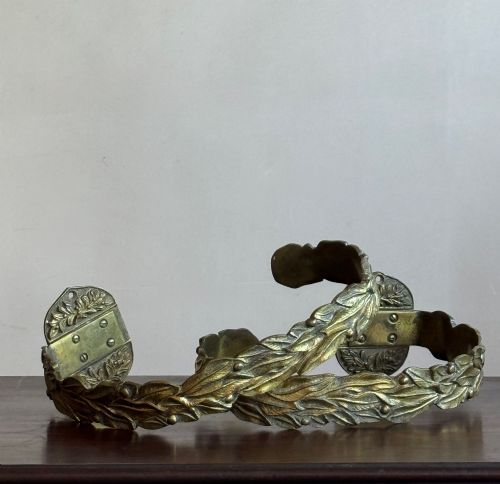
The versions most commonly met on this page span the Georgian and Victorian eras, with a strong representation of nineteenth-century French manufacture. Ormolu, brass, and giltwood pieces appear frequently, often styled in the French Rococo Revival and Baroque traditions.
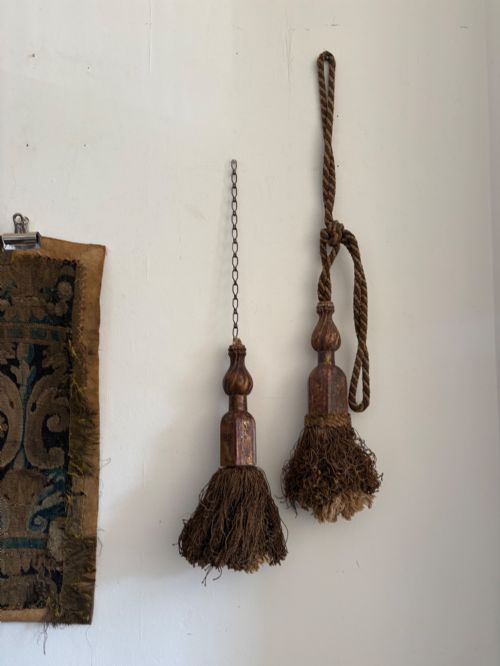
Makers fashioned these fittings in pairs or sets of four to mount symmetrically beside tall windows. Their forms range from simple brass lion mounts to large Venetian carved wooden pulls and ornate gilt bronze scrollwork.
How they were made
Craftsmen shaped these pieces using cast metals like brass, ormolu, and gilt bronze, alongside carved giltwood. Metal elements were frequently fire-gilded to achieve a rich, durable surface finish that catches the light against heavy fabrics.
Enamel sections were hand-applied and fired to introduce colour and smooth decorative detail into the metal mounts. Carved wooden examples, such as Venetian giltwood pulls, relied on traditional timber carving and gold leaf application over a prepared ground.
Antique Curtain Tie Backs Retail Price Guide 2026
Typical asking prices for curtain tie backs among the pieces listed under this phrase on Sellingantiques today, from the lower quarter to the upper quarter. They describe what is for sale here now, not the wider market.
Design styles present in the hardware include French Rococo, Baroque, Louis XVI, and nineteenth-century Venetian forms.
What varies in quality
Surface preservation dictates the visual impact of surviving examples, particularly where original ormolu or fire-gilding remains intact rather than rubbed away by decades of cleaning. Weight and thickness of the base metal also signal quality, as heavier castings provide better support for substantial drapes.
The Antique Curtain Tie Backs Glossary
- Ormolu
- Gilt bronze produced by applying a mercury and gold amalgam to a bronze object before heating to drive off the mercury. This technique creates a distinctive, deep golden lustre characteristic of fine French decorative hardware.
- Giltwood
- Timber carved and coated with a thin layer of gold leaf or gilder's paste. It provides a lighter alternative to metal mounts while offering similar reflective qualities.
- Rococo Revival
- A nineteenth-century design movement drawing on eighteenth-century French asymmetry, C-scrolls, and naturalistic plant motifs. It appears often in nineteenth-century curtain hardware.
- Gilding
- The application of a thin layer of gold or gold-coloured finish to metal, wood, or other base materials. The quality of this layer significantly affects the appearance of the piece over time.
Antique Curtain Tie Backs: Frequently Asked Questions
How do you install antique tie backs?
These pieces generally feature integrated screw threads or mounting plates designed to secure directly into the window frame or surrounding masonry. Wall plugs and appropriate fixings ensure the hardware supports the weight of the drapery.
Positioning depends on the length of the curtains and the height of the window, typically placing the hardware at one-third to one-half the height of the drop.
Are tie backs sold in pairs?
Many examples are offered as matched pairs to dress both sides of a single window symmetrically. Larger rooms or wider drapery arrangements sometimes require sets of four matching pieces.
Checking the listing details confirms whether the hardware is available as a single pair or a larger set.
What metals are used in these pieces?
Makers utilised brass, ormolu, gilt bronze, and gilt metal for durability and decorative appeal. Enamel and carved giltwood also appear across eighteenth and nineteenth-century examples.
Each material responds differently to cleaning, requiring careful maintenance to preserve the original surface finish.
How do you date a curtain tie back?
Stylistic indicators such as Rococo asymmetry, Empire motifs, or Georgian brass casting styles help narrow down the period. Manufacturing techniques, including the quality of the ormolu or the hand-carving on giltwood, provide further clues to age.
Comparing the form and materials against known eighteenth and nineteenth-century design patterns confirms the era of manufacture.