

French Brass Ceiling Chandelier
When you search for a french brass ceiling chandelier, you are looking at substantial metalwork and cut glass designed to anchor a room.
French Brass Ceiling Chandelier
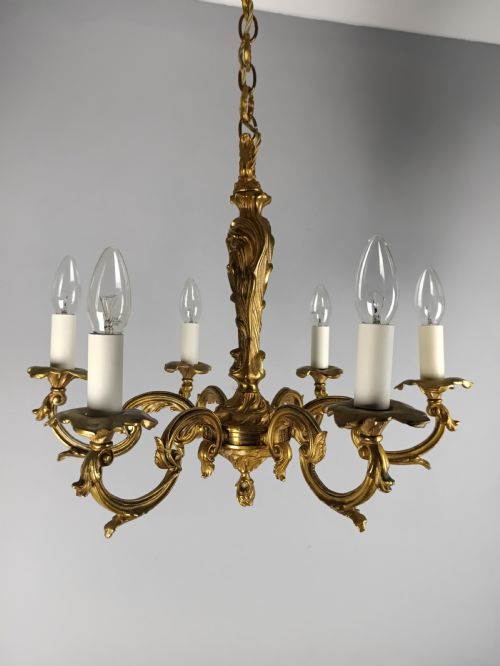
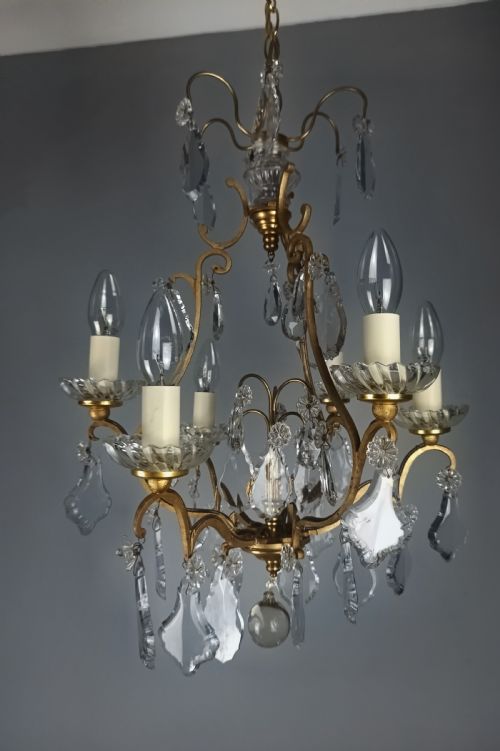
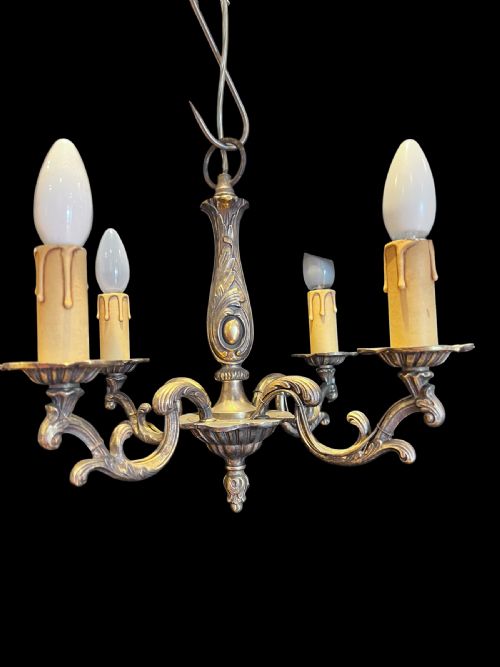
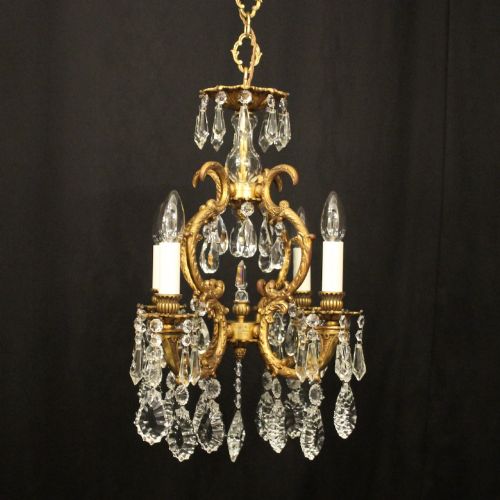
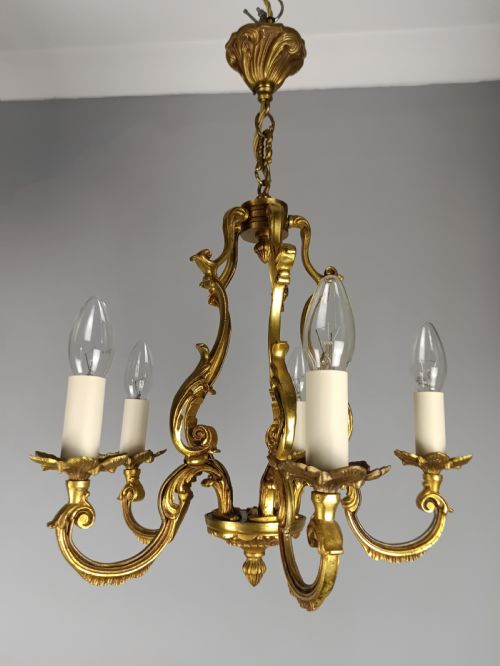
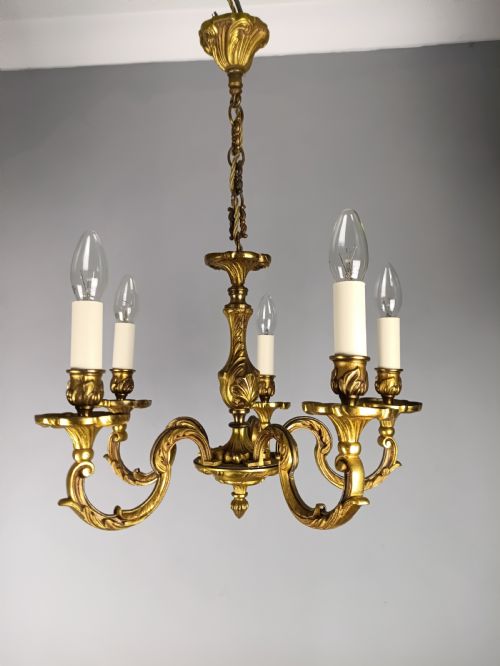
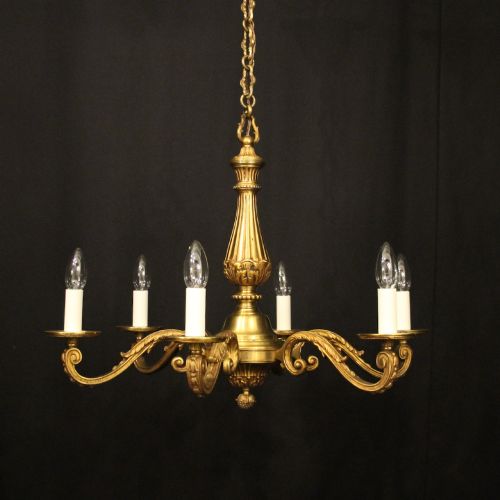
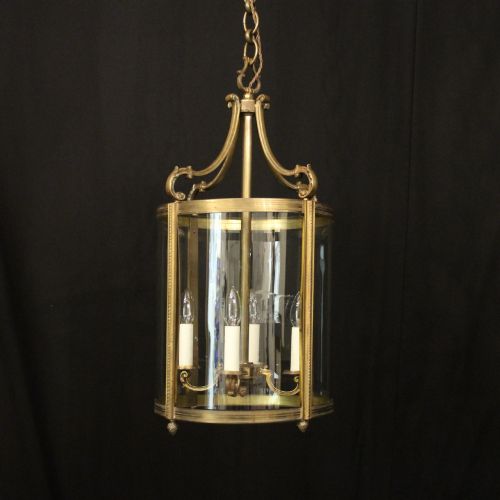
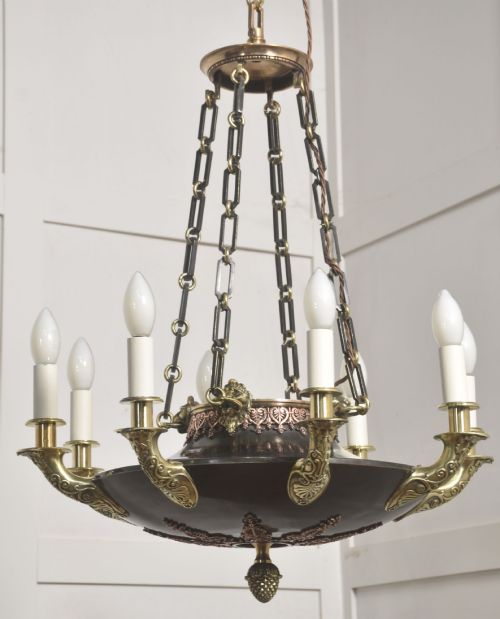
A french brass ceiling chandelier combines cast metal frames with suspended glass elements to project illumination across a space. These fixtures appear primarily as multi-light candelabra arrangements, birdcage forms, and hall lanterns dating from the late nineteenth century through the nineteen-thirties.
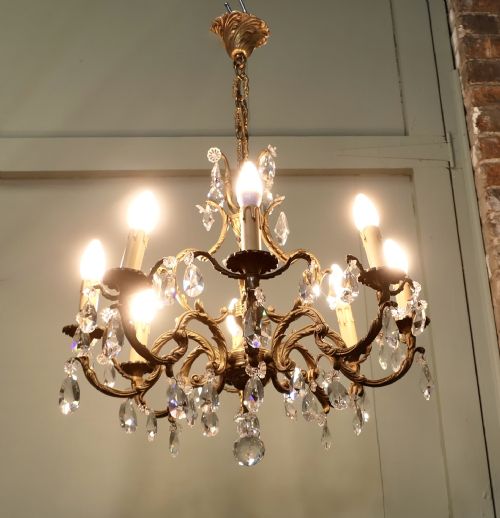
The selection ranges from restrained Empire and Neoclassical designs to ornate Rococo Revival and Art Deco models. Most examples encountered here utilise brass, gilt bronze, and crystal components arranged in symmetrical tiers of branches.
Lighting formats also include basket chandeliers, tent and waterfall configurations, and single-bulb pendants fitted with etched glass or ceramic accents. Their scale shifts from compact three-light hall lanterns to grand twenty-five light salon centerpieces.
Materials and construction
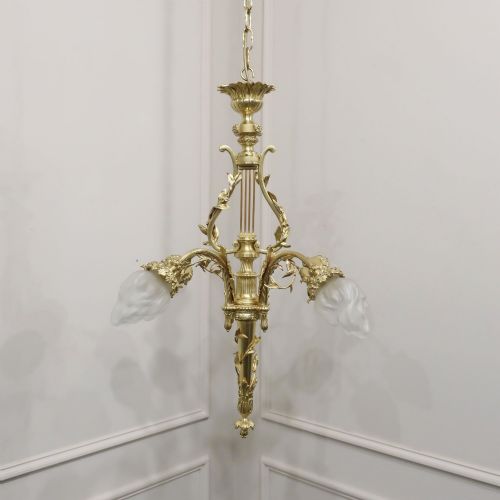
Foundry casting and hand-chasing form the basis of the metal elements, utilising brass, bronze, and copper that frequently received a gilt or gilded surface finish. These metallic skeletons support wired or candle-socket arms, often enriched with leaf decoration, winged cherubs, or classical urn motifs.
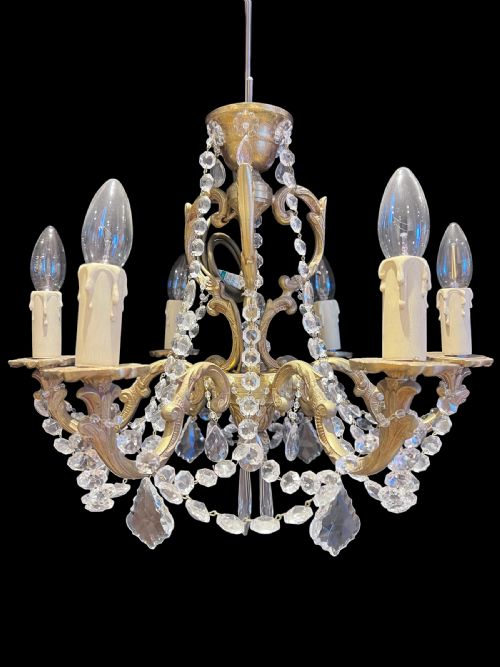
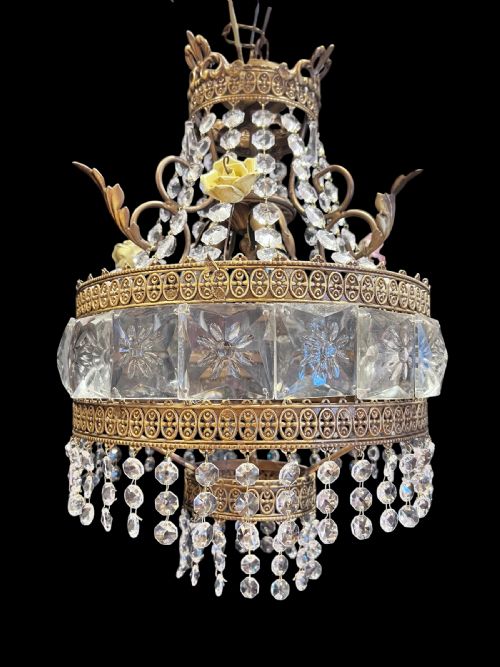
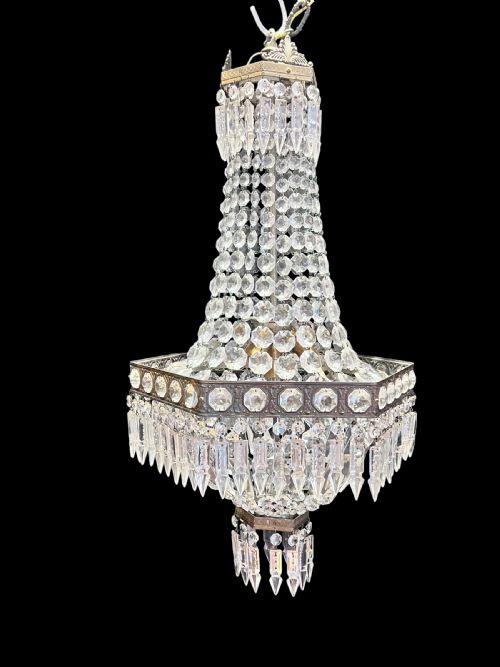
Cut glass and crystal lustres are suspended from the upper crowns and drip pans using wire loops, catching and refracting the light source. Additional ornamental details incorporate ceramic flowers, etched glass convex panels, and tolewear components fixed directly to the frame.
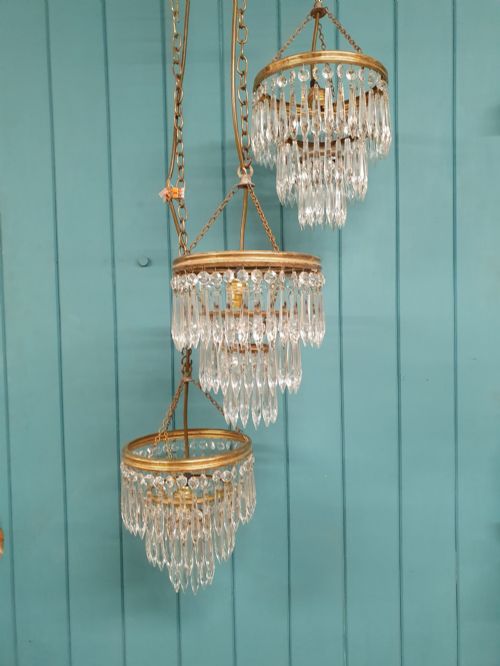
Listings feature brass, gilt bronze, and cut glass configured into tent and waterfall, birdcage, and hall lantern formats.
Evaluating craftsmanship
The refinement of the casting and the depth of the subsequent chasing set standard production apart from exceptional studio work. Crisp detailing on the brass or gilt bronze foliage, cherubs, and structural mounts indicates superior execution by the maker.
The quality of the hanging components matters greatly, with hand-cut crystal lustres offering sharper facets and heavier refractive weight than pressed glass alternatives. The integration of the wiring channels and the structural rigidity of the central stem complete the assessment.
The French Brass Ceiling Chandelier Glossary
- Lustre
- A cut glass pendant or drop hung from the arms or crown of a light fitting. These prismatic elements refract the light to brighten the surrounding walls.
- Tent and waterfall
- A specific configuration where strings of glass beads form an upper tent shape above a cascading arrangement of lower drops. This style creates a dense, glittering column of crystal.
- Birdcage
- A metal frame construction shaped like an avian enclosure, housing internal candle branches and draped with crystal swags. This form became particularly popular during the early twentieth century.
- Plafonniere
- A ceiling-mounted bowl or shallow light fixture that sits flush or close to the plasterwork. They frequently feature decorative brass rims holding etched or moulded glass panels.
French Brass Ceiling Chandelier: Frequently Asked Questions
How do I hang a heavy antique chandelier?
These fixtures require direct suspension from a ceiling joist using an appropriate steel hook and loop system rather than relying on standard plasterboard fixings. The weight of the metal frame and crystal elements demands robust load-bearing support.
Professional electrical installation is also recommended to manage the internal wiring safely and ensure the brass canopy sits flush against the ceiling rose.
Can I adjust the drop height of these lights?
The hanging height can typically be altered by adjusting the length of the suspension chain linking the ceiling rose to the main body. Care must be taken to ensure any excess electrical flex is safely shortened or housed within the ceiling void.
Altering the chain length on complex tent and waterfall configurations requires patience to maintain the balance and symmetry of the surrounding crystal swags.
How do I clean crystal lustres safely?
Crystal elements are best cleaned in situ using a dedicated spray cleaner and a soft cloth to avoid damaging the aged brass or bronze wiring frames. If the drops are heavily soiled, they can be unhooked individually and washed in lukewarm soapy water.
Avoid using harsh chemical abrasives on the gilded surfaces, as these can strip the historical patina and surface finish from the metalwork.
What is the difference between Empire and Rococo styles?
Empire style fixtures emphasise strict classical symmetry, featuring laurel wreaths, urns, and architectural lines inspired by antiquity. They project a formal and orderly aesthetic across the room.
Rococo designs favor asymmetrical curves, C-scrolls, and exuberant naturalistic motifs such as leaves and floral arrangements. This style creates a more fluid and theatrical visual impact.