


French Botanical Painting
When you search for french botanical painting, you enter a world of floral still lifes and delicate studies spanning centuries.
French Botanical Painting
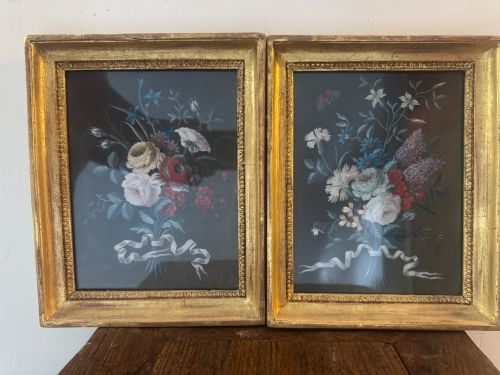
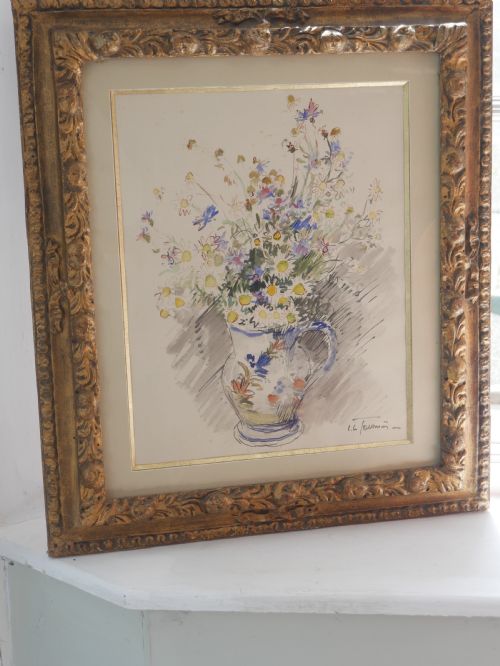
French botanical painting encompasses a rich selection of floral still lifes, botanical studies, and gouache works originating from France. The examples available span from the eighteenth century through to the mid-twentieth century, capturing blossoms, lilies, and garden flowers.
Buyers will encounter various formats on this page, including traditional oil on canvas, gouache on paper, oil on board, and detailed engravings. These pieces frequently feature subjects such as vases of summer flowers, anemones, and water lilies.
The aesthetic reaches across multiple periods including the nineteenth century, Victorian era, and the 1930s. Alongside paintings, related decorative items incorporating floral motifs appear, such as painted porcelain and framed herbariums.
What varies in quality
Quality rests upon the precision of the brushwork and the naturalism captured in the petals, leaves, and stems. Hand-painted details on paper, canvas, or panel reveal the distinct hand of the artist.
The condition of the medium - whether oil, gouache, or watercolour - and the integrity of the original frame contribute significantly to the standing of each piece.
One lucky charm still life depicts lily of the valley as a token of friendship.
Pancrace Bessa·Pierre-Joseph Redouté·Bertoldo Taubert·Jules Felix Ragot
The French Botanical Painting Glossary
- Gouache
- An opaque watercolour paint consisting of natural pigment, water, a binding agent, and sometimes additional inert material. It allows artists to create flat, vibrant areas of colour in botanical studies.
- Still life
- A work of art depicting mostly inanimate subject matter, typically commonplace objects which may be either natural or man-made. In this context, it centres upon arrangements of cut flowers and potted plants.
- Engraving
- The process or result of cutting or carving a design onto a hard surface, often metal, to print multiple impressions. Botanical engravings provided accurate scientific illustrations for publications.
- Herbarium
- A collection of preserved plant specimens and associated data used for scientific study. When mounted in frames, they serve as decorative botanical displays.
- Impressionism
- A 19th-century art movement characterised by relatively small, thin, yet visible brush strokes and an open composition. It often emphasises accurate depiction of light in outdoor garden scenes.
French Botanical Painting: Frequently Asked Questions
What is a botanical painting?
A botanical painting is an artwork that depicts the form, detail, and colour of plant life, typically executed with scientific accuracy.
These pieces range from detailed gouache studies on paper to expressive oil paintings on canvas.
How do I date a French painting?
Dating relies upon stylistic markers, materials used such as canvas or mahogany panels, and the framing techniques characteristic of periods like the 18th or 19th century.
Signatures, attributions, and historical subject matter further help narrow the creation era.
Where should I hang these artworks?
These floral pieces suit dining rooms, drawing rooms, or quiet reading spaces where natural light enhances the painted colours.
Pairing them with wooden furniture or period decor creates a cohesive interior scheme.
Are these paintings original?
The selection includes original oil paintings on canvas and board, alongside hand-painted gouache works and period engravings.
Each listing details the specific medium used by the artist.